Bongeunsa is a worthwhile addition to a Gangnam day when you want to spend some time in a temple setting and are willing to let worship shape your visit. It is less suitable as a tightly scripted photo stop in which every hall must be available on demand. Come as a visitor to a working religious place. That choice changes how you walk, where you pause, and what you do when a service is taking place. For Korean map searches, use 봉은사.
For most sightseeing itineraries, a suggested 45–75 minutes on site is a reasonable starting allowance, excluding the journey there. You can shorten that to a quiet grounds visit or extend it if you want to look more closely, but organized programs need their own planning.
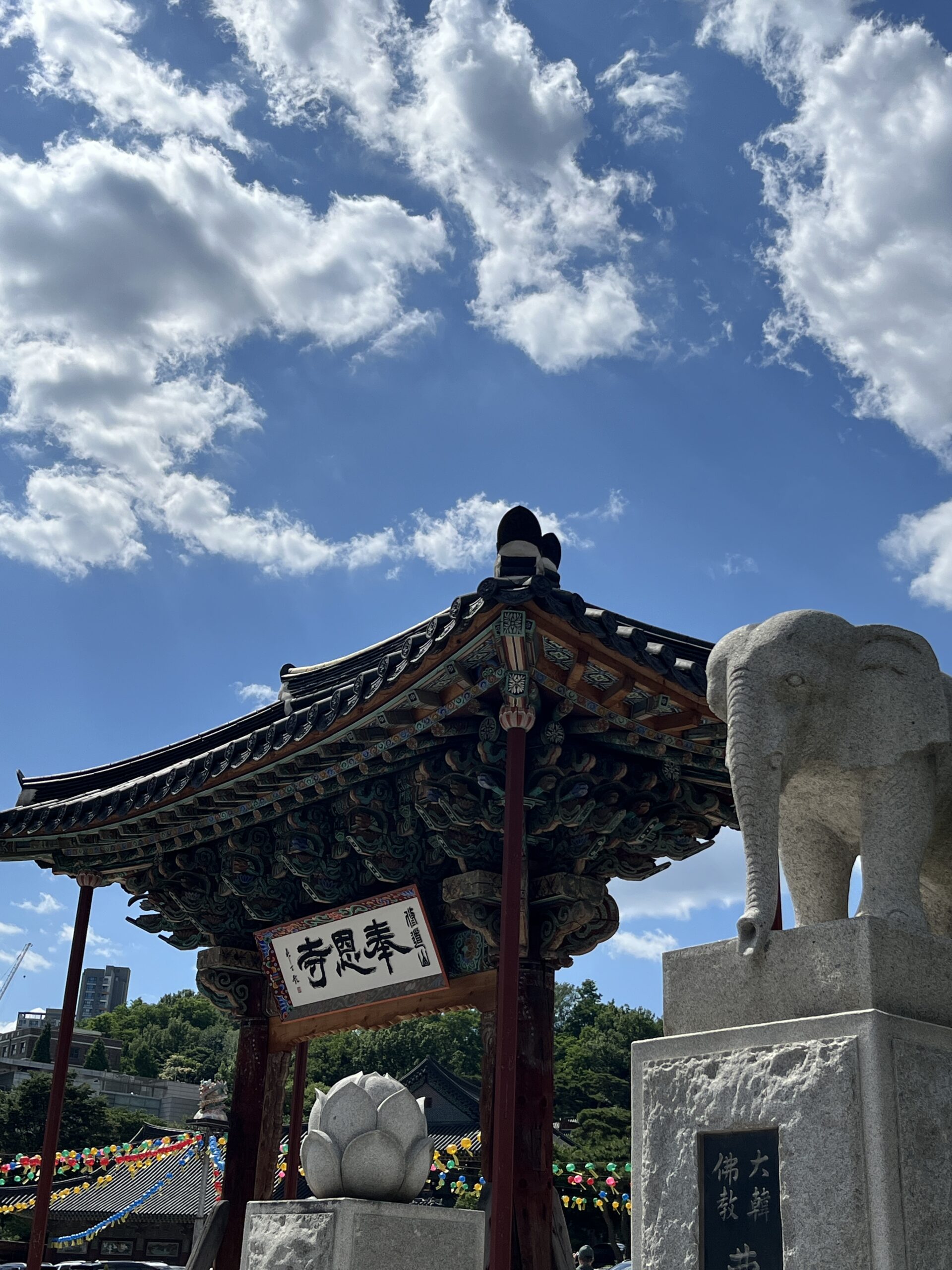
Arrive with a flexible first step
The temple address is 531 Bongeunsa-ro, Gangnam-gu. Visit Seoul gives Bongeunsa Station on Line 9, exit 1, as the approach, with a listed walk of 135 meters. Its official temple listing also warns that access varies with Buddhist services and prayer.
On arrival, pause before entering the first building. Look for current visitor notices, observe whether people are worshipping, and follow any directions from staff. Starting slowly helps you distinguish a passageway from a place where stopping would interrupt someone. If you are unsure whether visitors may enter a hall, ask rather than interpreting an open door as an invitation.
This approach is useful even if you have visited temples elsewhere. Local signs and the activity in front of you are better guides than assuming every site uses the same arrangements.

Read the hours as access to the grounds
The Korea Tourism Organization lists general hours of 05:00–22:00 daily and free admission. Treat these as published grounds hours, subject to worship and local restrictions, rather than permission to enter every hall throughout that period. Check the official visitor information before making an early-morning or evening journey.
A daytime stop is the simpler choice if you want to orient yourself without depending on a particular building being open after dark. Admission being free also makes a flexible visit practical: there is no need to force a complete circuit to justify a ticket expense. If a service changes access, spend your available time elsewhere in the permitted grounds or return on another day.
For a short visit, think in three parts: arrive and read the notices, take a calm walk through accessible areas, then leave time to return to the station or your next appointment. This is a planning framework, not an official temple route. It keeps the final minutes from becoming an abrupt rush through a space that asks for a quieter pace.

Photography should follow the visit
Check the posted rules before photographing inside buildings or near worshippers. Even where general photography is allowed, that does not make an individual visitor’s prayer a suitable subject. Frame your images to respect people’s space, keep passages open, and avoid directing companions into areas where they would disturb a service.
Quiet behavior is more useful than trying to perform unfamiliar gestures for a photograph. You can observe respectfully without imitating a ritual you do not understand. If footwear instructions apply at an entrance, follow them carefully and keep your belongings out of the way.
For families, explain the setting before entering: voices low, no running between people, and questions saved for a place where conversation will not interfere. That brief preparation can make the visit easier for both children and the people using the temple.

A temple stop and a temple program are different plans
Walking through the grounds does not mean you have joined a guided experience, meal, or overnight stay. If your interest is specifically templestay, use the current booking information linked through Korea Tourism Organization’s templestay guide and verify the temple, language, date, price, and program format.
Do not build an itinerary around a weekday tour timetable copied from an old travel post. A program can determine the shape of an entire afternoon, while an ordinary visit can remain flexible. If an English explanation is essential to you, confirm that requirement before making the booking.

Bongeunsa can provide an outdoor counterpart to time around COEX, but bad weather changes the appeal of that pairing. Wear shoes suited to the conditions and shorten the grounds walk if necessary. The best next step is modest: confirm the day’s access, leave a little uncommitted time, and let the temple’s actual activity determine how much you see. If you have time for a second heritage stop in Gangnam, see the guide to the Joseon royal tombs, including Seolleung and Jeongneung.