If you have time for only one stop at Gongpyeong Historic Sites Museum, start with the site plan and trace one excavated alley. Then read the label beside a model to see what survived underground and what the museum recreated to explain it.
At this basement museum in central Seoul, you don’t need a guided tour to make sense of one small part of the old city. Use the visitor route and let the labels do the work.
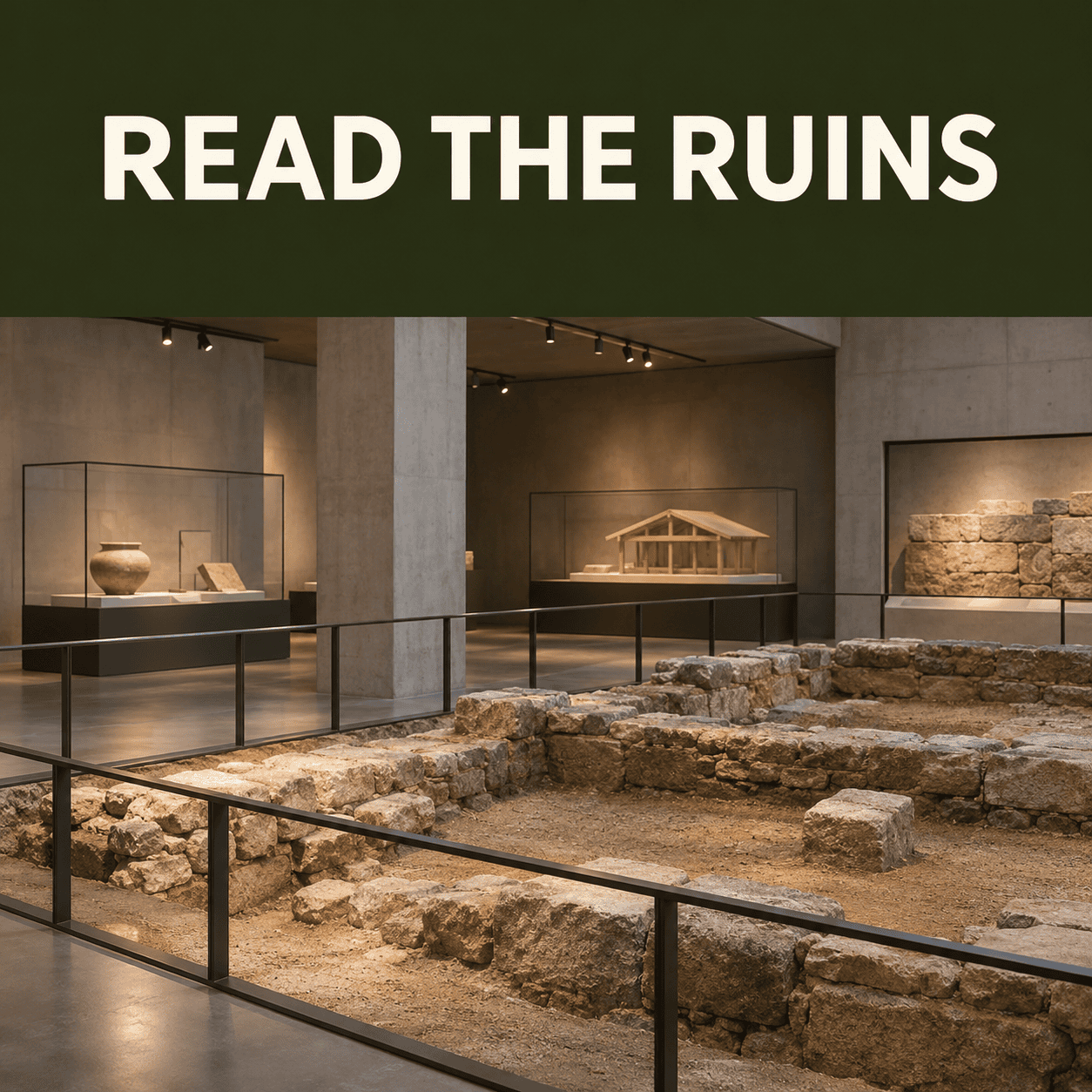
Find the branch beneath Centropolis
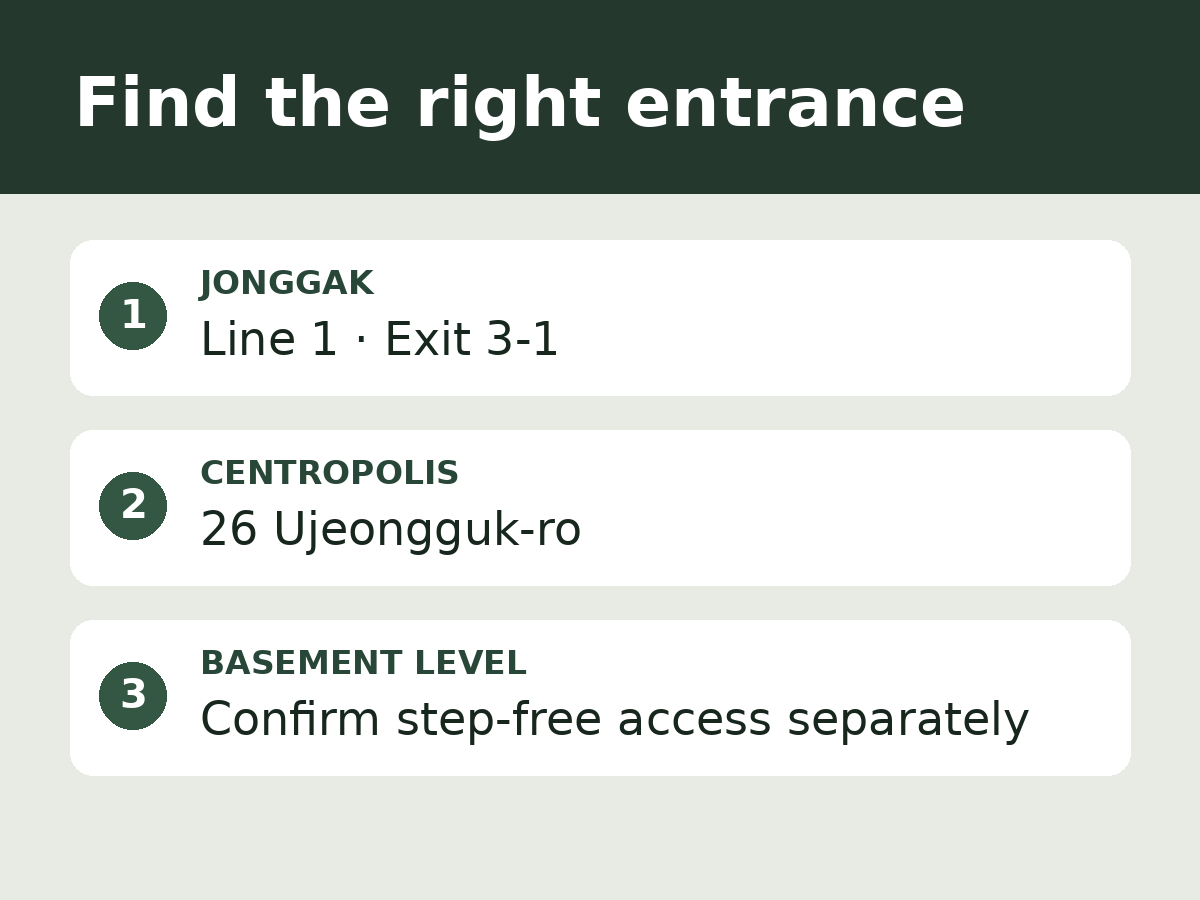
The museum is in Centropolis at 26 Ujeongguk-ro, Jongno-gu, not in the main Seoul Museum of History building. The official branch guide lists Jonggak Station on Line 1, Exit 3-1. If you need step-free access, confirm the building entrance separately.
If a map result says Insa Urban Archaeological Museum at 18 Jong-ro 11-gil, that’s a different branch. For this walk, look for Centropolis and 26 Ujeongguk-ro.
Admission is free. The museum’s visitor guide lists 9:00 a.m. to 6:00 p.m. with last entry at 5:30 p.m. The museum normally opens Tuesday through Sunday and closes on January 1. Check for holiday changes before you leave.
You can look around on your own. For an English-language tour, call the information desk at +82 2-724-0135 at least a day ahead to check availability and arrange a time. There is no need to book a tour for a self-guided visit.
Distinguish a surviving trace from a reconstruction
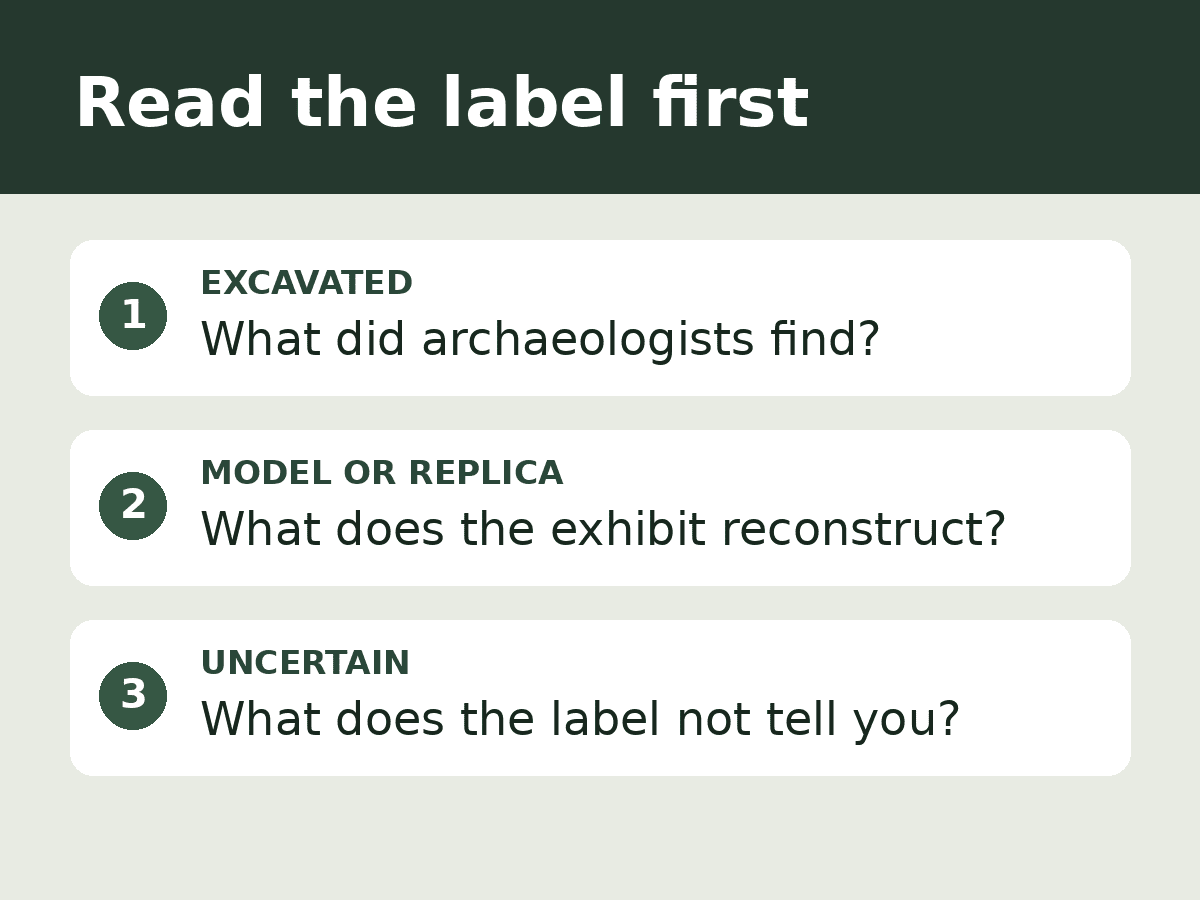
Excavations in Gongpyeong redevelopment blocks 1, 2 and 4 uncovered building sites, streets and everyday objects. The museum opened in 2018 to keep and interpret remains on the site. The original traces are only part of what you see: some displays use models or reconstructions to show how the old neighborhood may have looked.
Try the square-shaped alley house as an example. Find its footprint first. Then read the model label and compare what it presents with the traces on the plan. A model can clarify the shape of a house without being an untouched house from the past.
Follow one alley instead of trying to see every room
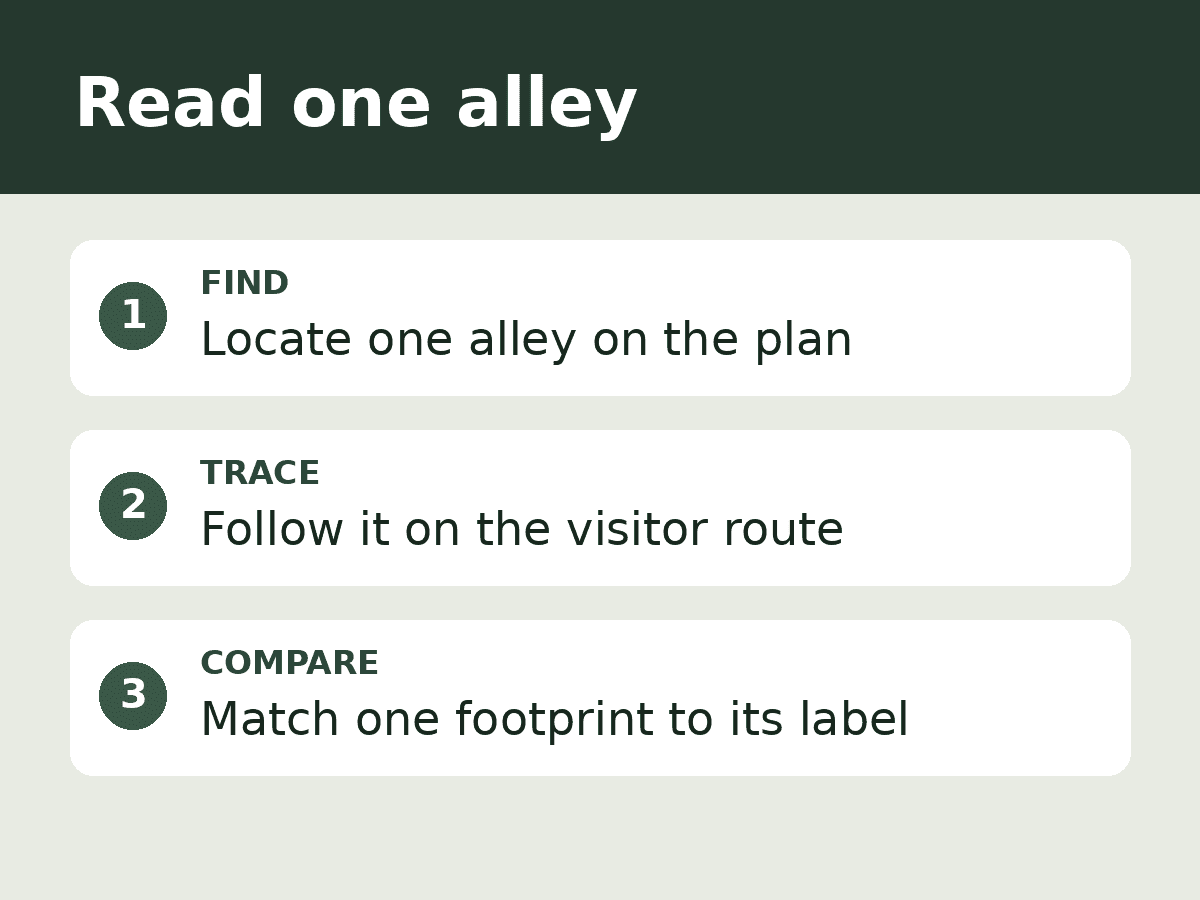
Choose a marked alley on the plan. From the visitor route, notice where it changes direction and how it sits next to one building. If you cannot tell whether a gap was an entrance, leave it as a question rather than guessing. The exhibition explains how the city preserved and interpreted the site.
Take one detail back to street level
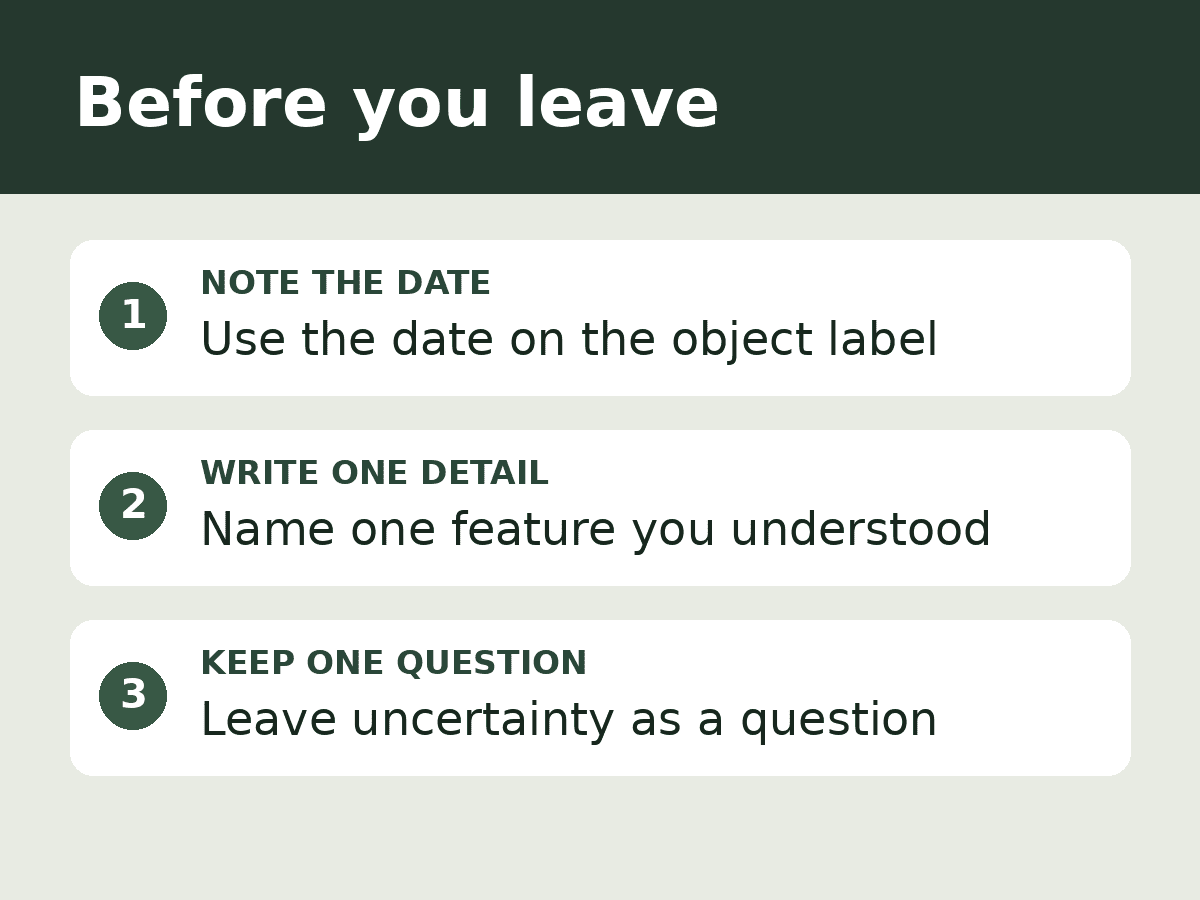
Choose one object before you leave. Read its own date and label rather than assuming it is as old as the nearby foundations. Outside, notice how the scale of the excavated neighborhood compares with the buildings overhead. For a citywide view, the main Seoul Museum of History guide is a different visit.
Korea Travel Stories Editorial
This AI-assisted planning guide is based on official visitor information. It is not a first-hand visit or a personal review. The images are illustrations, not photographs or maps of the museum.