A museum-shop postcard can be a small reminder of Korea without becoming another item in your suitcase. Before buying stamps, though, look at what you have bought: a flat card, a folded greeting card and a card sealed inside an envelope are not interchangeable postal items.
This guide is for a visitor sending a personal card overseas from a Korean post office. It is desk-researched, not a claim of a mailing test. The diagrams explain decisions; they are not official postal forms.
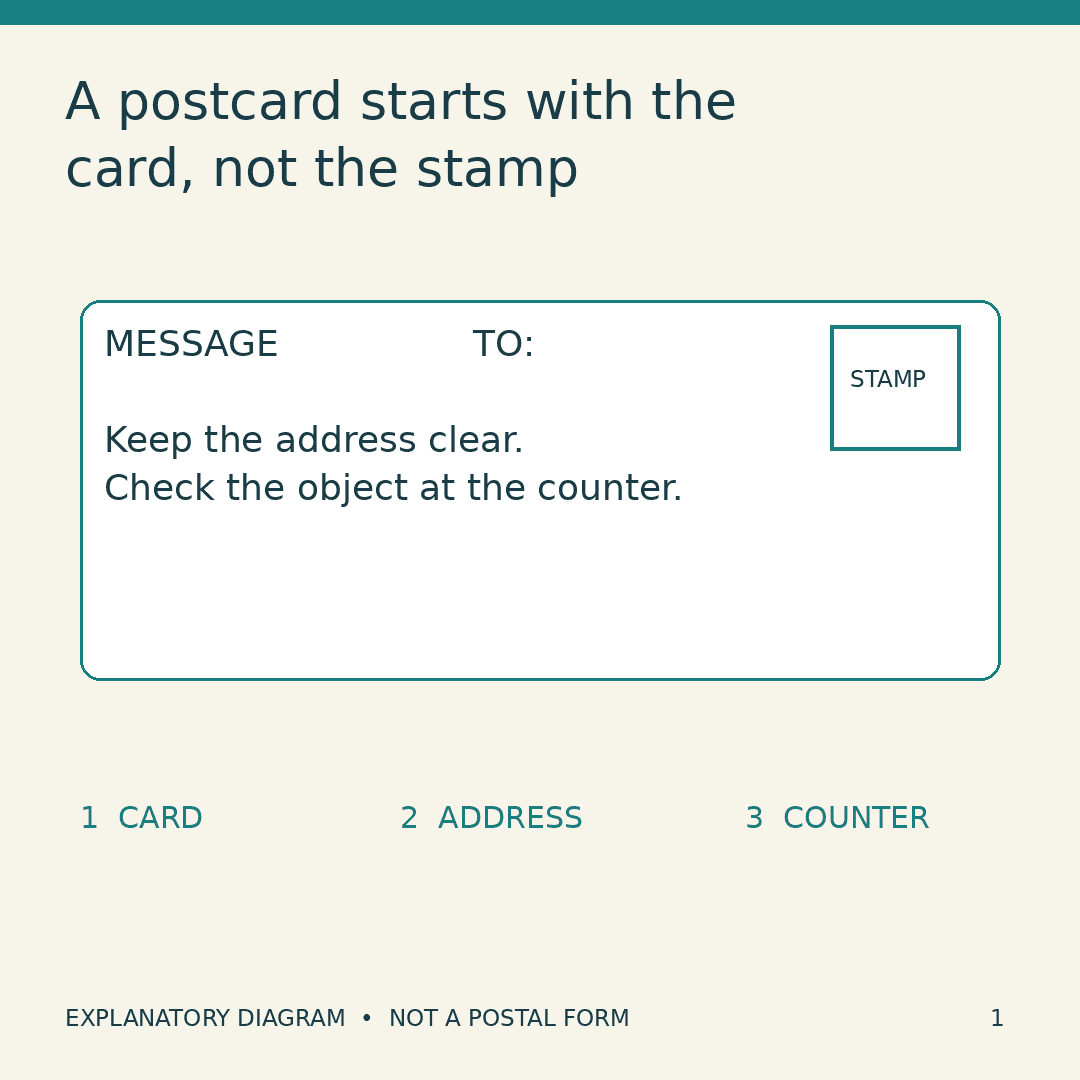
Put the unwrapped card on the table
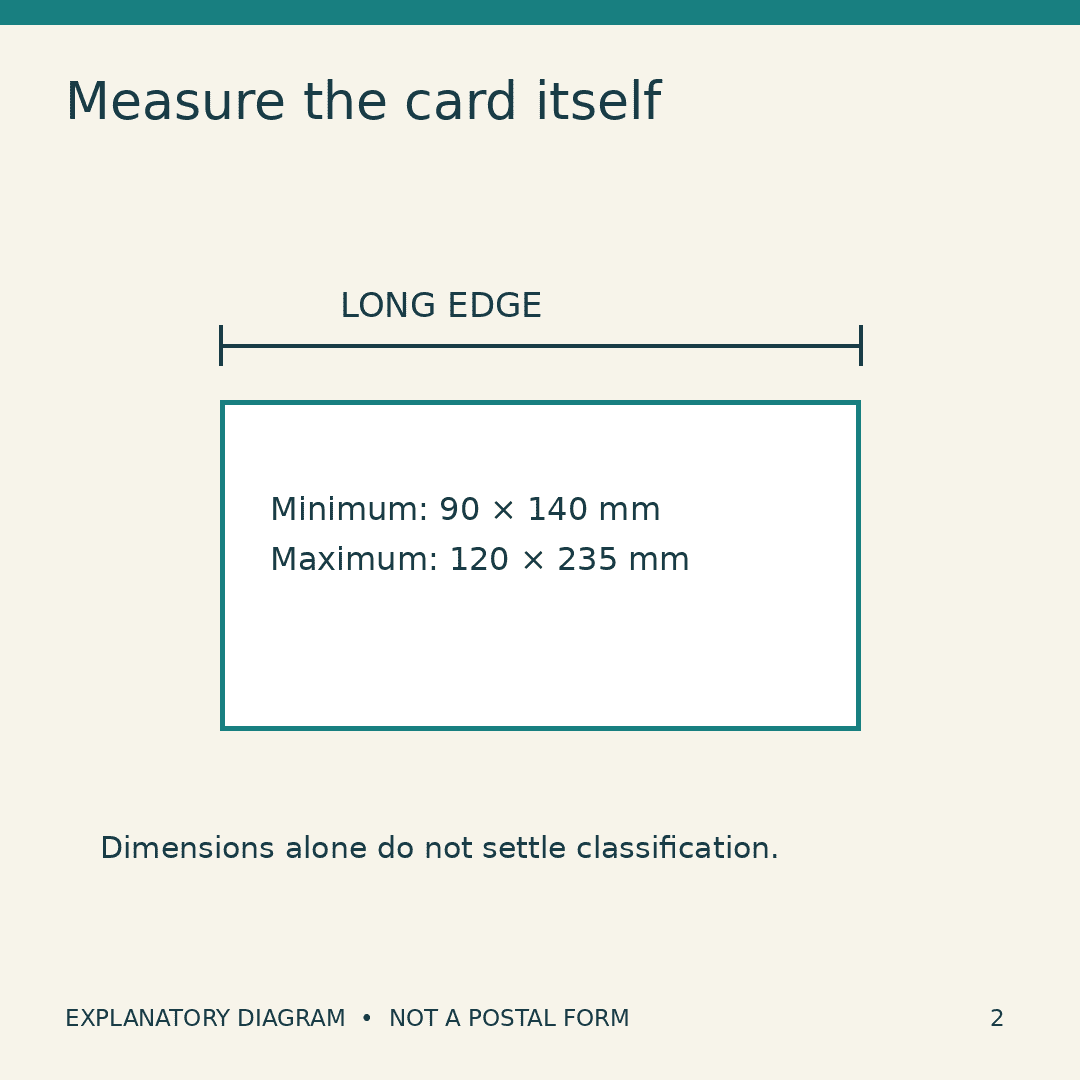
Measure the card rather than its retail packaging. Korea Post lists international postcard dimensions from 90 × 140 mm to 120 × 235 mm. Its requirements also distinguish standardized items from folded cards, protruding contents and certain unusual fastenings. Meeting the size range is a useful first check, not a promise that every souvenir material or decoration is acceptable. See the official size and item requirements.
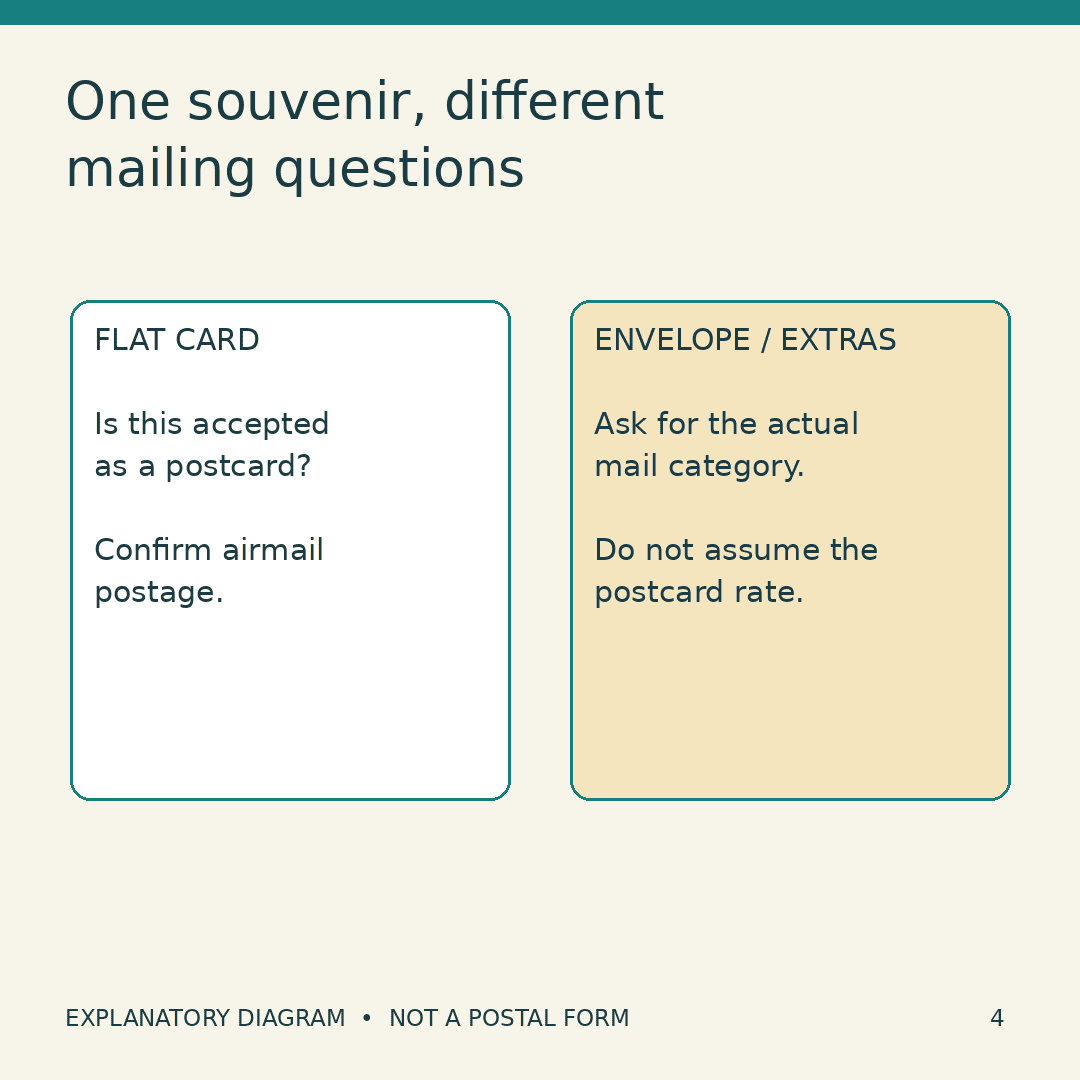
If the card has a metal charm, a thick raised decoration or an envelope you want to keep, take the complete item to the counter. Do not remove something valuable merely to force it into the cheapest category. Ask how it should be sent, then decide whether mailing it still makes sense.
Make the recipient easy to find
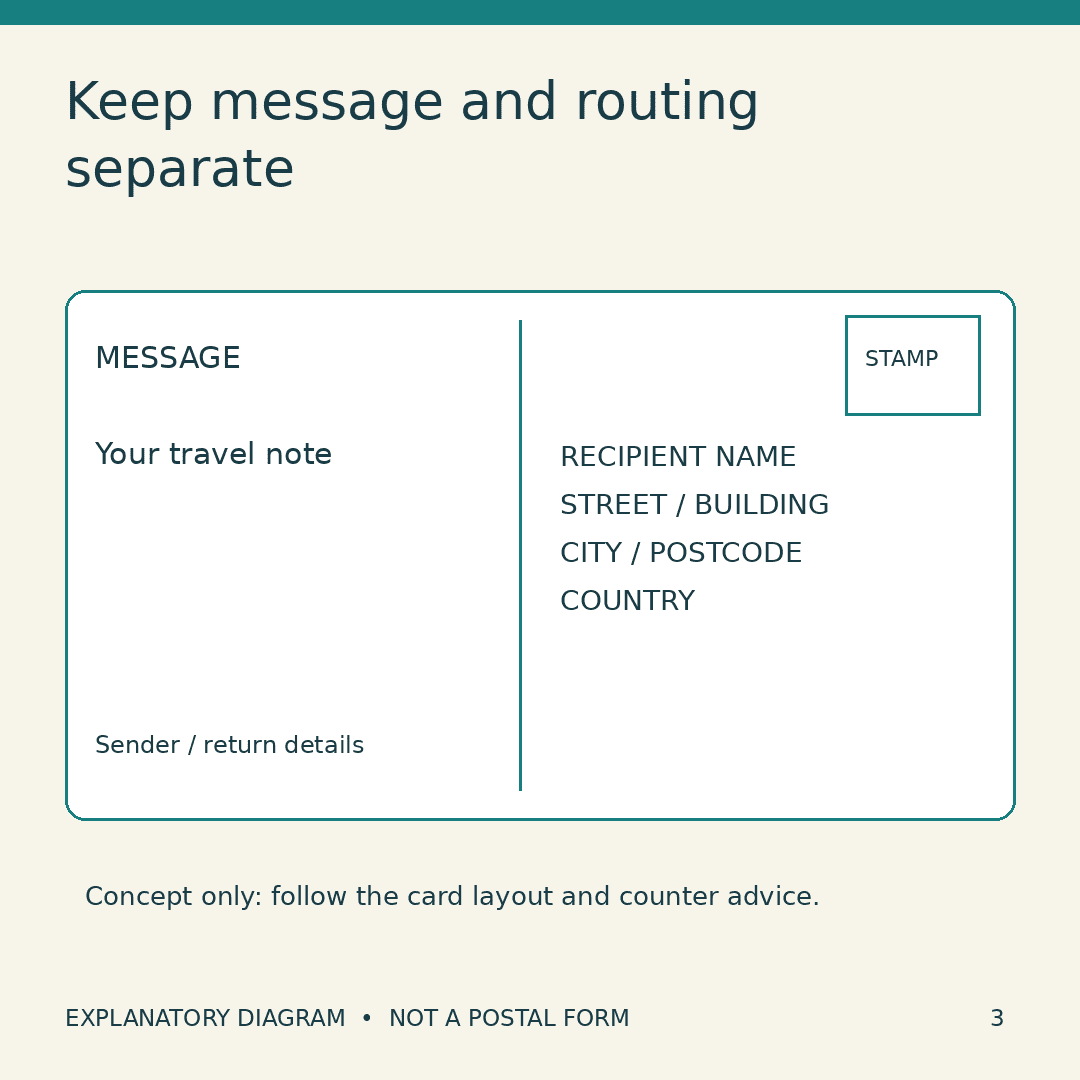
Have the recipient send you their complete postal address before you start writing. Use a pen and leave a distinct, readable address area. Korea Post’s labelling guidance calls for clear names and addresses in Roman characters and Arabic numerals, allows the destination’s local language as well, and asks for the city and country in capitals with the postcode where available. It also calls for sender information; do not assume that a short tourist stay removes that requirement.
Ask the clerk how to enter a suitable return address if you are leaving your accommodation soon. Do not invent an address or use somebody else’s without permission. If you need to understand a Korean building or floor line first, our guide to Korean address components separates those details from the street name.
Ask for postcard postage, not merely “an international stamp”
The Korea Post international letter and postcard rate table currently lists an airmail postcard rate of KRW 430. The page labels the table as effective from July 2017; that is its stated effective date, not evidence of a new 2026 price change. Confirm the charge and destination service when you hand over your item.
An envelope, added souvenir or nonstandard construction can change the classification. Do not read the postcard price as a flat price for every small object sent abroad. Likewise, the word “airmail” does not supply a guaranteed arrival date. If delivery evidence or a deadline matters more than the postcard experience, explain that need and ask the counter which service is suitable before paying.
Use a weekday errand slot, not your last departure hour
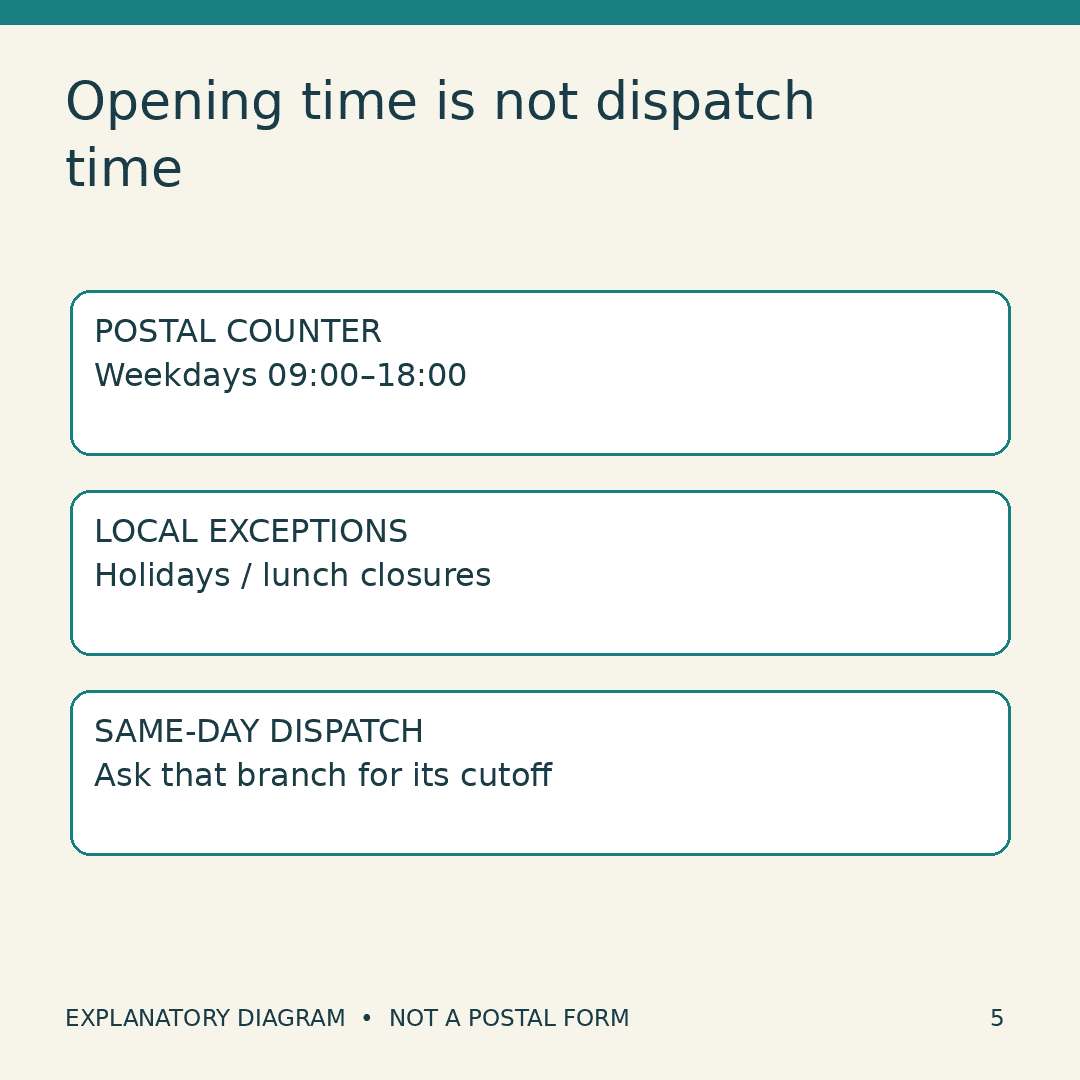
Korea Post’s published postal counter hours are weekdays, 09:00–18:00, excluding public holidays. The same page warns that lunch closures and same-day dispatch cutoffs can differ by branch. A branch still being open does not mean your card will leave that day. Check the branch through the linked official post-office finder rather than assuming that a banking-hours result describes the postal counter.
For a Sunday flight, a weekday visit earlier in the trip is a more forgiving plan than leaving this task to departure morning. That is planning advice, not a delivery estimate. Keep enough time to rewrite an unclear line, change packaging or return if that branch is closed for lunch.
Finish with the actual card in front of the clerk
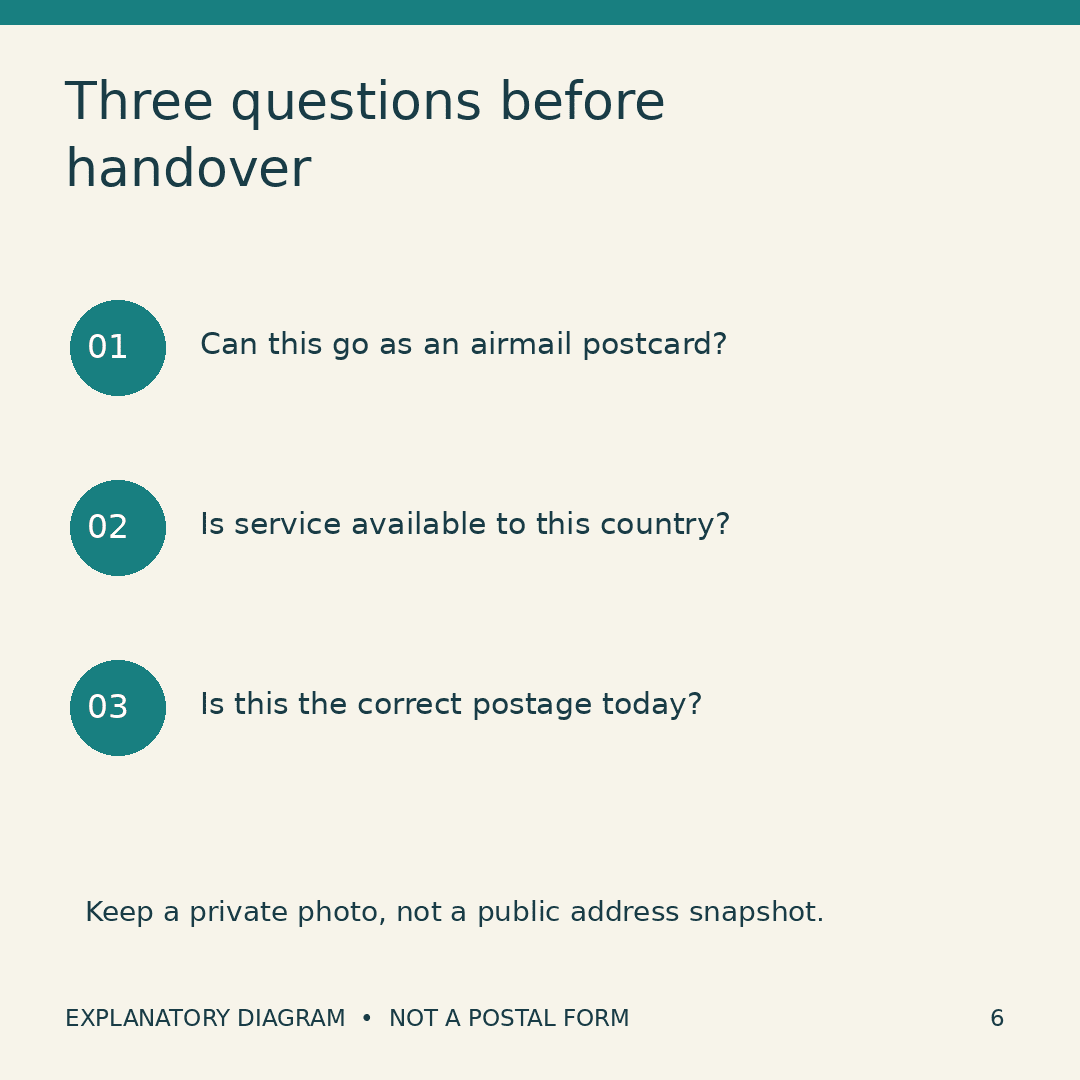
Show the destination country and ask three things: whether this object qualifies as an airmail postcard, whether the destination service is available, and what postage applies today. This is more useful than handing over a pre-stamped card and hoping its packaging is acceptable.
A private photograph of your message can preserve the memory if the card takes longer than expected. Keep the address side out of public social posts. Once it has been accepted, treat any estimated arrival window as an estimate—not a reason to promise your friend a particular delivery day.
Information checked 3 November 2026, Korea time. Rates, branch arrangements and international service availability can change; Korea Post’s current counter advice takes priority.