The famous Goblin seaside stop is not interchangeable with every map result labelled “Jumunjin.” A harbour, a beach, the BTS bus-stop attraction and a drama-filming breakwater can all appear in the same coastal search. Before arranging transport, settle which place you mean.
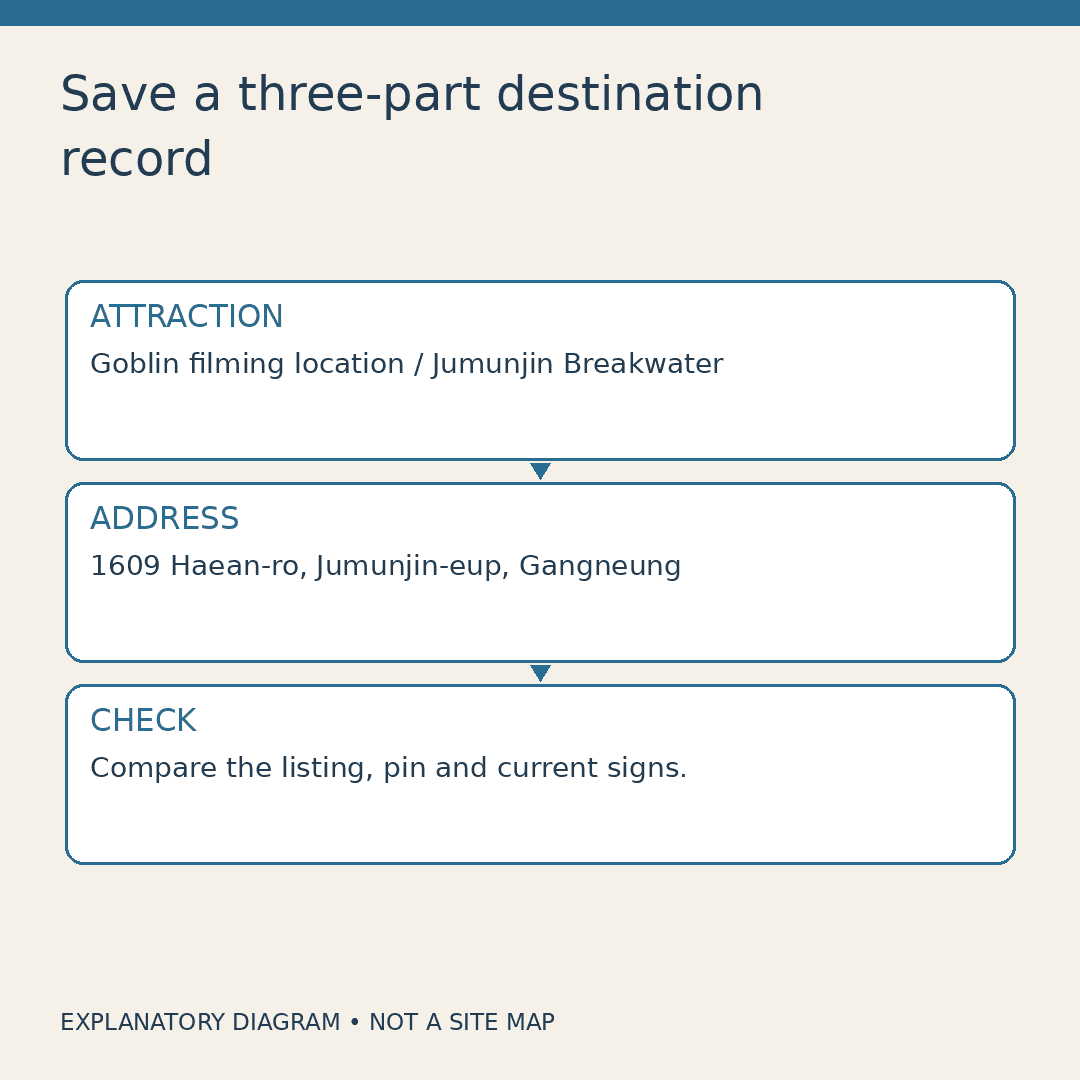
The Korea Tourism Organization’s Jumunjin Breakwater listing connects the location with the leads’ first meeting in Guardian: The Lonely and Great God (2016), commonly called Goblin. It gives 1609 Haean-ro as the reference address. That is a documented screen connection, not a promise of an actor appearance, an organized experience or unrestricted access in every sea condition.
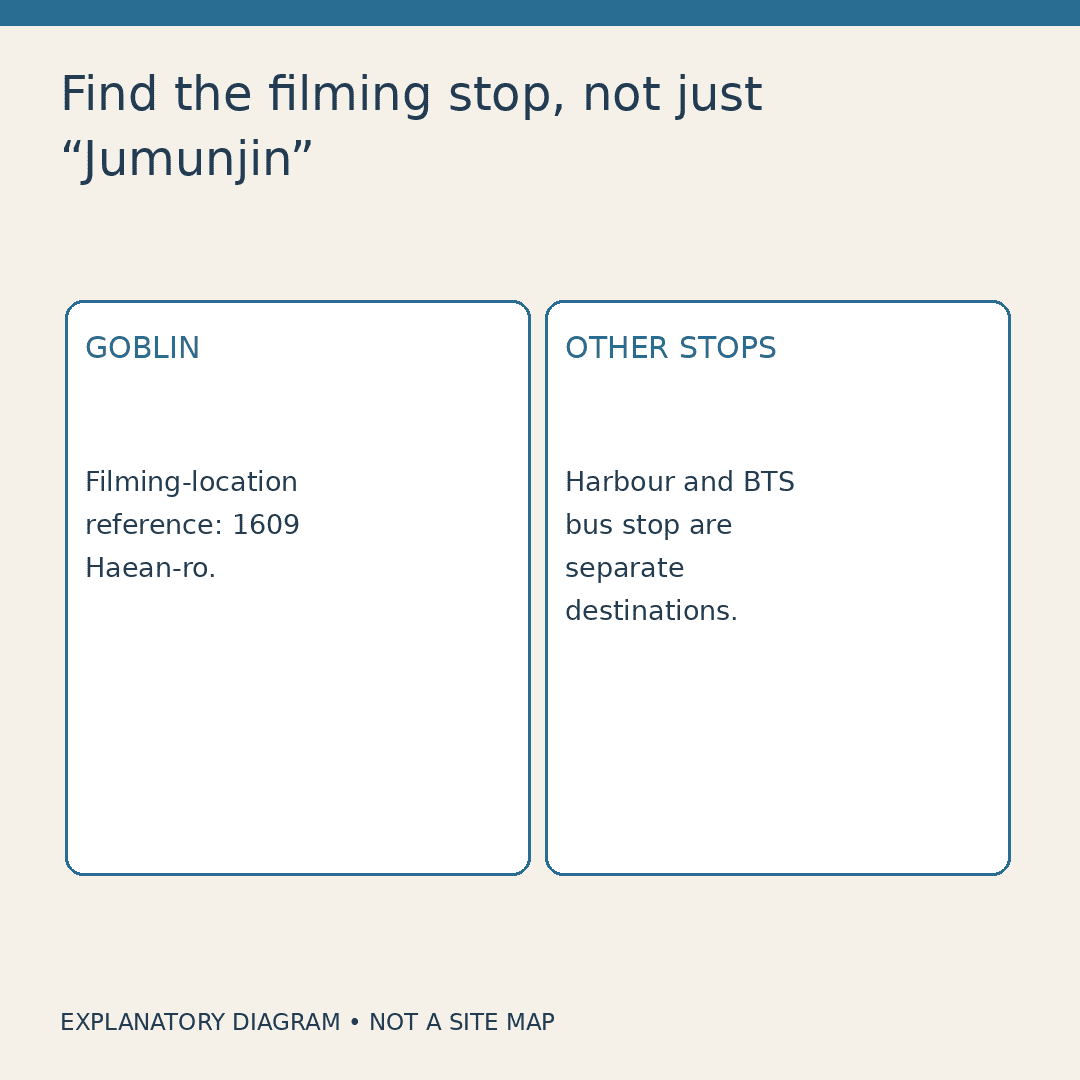
Match the name and address before following a pin
Save both the attraction name and the Korean address: 강원특별자치도 강릉시 주문진읍 해안로 1609. Compare the result with the official listing rather than selecting the first harbour marker containing 주문진. The street-address reference helps locate the filming area; it does not identify a safe place to stand on a sea structure.
The BTS bus-stop guide concerns a different attraction associated with album photography at Hyangho. Keep it as a separate stop if it matters to you. Do not merge two locations into a single walking pin or assume that their shared district makes the transfer negligible.
Published Korean-language visits describe the drama stop and BTS shelter as separate parts of a Gangneung outing. Those accounts help expose the naming confusion, but their old photographs and itineraries do not establish today’s access or travel time. This guide is researched, not a claim that we recently visited the shore.
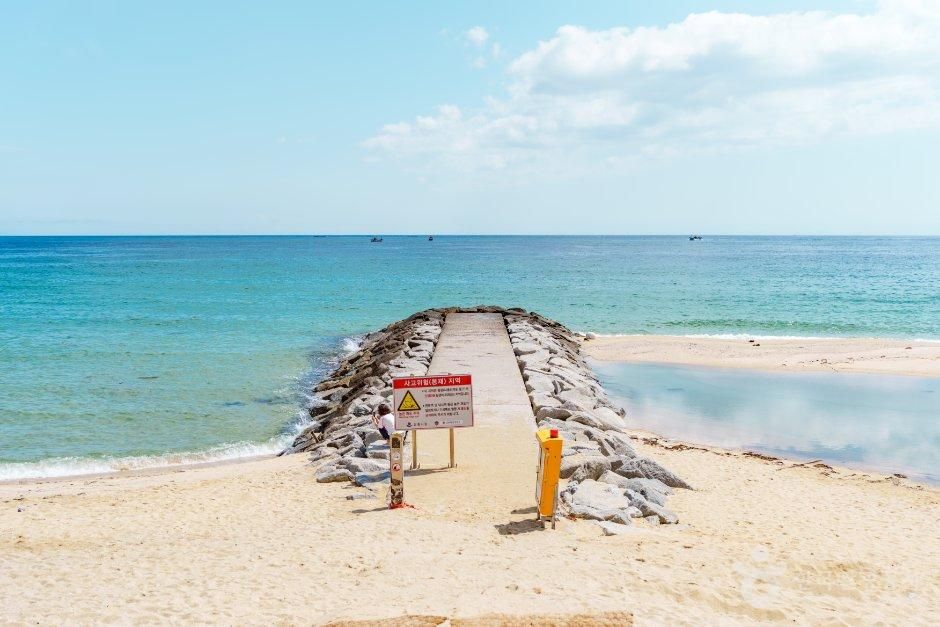
Let the shore decide whether the photo happens
The most important question on arrival is not whether you can reproduce the scene. It is whether the current signs, barriers and sea conditions permit a safe visit from the public area. Stay behind closures and do not step onto wave-exposed edges or coastal protection blocks for a better angle.
A calm-looking sky is insufficient evidence. The Korea Meteorological Administration explains that swell generated farther offshore can produce sudden coastal waves even without local wind. Its marine weather portal provides marine and swell information; consult the current forecast and local warnings before traveling. The portal requires JavaScript, so a blank screen in a simplified reader does not mean there is no warning.
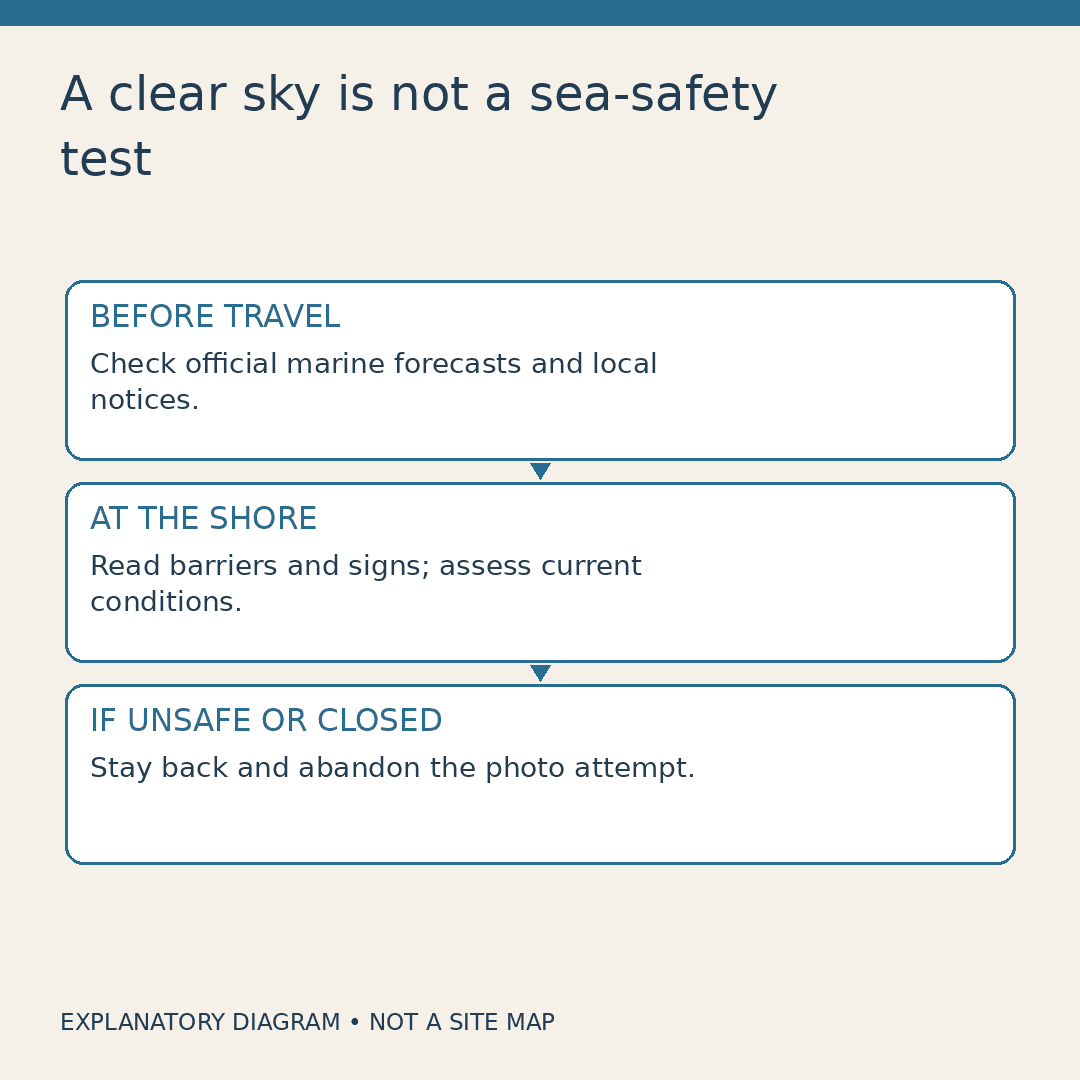
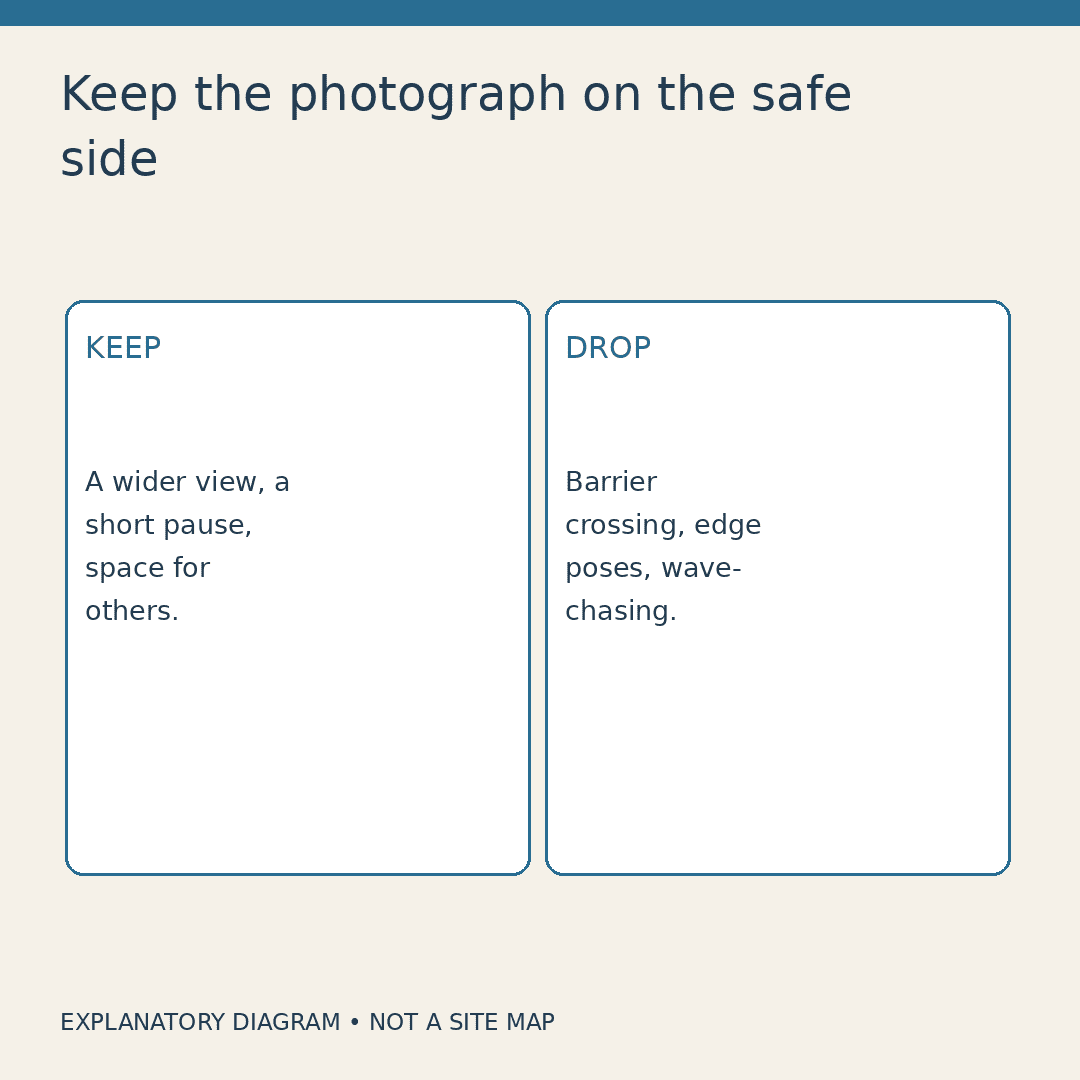
If access is restricted or conditions are doubtful, keep the visit on the safe landward side or skip it. A source photograph showing somebody farther out is not a safety assessment for your day. You can remember the drama without repeating the actors’ position.
Choose a photograph that does not need a risky pose
Before approaching other visitors, decide whether a wider view from a permitted area is enough. Keep the route clear, ask before including strangers prominently, and avoid stepping backward while watching your phone. Do not pursue spray or larger waves for a dramatic frame.
There is no need to promise yourself a particular prop, empty background or waiting time. Those details vary, and a short, ordinary coastal stop may be the honest outcome. The explanatory graphics here are not site maps or recreations of a drama frame; the separately credited photograph is a dated-unknown reference, not a live view.
Keep the local return leg visible
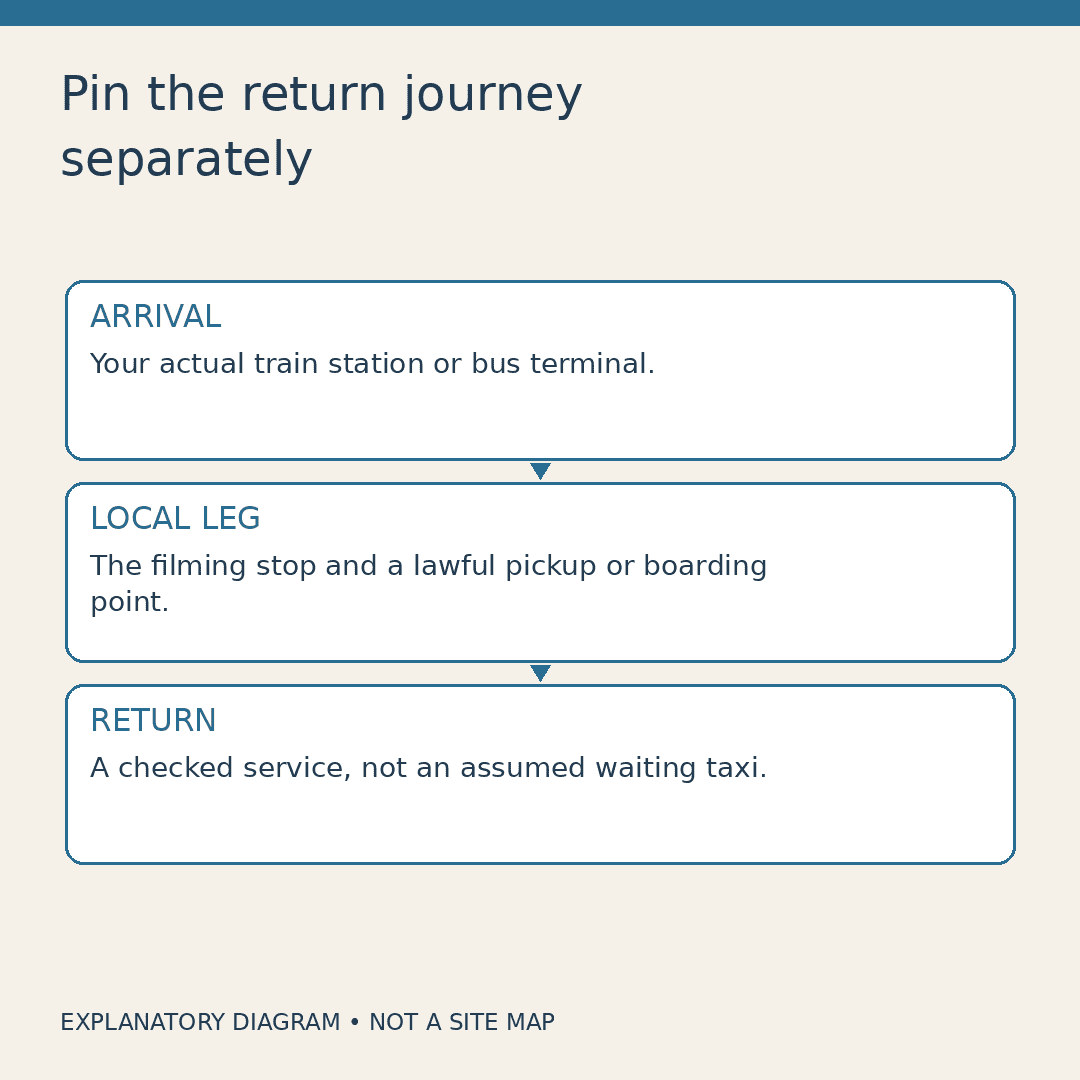
Gangneung arrival and reaching the filming area are separate journeys. Check the full route from your actual railway station or bus terminal, then save a lawful pickup point or the correct return boarding stop. An attraction marker alone is not enough information for the journey home.
Do not choose a departure ticket on the assumption that a taxi will be waiting or an old blog’s bus number still runs exactly as described. Compare current transport information for your date, leave a margin for the local leg, and remove an optional second stop if the return plan becomes tight. This guide does not quote an unverified fare or promise a fixed transfer time.
The successful version of this visit is simple: find the intended filming area, respect the actual coast you encounter and return without treating a photograph as an obligation.
Information checked 3 November 2026, Korea time. Coastal access, weather and transport can change. No current safe-entry condition is certified by this article.