A reusable bottle is useful in Seoul only if you have a realistic place to refill it. In warm weather, an outdoor drinking fountain may fit naturally into a park visit. In November, that same map pin can become a poor foundation for your day: outdoor facilities can stop operating to prevent frozen pipes.
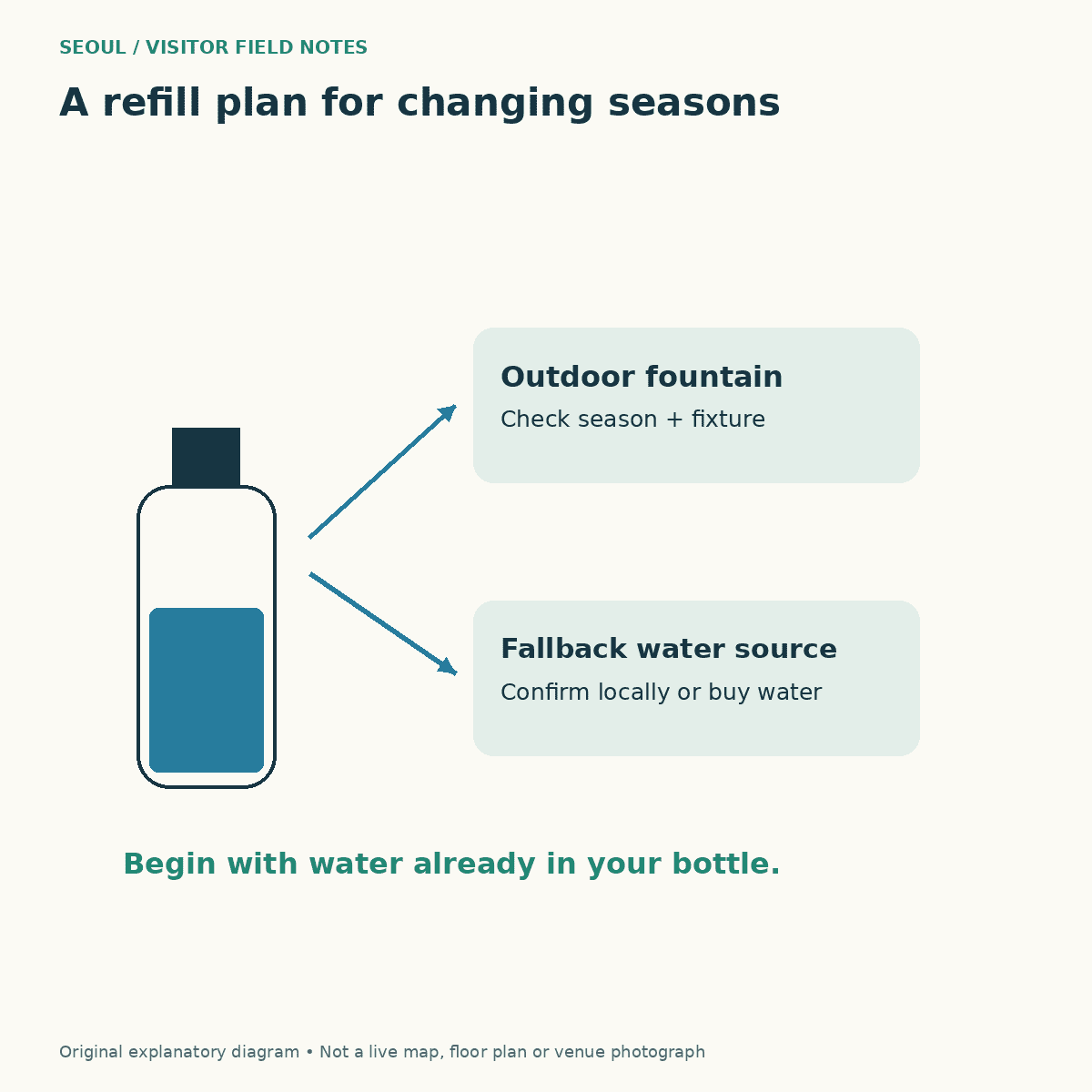
Start with water already in your bottle, then treat an outdoor refill as a possibility to verify. This guide explains how to use Seoul’s Arisu map without confusing the location of a fountain with a promise that water will be running when you arrive.
A seasonal service, not a permanent water supply
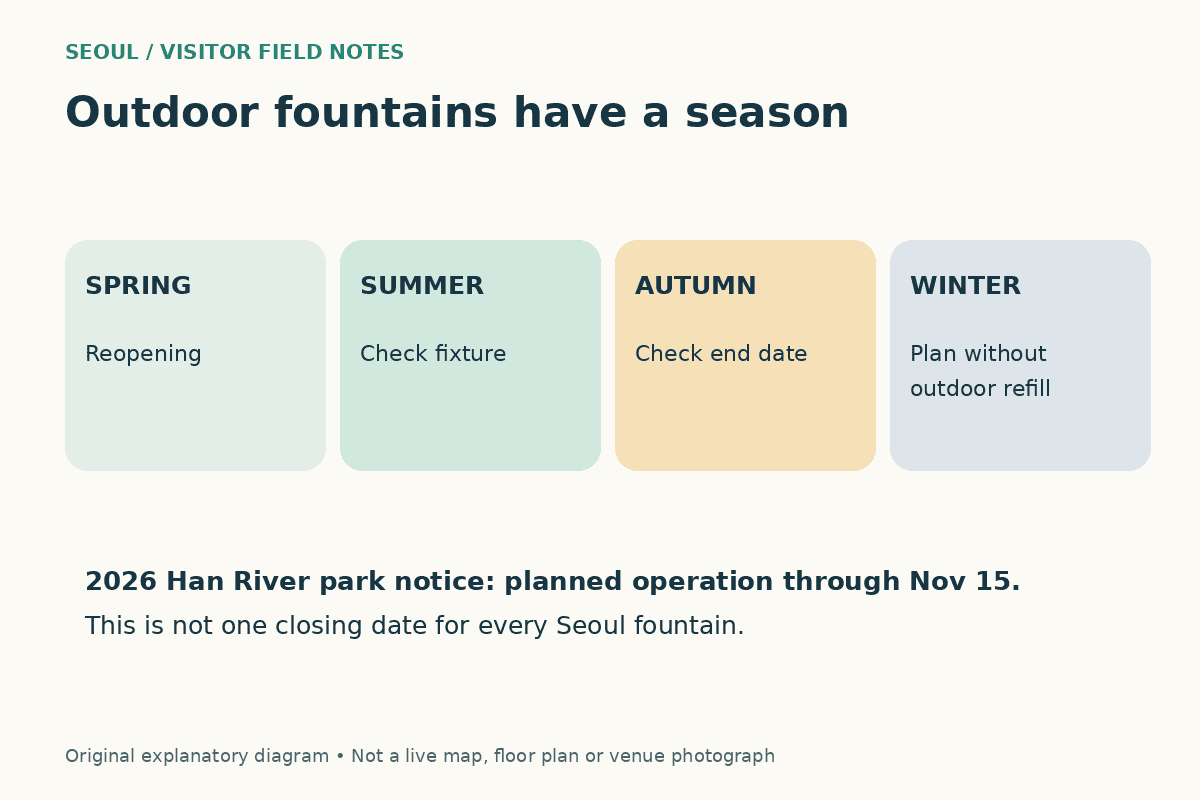
Arisu is the name used for Seoul’s municipal tap water. The city’s March 2026 reopening announcement described 1,777 outdoor fountains returning to service from March 15 after winter suspension. The useful lesson for a traveler is the seasonal pattern, not the assumption that every marked fountain shares one opening date or never needs maintenance.
For the Han River parks specifically, the 2026 Arisu Run notice says outdoor fountains are planned to operate through November 15 before winter freeze protection. That is a dated park notice, not a citywide guarantee. A damaged fixture, maintenance work or a local notice can still affect an individual stop.
If your visit is after that period, design the day without depending on a riverside fountain. If it is before the deadline, check the actual fixture rather than treating the calendar as a reservation for running water.
Use the outdoor-fountain layer, then inspect the place
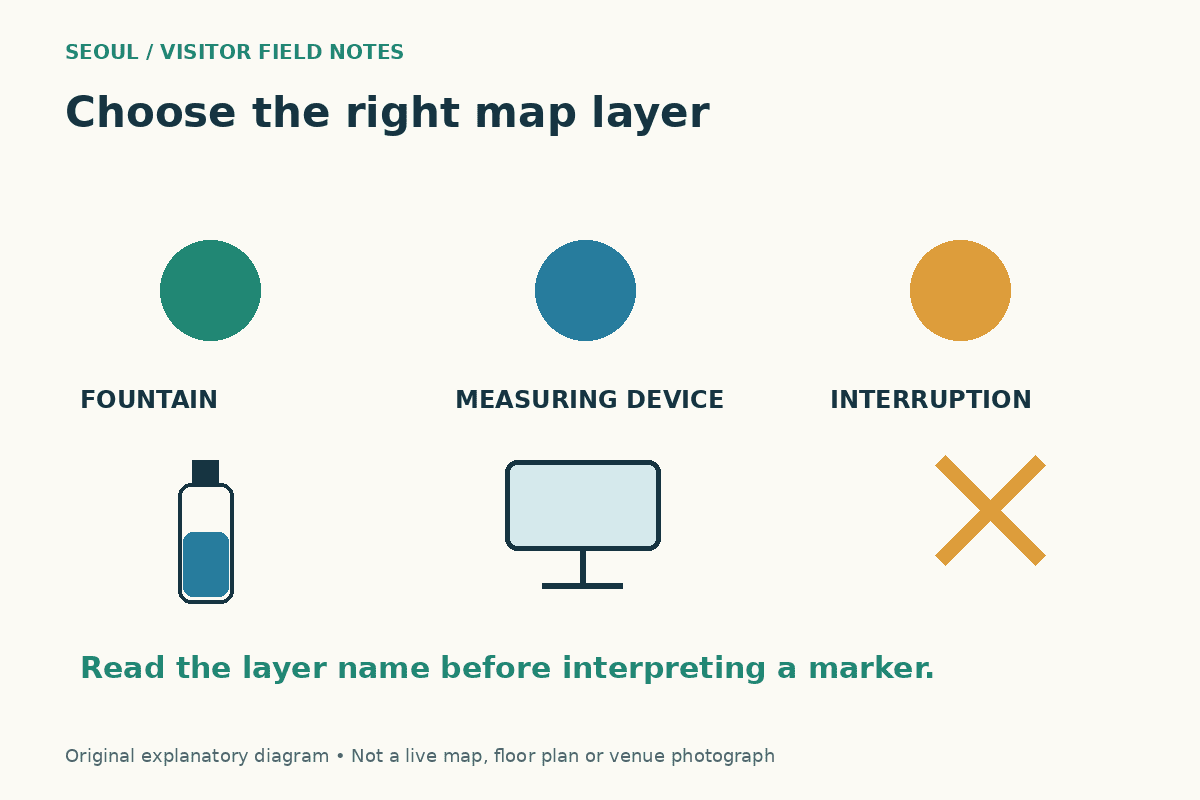
Open the official Arisu map. Its neighborhood-information menu separates outdoor fountains, automatic measuring devices and water-supply interruption information. Choose 야외 음수대, meaning outdoor drinking fountains. A measuring-device marker is not an invitation to refill a bottle there.
Move to the park or neighborhood you actually plan to visit. Compare the marker with the paths and entrances in your usual pedestrian map. The nearest point in a straight line may sit on the other side of a road, fence or inaccessible entrance. Do not leave your intended route for a distant pin unless the detour still makes sense without the refill.
The map also provides water-quality information, but the presence of those tools should not be read as proof that every individual fountain has a live, continuously updated quality report. Look at what a particular layer and marker actually describe. On arrival, read posted notices and the fixture’s management label; a location on a map cannot overrule an out-of-service sign.
Build the refill into a stop you already wanted
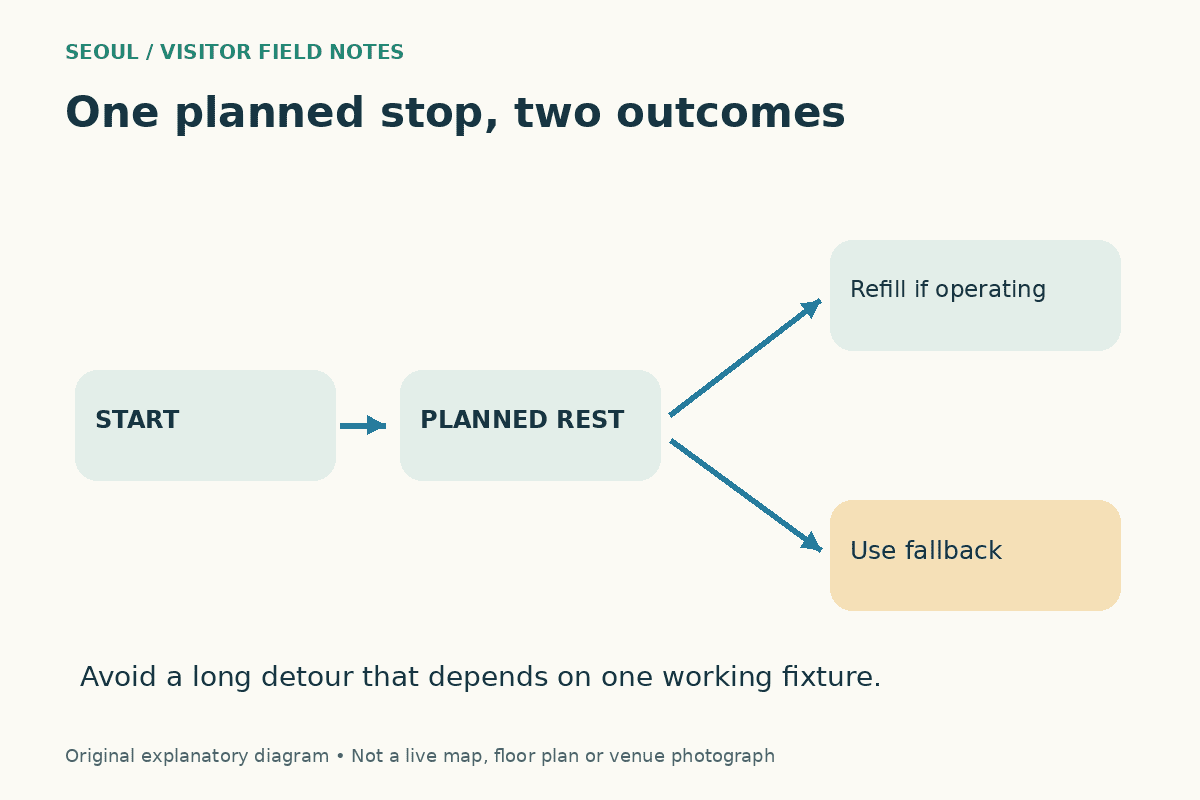
Imagine a morning walk followed by an indoor cultural visit. Fill the bottle at your accommodation where an identified drinking-water source is available. During the walk, check a fountain near a planned rest rather than adding an entirely separate expedition for water. Later, ask at the indoor venue whether there is a visitor drinking-water dispenser and where it is.
This is a planning example, not a claim that every hotel, museum or library supplies public refills. A washroom tap, decorative water feature or maintenance outlet is not the same thing as a labeled visitor drinking-water facility. If no suitable refill is available, keep buying drinking water as a straightforward fallback instead of trying to make the map work at any cost.
For a compact route, identify one likely refill opportunity and one practical fallback before leaving. For a longer outing, review water again before the next substantial outdoor section. This is about making your plan resilient; it is not a prescribed quantity of water or health advice.
Read the label before using the spout
At a fountain, look for a drinking-water designation, a closure notice and the operator’s contact information. If the fixture is visibly damaged, unusually dirty or displaying a warning, choose another source. Report a problem using the contact on the installation rather than assuming a nearby café is responsible.
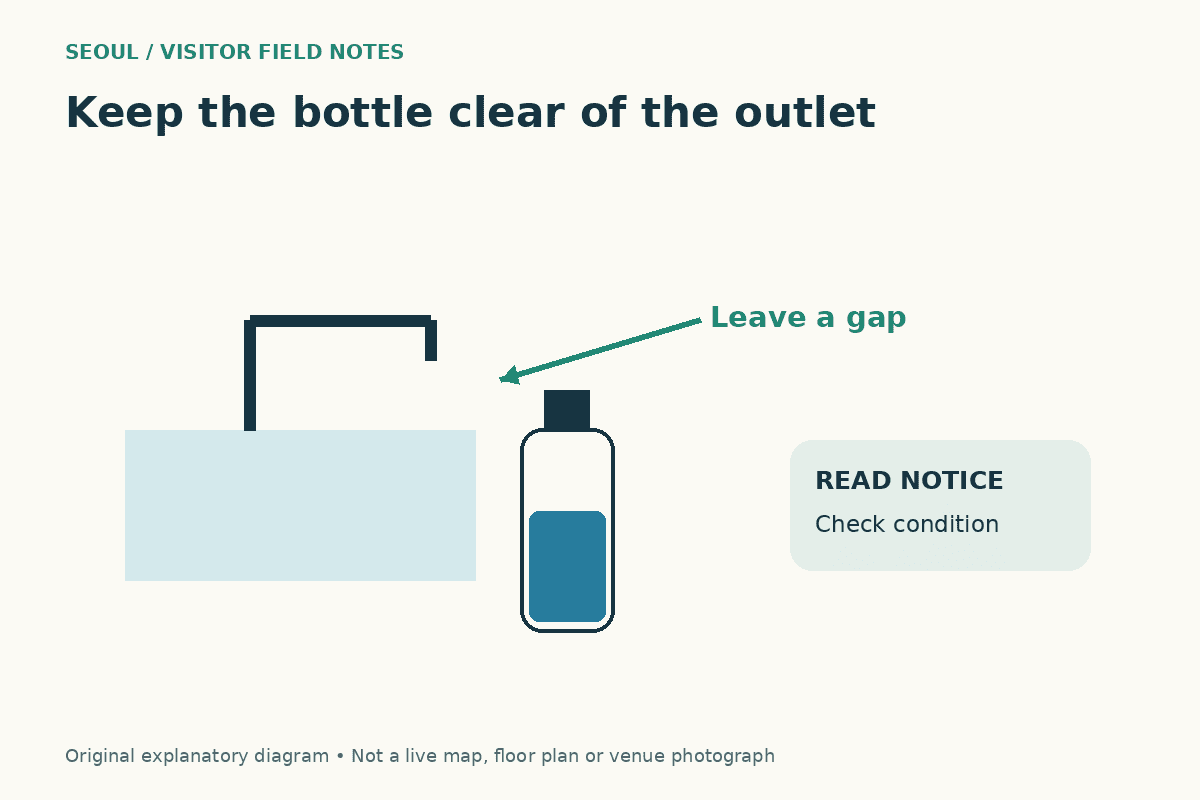
Keep your bottle opening away from the spout, avoid touching the outlet with your mouth and do not wash food or personal items at the drinking point. Leave space for the next person. These small habits make the refill quicker and more considerate, especially when several walkers are sharing one fixture.
Before you leave the park
Check what comes next. A full-looking sightseeing map can hide a long gap between useful facilities, and a colder day does not make that gap disappear. If you are continuing along the river, decide whether to refill or buy water before leaving the area with services.
Our Korea weather-planning guide helps connect the forecast with changes to an outdoor day. Use it alongside the fountain notice: a seasonal operating plan and the conditions on your actual visit answer different questions.
Official information checked November 4, 2026, Korea time. Fountain operation can change locally. Diagrams are original planning illustrations, not live maps or water-quality certifications.