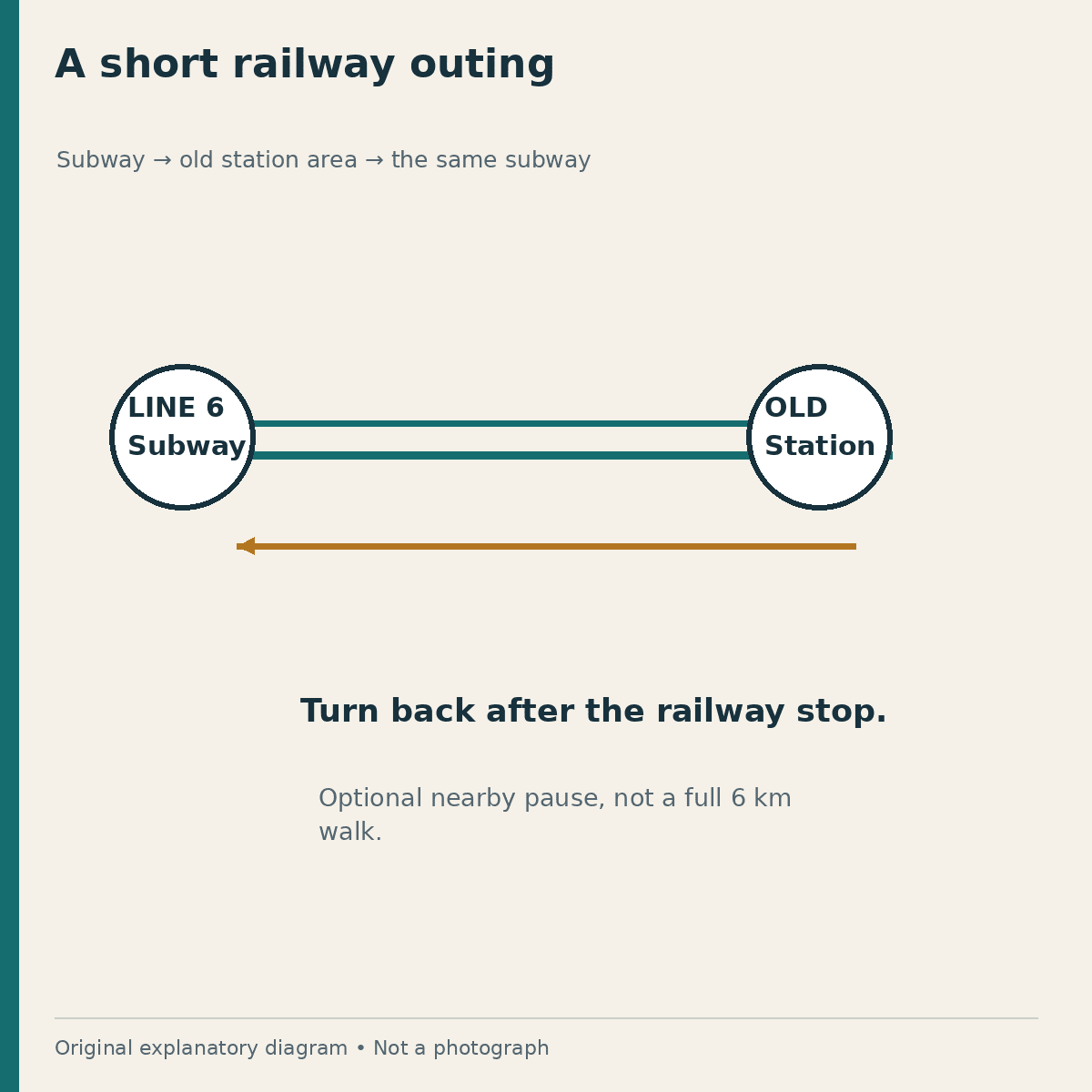
With about two hours to spare in northeast Seoul, make Hwarangdae’s former railway station your destination and return the way you came. This keeps the outing manageable without committing to the whole Gyeongchun Line Forest corridor.
The plan begins and ends at Hwarangdae subway station on Line 6. The main stop is the old station inside Hwarangdae Railroad Park (화랑대 철도공원). Cafés, indoor attractions and evening lighting are optional additions with their own operating conditions.
Save two separate station pins
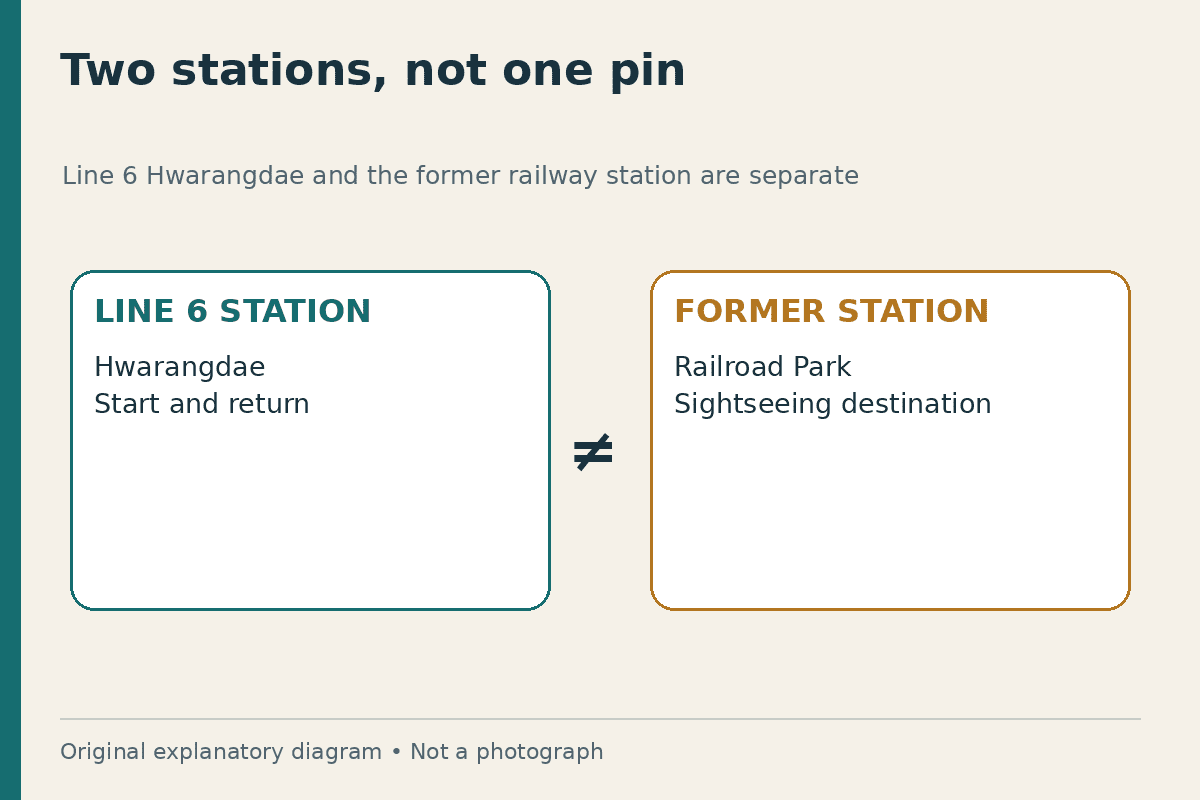
Hwarangdae subway station and the former railway station are different places. Before you leave, save both the subway exit and the park destination so that the return search takes you to the correct one.
The current Visit Seoul park listing, edited October 24, 2026 and checked November 5, gives the address as 608 Hwarang-ro, Nowon-gu. It lists the park about 860 metres from Line 6 Exit 4. Treat that as approach guidance, then follow current pedestrian directions and crossings on your map.
The relevant greenway is Gyeongchun Line Forest (경춘선숲길). A search for Gyeongui Line Forest can send you toward a different Seoul railway park. Checking the Korean name is an easy way to catch that error before boarding the subway.
Reserve the return time before adding stops
The following is an editorial 120-minute planning budget for a daytime, same-station outing. The allowances have not been measured as a fixed walking route and do not certify a step-free journey. Adjust them to your pace, crossing waits and conditions.
| Part of the outing | Time | How to use it |
|---|---|---|
| Subway exit to the old-station area | 25 min | Follow the approach without needing to hurry. |
| Old station and nearby outdoor railway displays | 35 min | Read signs, look around and take photographs where permitted. |
| Optional pause | 20 min | Rest, or make a brief extra stop if it fits. |
| Return toward the same subway station | 25 min | Retrace the approach and check the correct station pin. |
| Unassigned buffer | 15 min | Absorb delays or slower walking. |
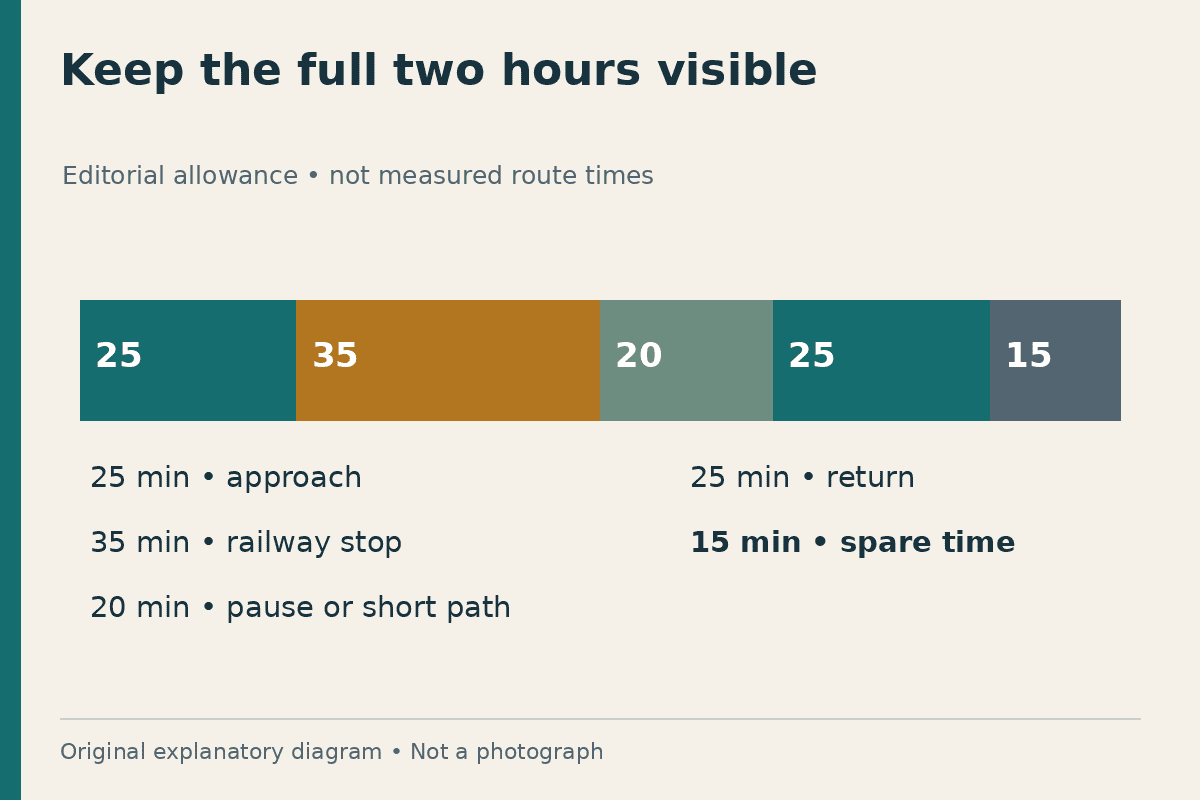
The total is 25 + 35 + 20 + 25 + 15 = 120 minutes. If the approach takes longer, reduce the optional pause first. Keep the return allowance intact. If your group needs frequent rests, the old station alone is enough of a destination.
A July 2024 family visitor account describes missing a café callback while inside another attraction. That is a useful planning warning for a short outing: a queue and an indoor visit can compete for the same free time. Choose one optional activity rather than assuming both will fit.
What to look for at the old station
Seoul’s official Gyeongchun Line Forest introduction describes a six-kilometre corridor arranged in three sections along the former railway. Its rail history spans 1939–2010, and the station’s earlier name, Taereung, changed to Hwarangdae in 1958.
At the old station, start with the station sign and information boards, then explore the outdoor railway displays. Vehicles displayed in a railway park can have different origins, so read each vehicle’s label rather than assuming every one worked on this stretch of line.
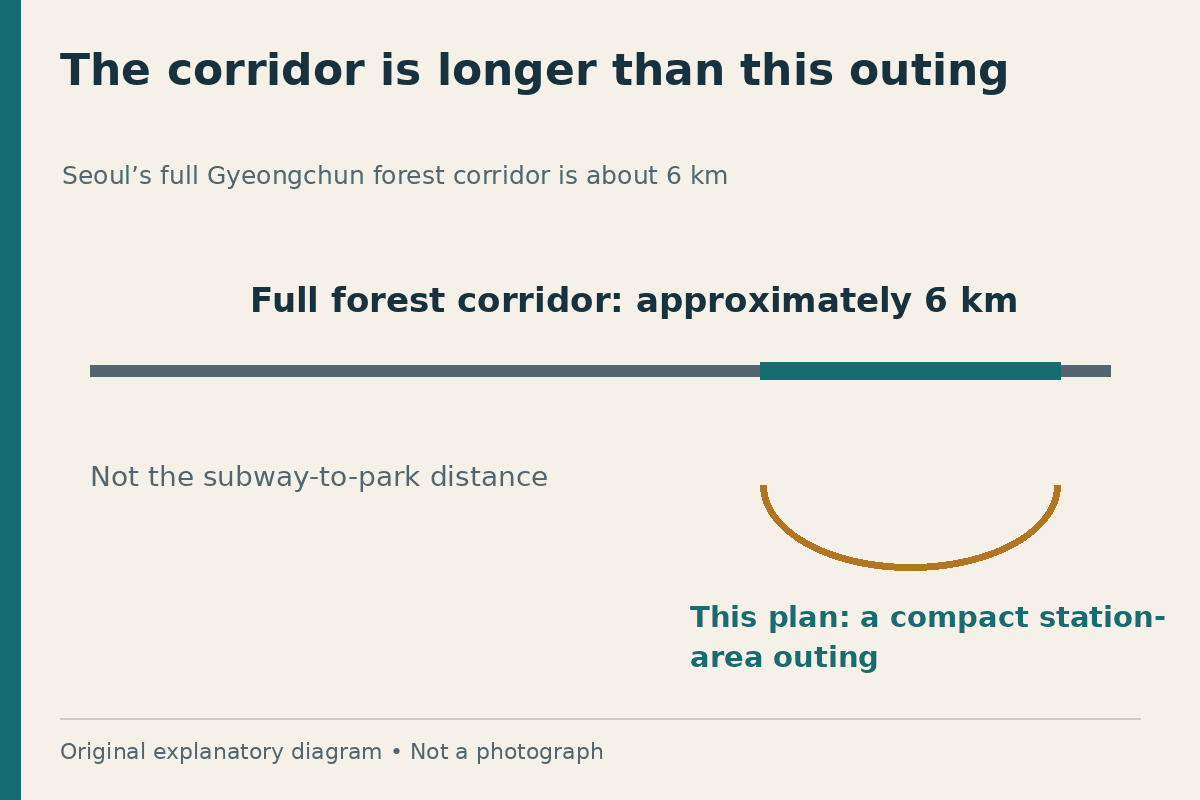
The full six-kilometre corridor is background to this short visit, not its promised walking distance. Once you have explored the old-station area, use it as your turnaround point. Extending farther along the greenway changes the distance and may call for a different exit station and a new time budget.
For photographs, keep routes clear and follow barriers around the tracks and vehicles. Preserved railway features are displays with their own access rules. A view from an older visitor post does not establish current permission to climb aboard.
Check café and attraction hours separately
Visit Seoul lists the outdoor park as open 24 hours, year-round. That does not establish the hours of cafés, galleries, vehicle interiors or other attractions. Check an individual venue’s current notice if entering it is essential to your plan.
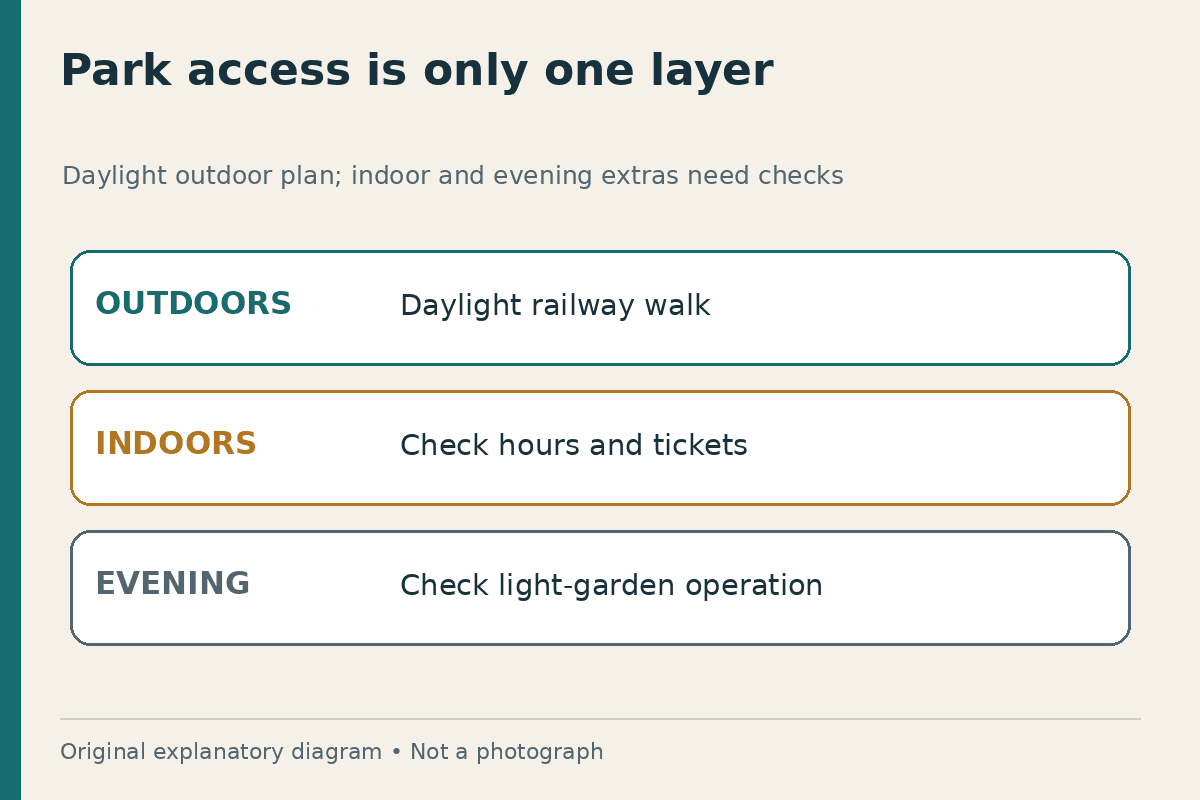
This route is designed for daylight. An evening-lighting visit needs a separate check of the current programme, lighting times and return transport. Do not wait indefinitely for an attraction to start merely because the outdoor grounds remain accessible.
The two-hour budget also excludes travel from your accommodation, subway fares, food and any optional paid attraction. Set aside money for those separately, and confirm an admission price before joining a queue. None of the optional purchases is needed to complete the outdoor station visit.
Shorten the outing while the return is still easy
Check the weather before leaving, using the flexible-day forecast guide if you need help turning the forecast into a decision. Rain, heat, cold or fatigue can make the same distance take longer.
If conditions deteriorate, skip the extra stop and head back along the saved approach. Do not count on a café or indoor attraction being open as a guaranteed shelter. For a mobility-sensitive visit, confirm the current path and access details rather than treating the distance estimate as an accessibility assessment.
Before you put the phone away, check three saved items: the park pin, the subway return pin and your intended departure time from the old-station area. With those saved, you can explore the station area and still leave enough time to catch your return train.