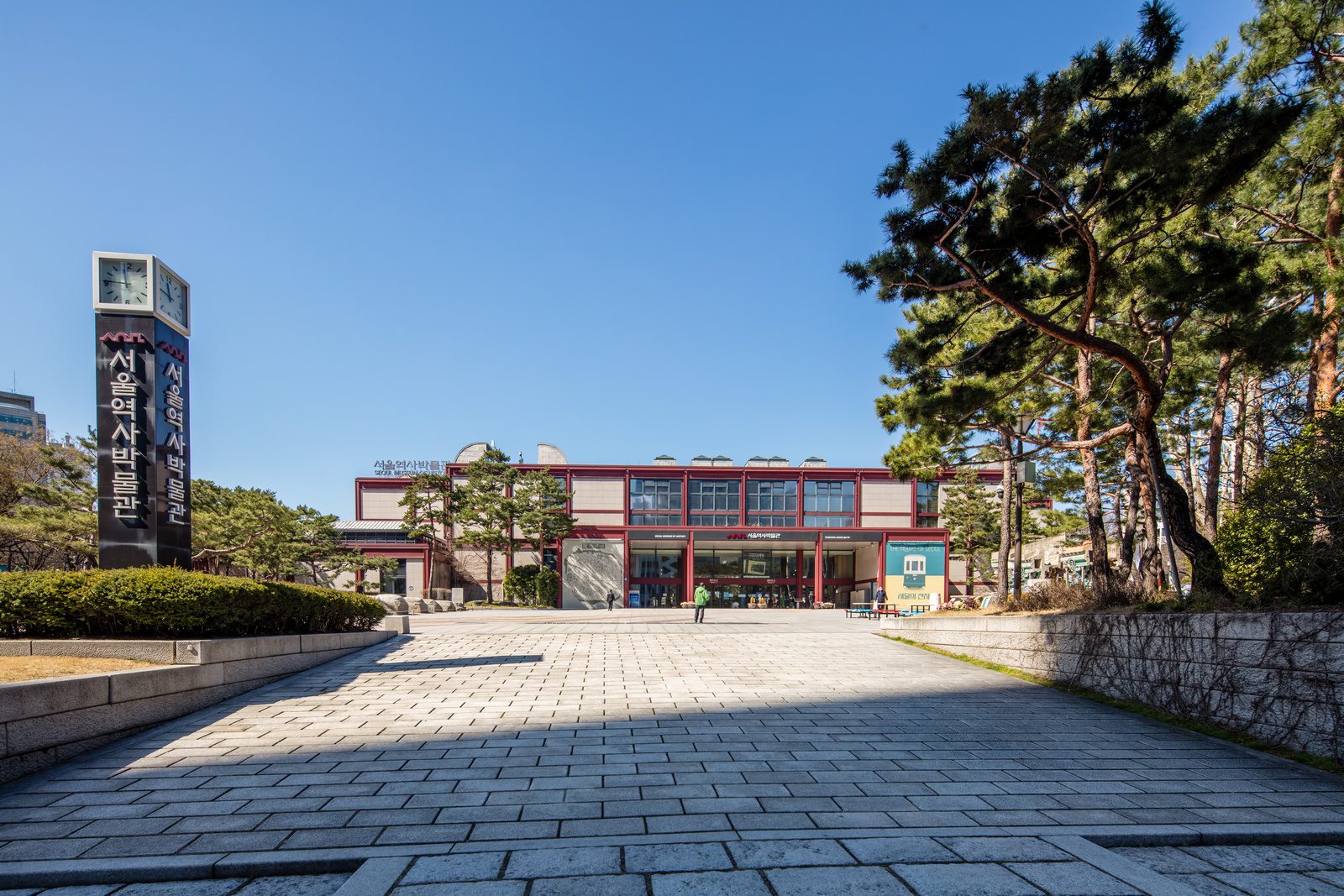
A palace itinerary tells you where rulers lived. Seoul Museum of History helps you frame a different question: how did the surrounding city become the Seoul you are moving through today? Choose it when you want context for neighborhoods, streets, and everyday urban life rather than another checklist of major national treasures. For Korean map searches, use 서울역사박물관.
This is also a useful place to slow an overpacked sightseeing day. Instead of adding a museum after everything else, give it a defined purpose: answer one or two questions about the city, then return outside with a better sense of what you are seeing.
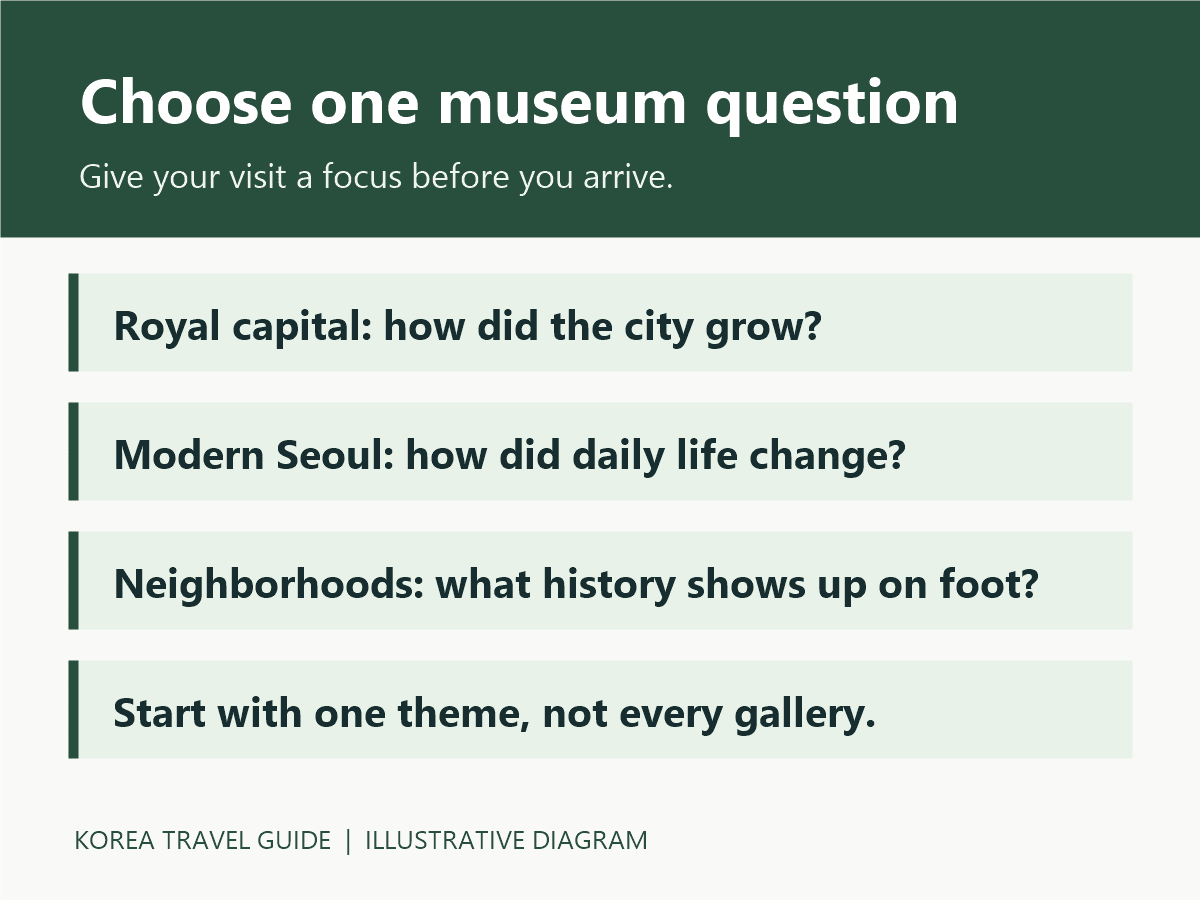
Choose your question before choosing your route
For a first visit, try one of three approaches. A palace-focused traveler can look for the relationship between the capital and its royal center. Someone interested in modern Seoul can concentrate on how urban life changed. A repeat visitor can follow a particular neighborhood or period that has become more interesting through walking around the city.
Those are viewing strategies, not promises of a particular temporary display. Check the exhibition information on arrival and adapt to what is open. You do not need to read every label to get value from a history museum; a small number of connected observations can be more memorable than an exhausted attempt to cover everything.
If you are also considering a palace day, use our Changdeokgung Palace guide for that separate visit. Do not assume a museum ticket, tour arrangement, or opening day carries over to a palace.
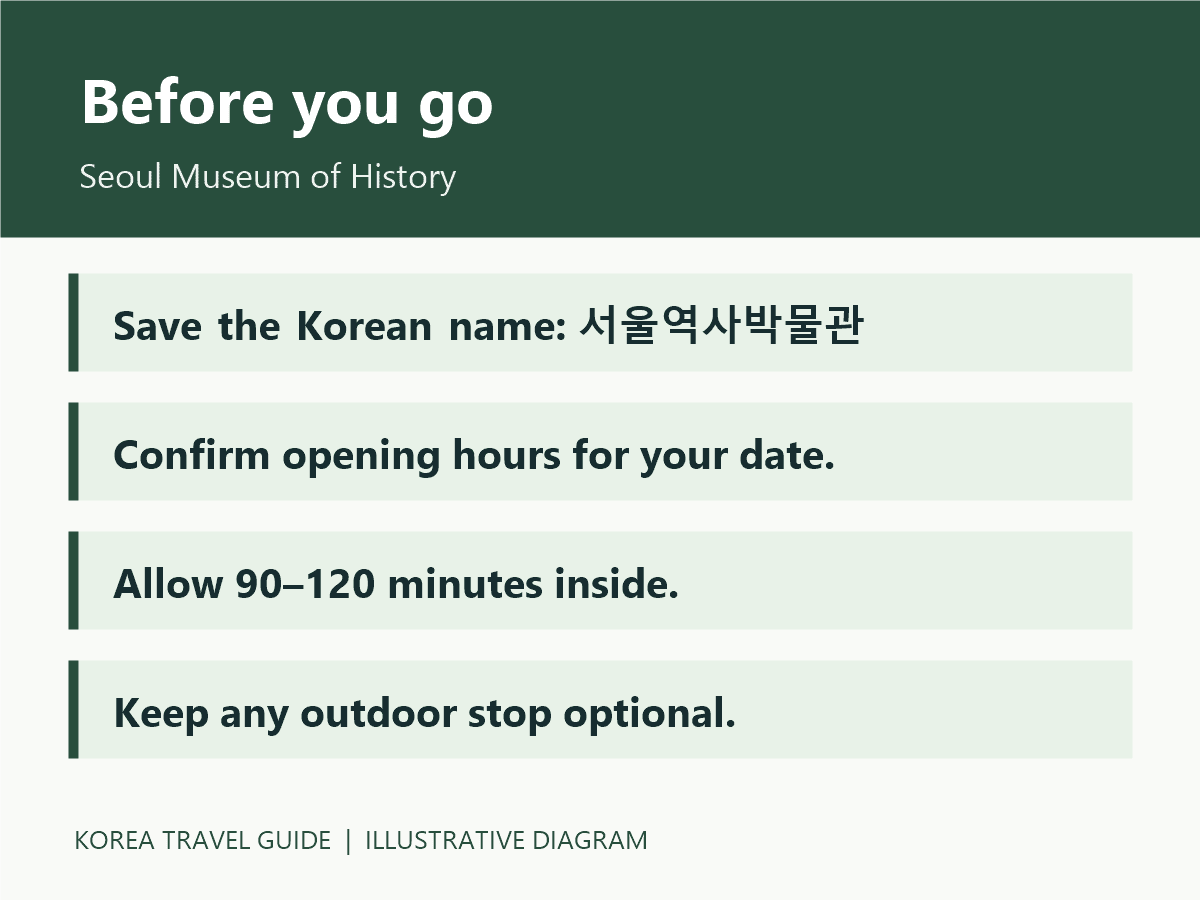
Make this a daytime appointment
The museum is at 55 Saemunan-ro, Jongno-gu. General admission is free, and the official English page lists Monday and January 1 closures. Confirm your exact date if a public holiday falls on a Monday. It also describes lockers, stroller and wheelchair availability, and an English audio guide. Consult the museum’s visitor information before leaving.
Do not rely on an evening extension without checking the current notice. The museum’s English and Korean visitor pages have displayed different schedules. A daytime visit is the more dependable planning choice; if your itinerary depends on late admission, confirm it directly with the museum for that date rather than borrowing a closing time from an older travel article.
As a suggested budget, allow 90–120 minutes inside, with extra time for your approach and any outdoor stop afterward. A two-hour block should not be interpreted as two hours available after arriving at the subway station. If your schedule is tight, protect a shorter focused visit rather than turning the last galleries into a race toward the exit.
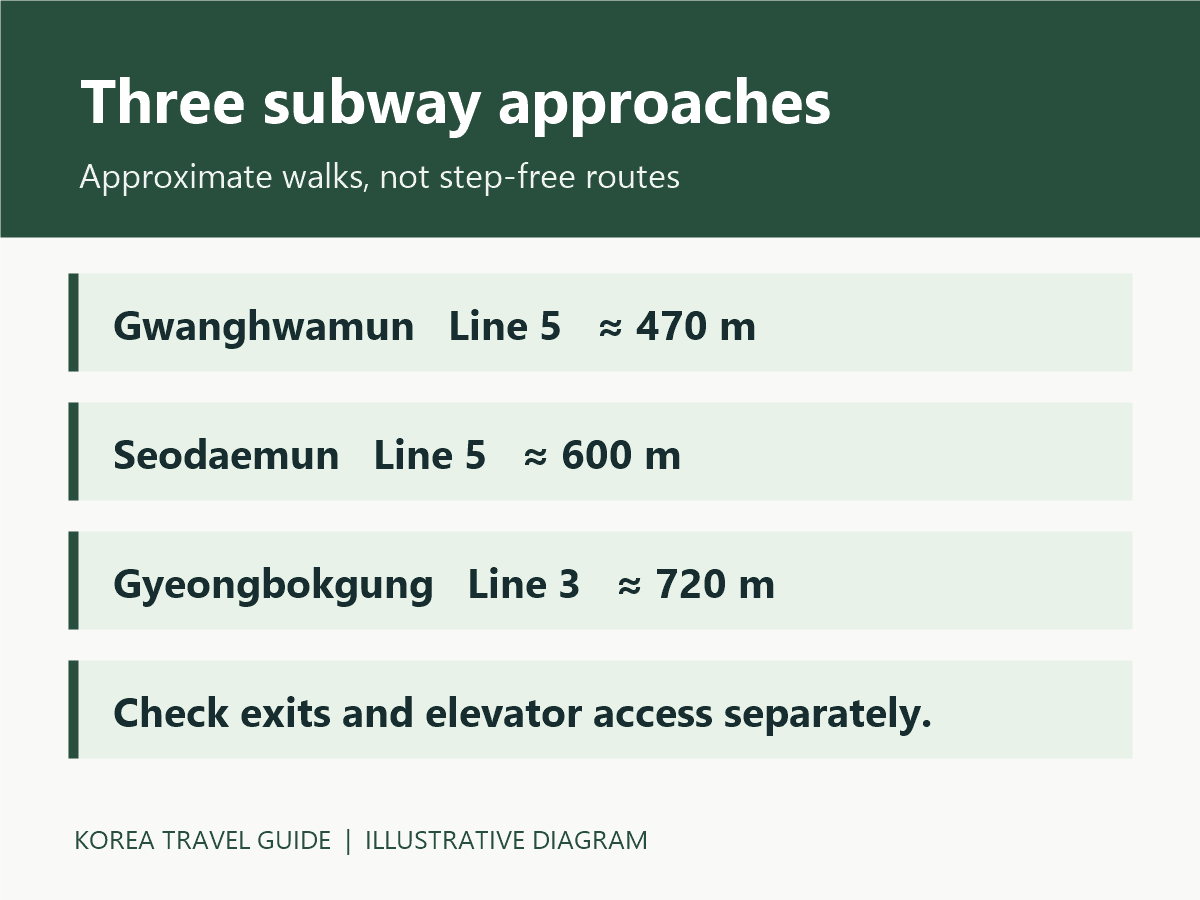
Three subway approaches, one practical choice
The museum’s official subway directions list Gwanghwamun Station on Line 5, exits 6, 7, or 8, at about 470 meters; Seodaemun Station on Line 5, exit 4, at about 600 meters; and Gyeongbokgung Station on Line 3, exit 7, at about 720 meters. The corresponding walking estimates are roughly seven, eight, and ten minutes.
Choose the approach that reduces transfers from your starting point, not automatically the one with the shortest final walk. A slightly longer outdoor section may be simpler than changing trains solely to save a few hundred meters. Conversely, rain or difficulty walking may make that final distance more important than the rail portion.
Those station estimates are not accessibility certifications. If stairs are a problem, check elevator access and the full street route separately. Allow time to find the correct entrance and orient yourself once inside, especially if someone in your group wants to borrow equipment or use an audio guide.
Keep the next stop optional
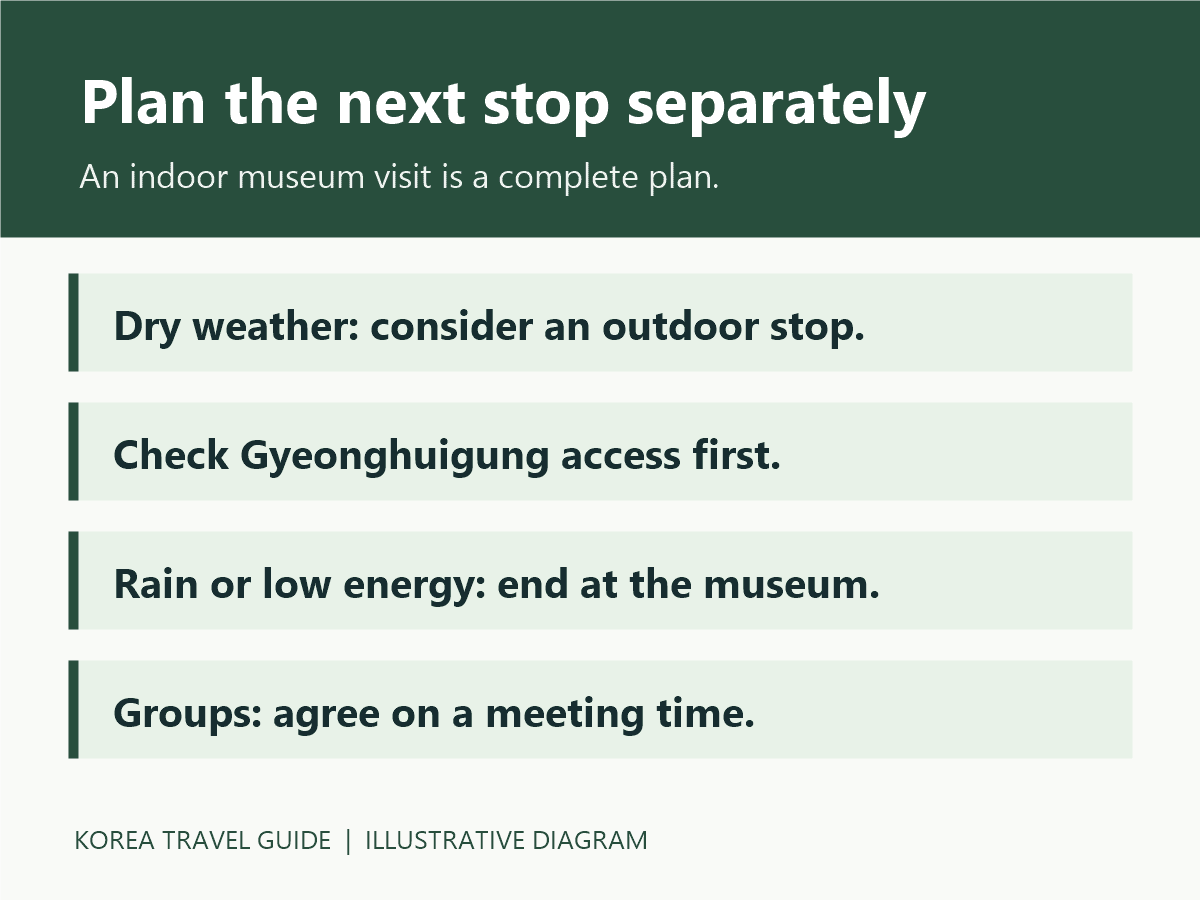
A nearby outdoor heritage stop can give the indoor visit a satisfying second act, but it should remain a separate decision. Check current access to Gyeonghuigung before treating it as a guaranteed addition. In wet weather, finishing at the museum can be a complete plan without forcing another outdoor destination into the afternoon.
For a group with mixed interests, agree on a meeting time and one theme each person would like to follow. That creates room for different reading speeds. Avoid promising a guided tour on the assumption that ordinary admission includes one; ask about language and availability if a tour is important to your visit.
When this museum earns its place
Put Seoul Museum of History early in your trip if the city’s development is a subject you want to understand. Put it later if your walks have already generated questions you would like to investigate. In either case, the practical next step is the same: choose a daytime opening, save the correct subway approach, and arrive with a question rather than a requirement to see everything.