Before leaving a Seoul guesthouse or apartment-style stay, ask your host where to leave general rubbish, food scraps and recyclables. Do this the evening before checkout, rather than carrying a mixed bag downstairs when your airport transport is waiting.
Read Seoul’s official living guide for background on waste categories. Your accommodation’s instructions and the current district guidance are the next checks for your actual stay.
Get four answers, not just “separate the rubbish”
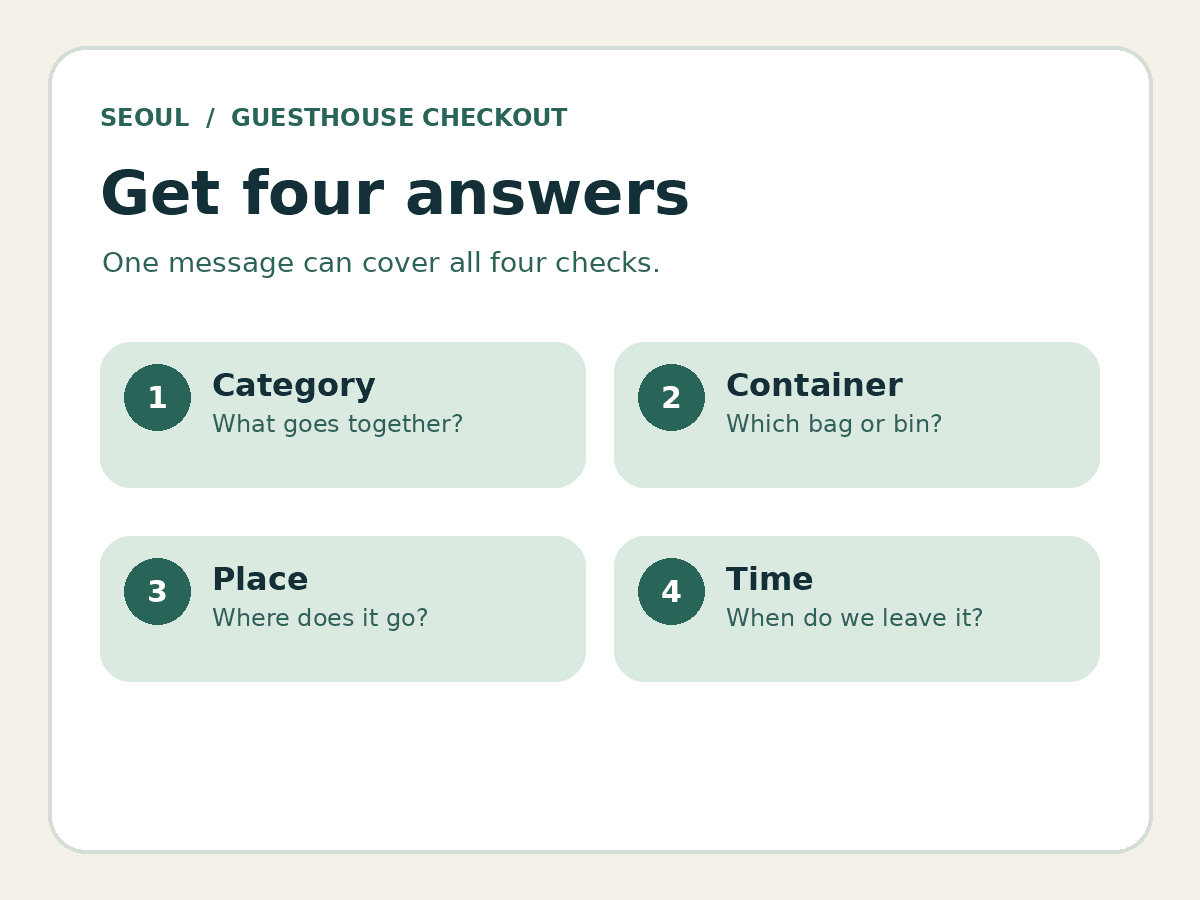
A short message can prevent several last-minute questions:
Before we check out tomorrow, could you show us which bags or containers to use for general rubbish, food scraps and recycling? Where should we leave them, and when?
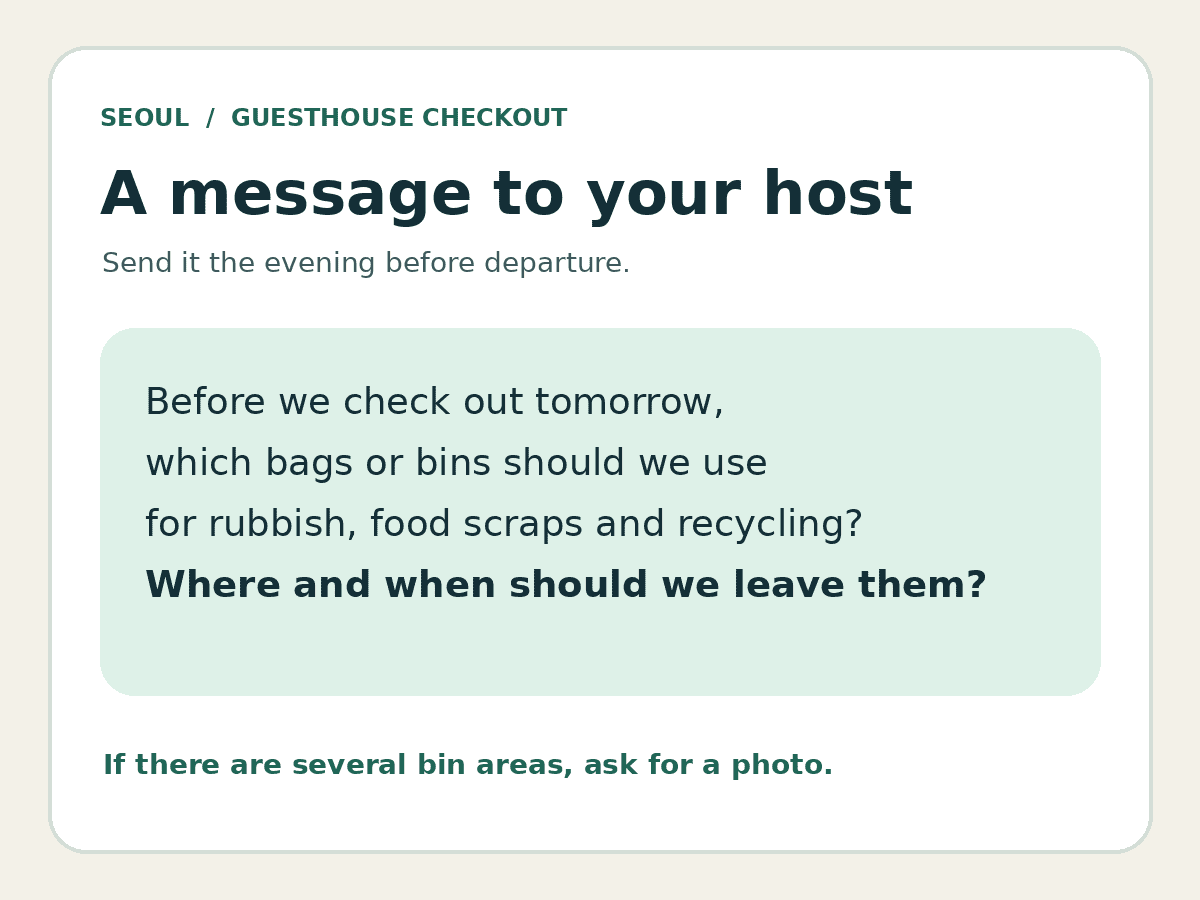
Ask for a photograph of the correct collection point if the building has several doors or bin areas. An address identifies the accommodation; it does not necessarily identify its rubbish collection point.
- Category: Which items go together?
- Container: Which supplied bag, bin or machine should you use?
- Place: Inside the room, a shared collection area or somewhere else?
- Time: Before checkout, or left for the host to handle?
Do not assume a shopping bag is the disposal bag
Seoul’s 2024 living guide distinguishes general waste, food waste and recycling. It describes designated bags and containers, notes that standard waste bags can be bought at supermarkets or convenience stores, and says prices and collection arrangements vary by district. This is background, not a citywide instruction to buy a particular bag or put it outside at a particular hour.
If your host has supplied bags, ask what each is for. If none are visible, ask whether you need to obtain one or whether staff handle the waste after checkout. Buying first and asking later can leave you with an unnecessary pack or the wrong arrangement for the building.
Food scraps are not every object left after a meal
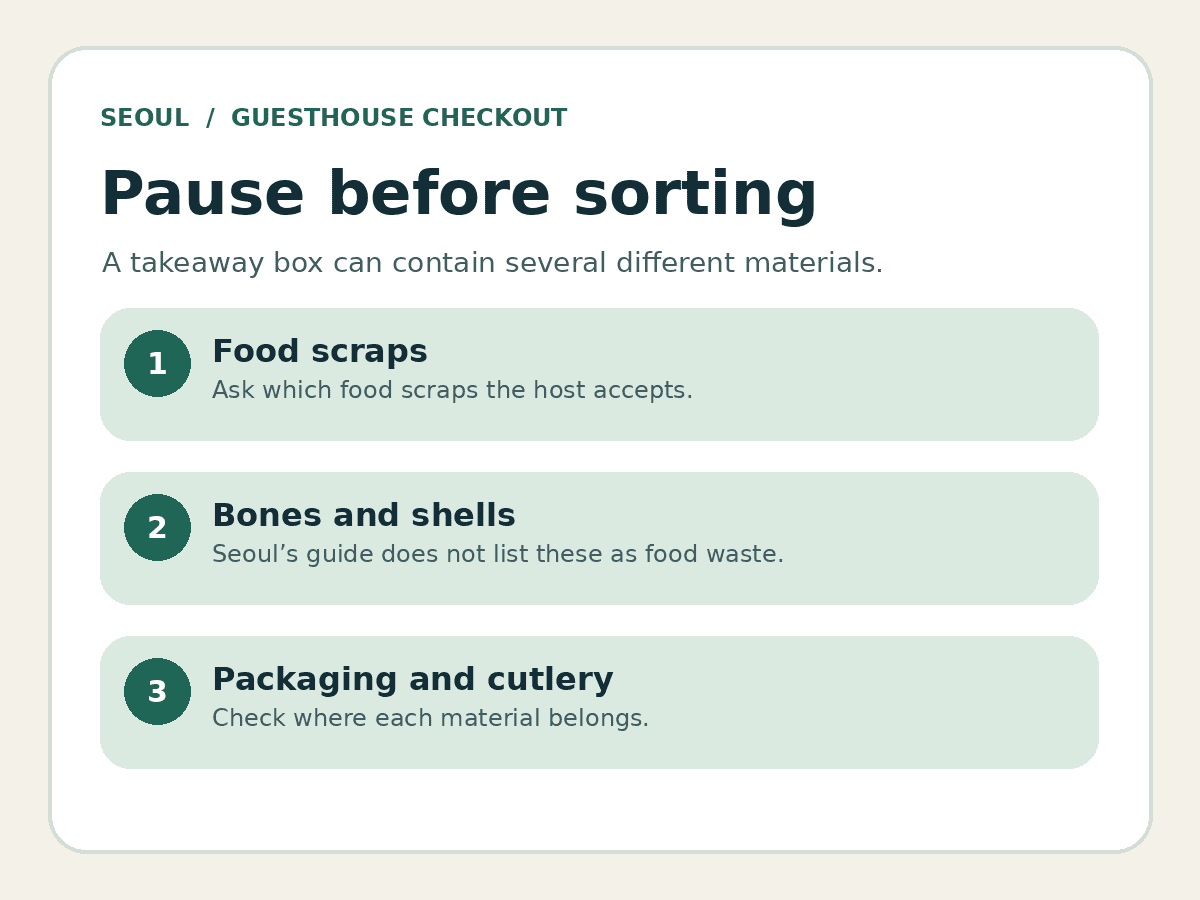
The city guide lists animal bones and shellfish shells among items that do not belong in food waste. Do not empty an entire takeaway container into a food-waste bin with its packaging, cutlery and bones still inside. Check uncertain items with your host or the current district sorting guide.
For an ordinary visitor, a photograph of one questionable item is often a clearer question than a long translated description. Keep the photograph focused on the item, without including other guests or private documents.
Make a morning plan that does not depend on guessing
Here is a planning example, not a collection timetable: the evening before an early departure, separate what you can, confirm the bags and ask where the remaining breakfast waste should go. In the morning, follow that agreed arrangement. Do not copy a pile outside another building or assume that an open container belongs to your accommodation.
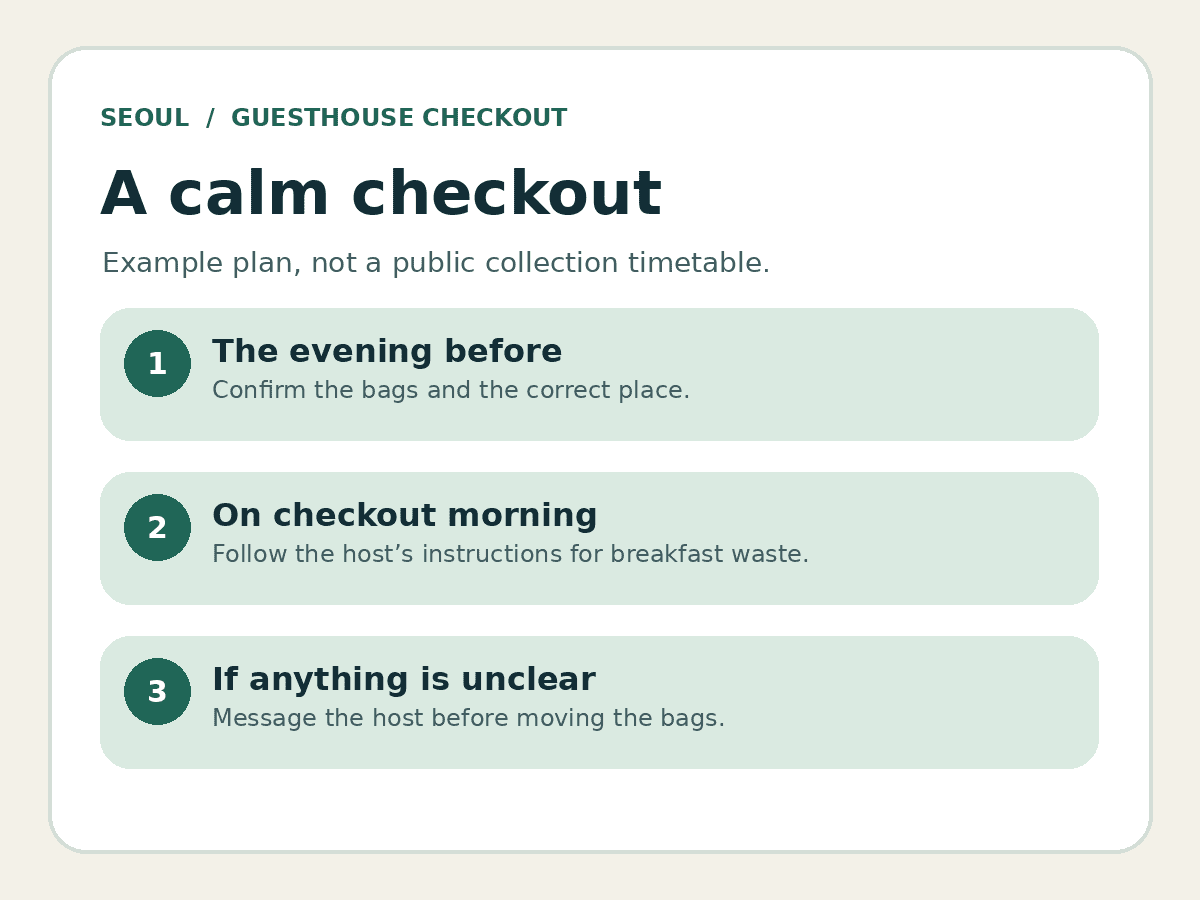
If instructions are unclear, contact the host before moving the bags. Do not leave them in a corridor, doorway or unconfirmed outdoor spot simply because you have seen bags there before.
Leaving for Incheon Airport after checkout? Confirm your departure terminal before arranging the ride.
The useful checkout question is not “Does Seoul recycle?” It is “What should I do with these items in this building before I leave?” Four specific answers are easier to act on than a general rule.
Background source: Seoul Metropolitan Government, 2024 Guidebook for Living in Seoul, residence section, waste and recycling. Reviewed November 19, 2026, Korea time. This article does not verify a particular accommodation’s current collection schedule.