When you look at Seoul’s city wall, it is easy to see a line of stone and miss the system behind it: gates, inspections, repairs and rules about moving through the capital. The Seoul City Wall Museum—한양도성박물관, also called the Hanyangdoseong Museum—is a useful place to investigate that working life before deciding whether to walk farther.
This guide focuses on interpreting the museum, not completing the wall circuit. It is based on official exhibition descriptions and published visitor research, not a claimed personal visit. The diagrams are explanatory and do not reproduce actual masonry or a museum floor plan.
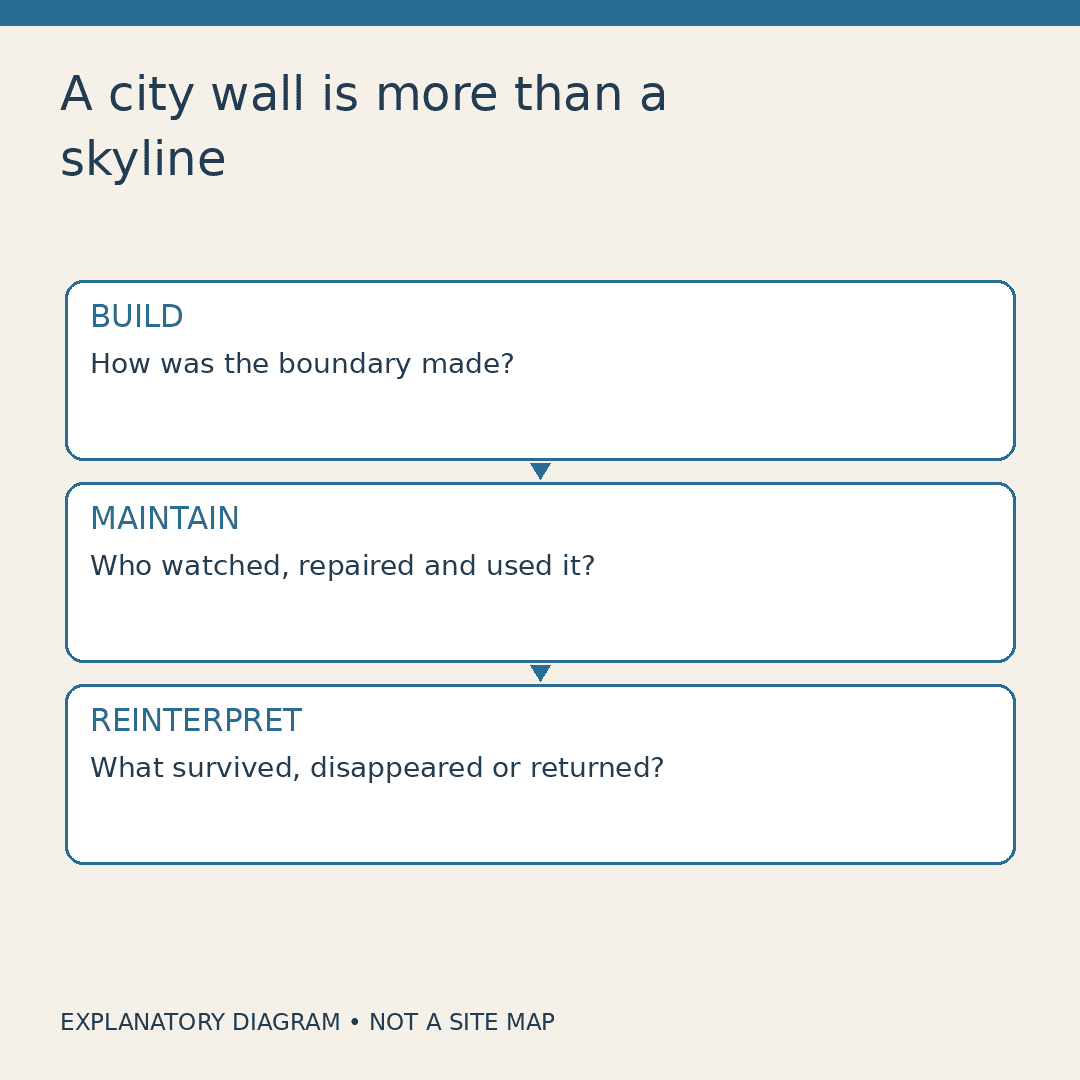
Start with the difference between a thing and an explanation
A surviving stone, a historical picture and a modern reconstruction are not the same kind of evidence. Before collecting photographs, choose one question: what can this exhibit tell me about how the wall operated? Read the caption for its date and context, then separate what is physically present from what the museum is explaining.
The museum’s opening exhibition section places the wall’s construction in 1396 and presents it as a boundary of the Joseon capital. That gives you a starting date for the system, not a date to assign automatically to every stone you see outside today.
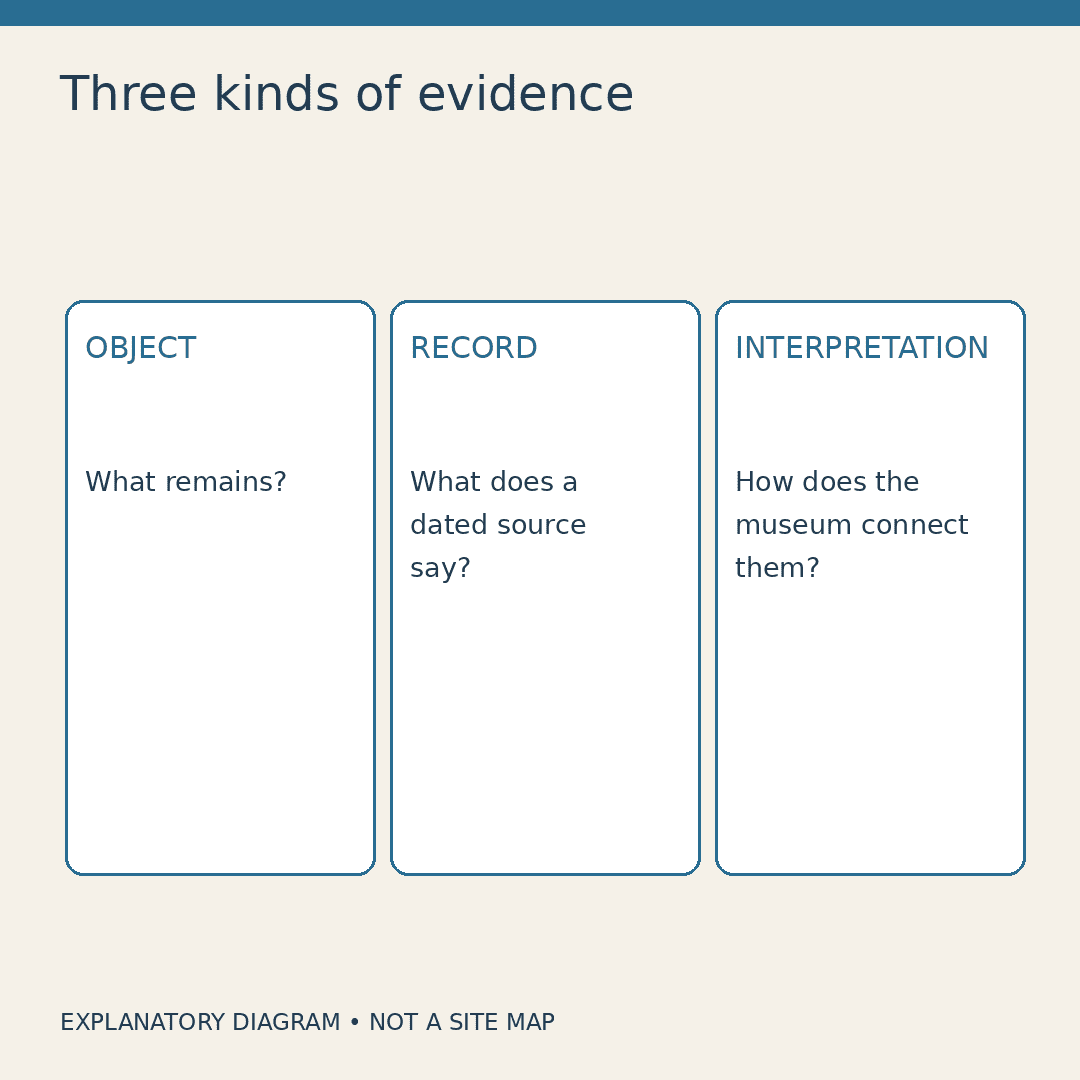
Follow the wall’s working life
In the construction and management section, the story extends beyond building a defensive barrier. The museum explains recurring repair, inspection paths and the influence of gate-opening times on residents’ daily lives. It also describes how responsibility for defending wall sections was allocated under a later system.
Use that account to ask a less obvious question than “How long was the wall?” Who had to notice a fault? Who needed to pass through a gate? What could a closing time mean for a person arriving from elsewhere? You do not need to supply imagined answers. Look for the records and explanations that support them, and leave unanswered questions open.
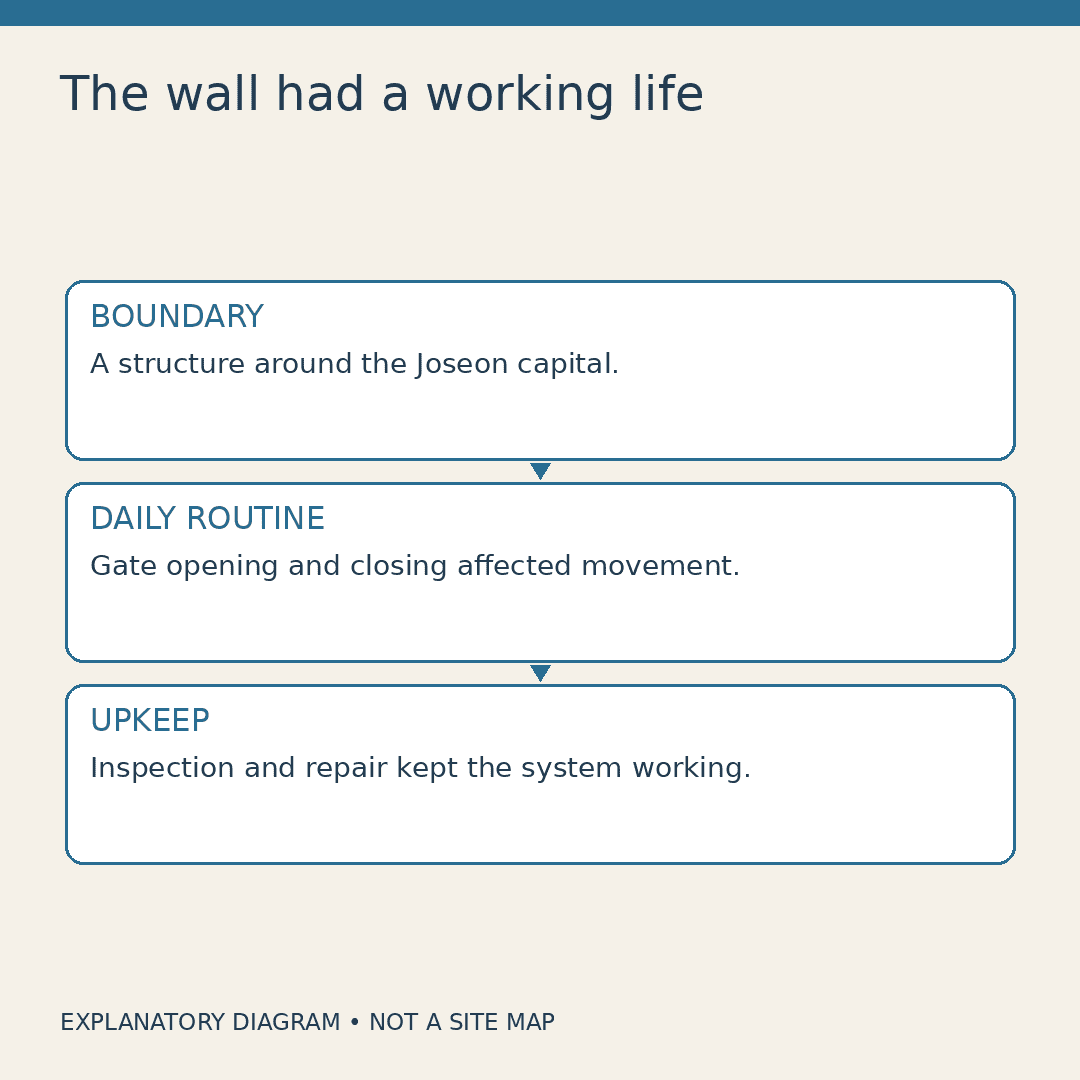
This approach also suits companions with different interests. One person can notice construction details while another follows movement and daily routines. Comparing those observations makes the same gallery useful without requiring everybody to memorize the same chronology.
Read damage and restoration as part of the history
The museum’s damage and rebirth section discusses urban expansion, new transport and destruction during Japanese colonial rule. Its account also considers later conservation and acknowledges that restoration itself can affect authenticity. A neat-looking reconstruction is therefore not simply the opposite of a historically interesting ruin.
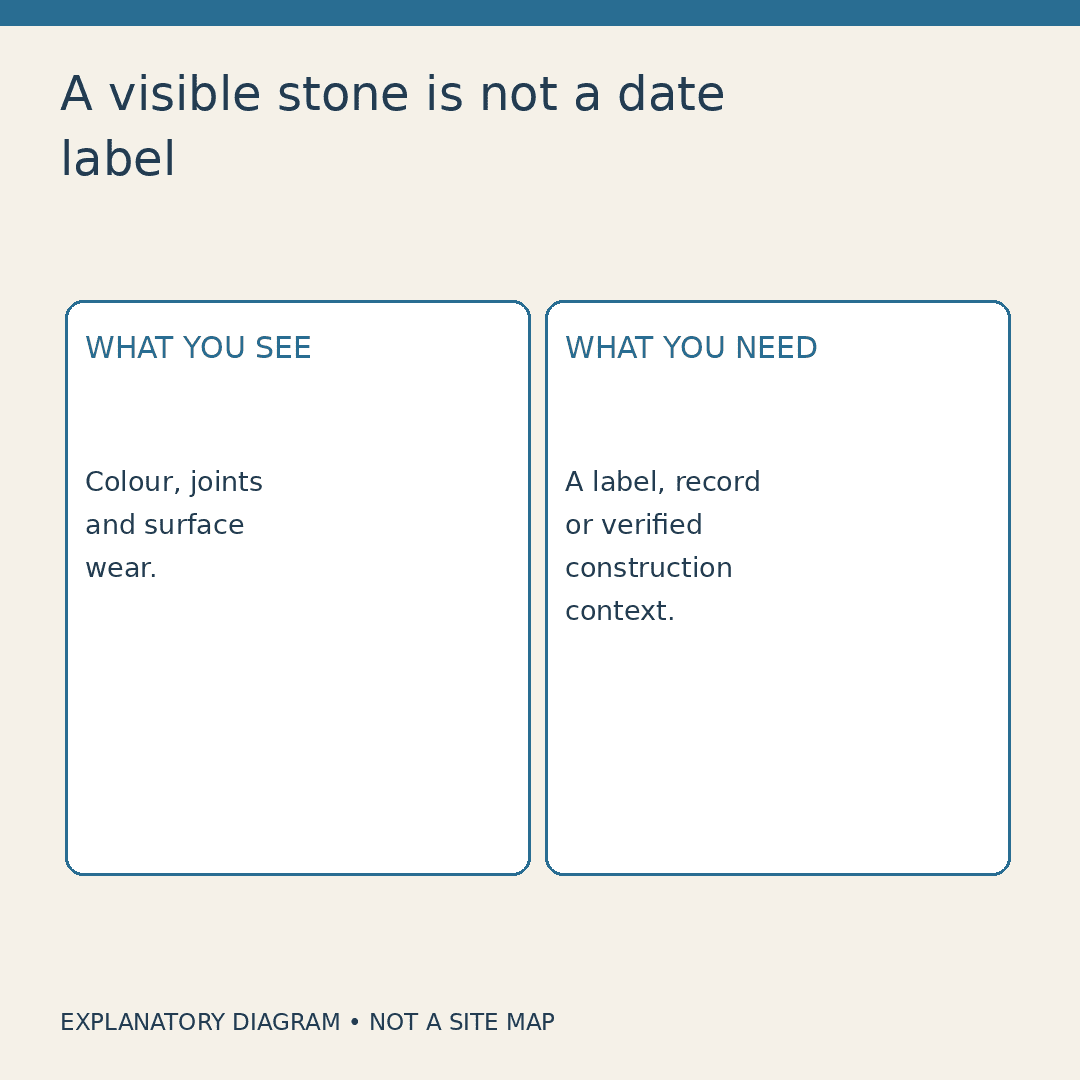
When a display contrasts an older image with a later condition, check whether it is discussing the same location and the same part of the structure. A useful note has three parts: what changed, what evidence shows the change, and what remains uncertain. This is a way to read the display critically, not a request to identify masonry dates without specialist evidence.
Find the correct museum and leave enough viewing time
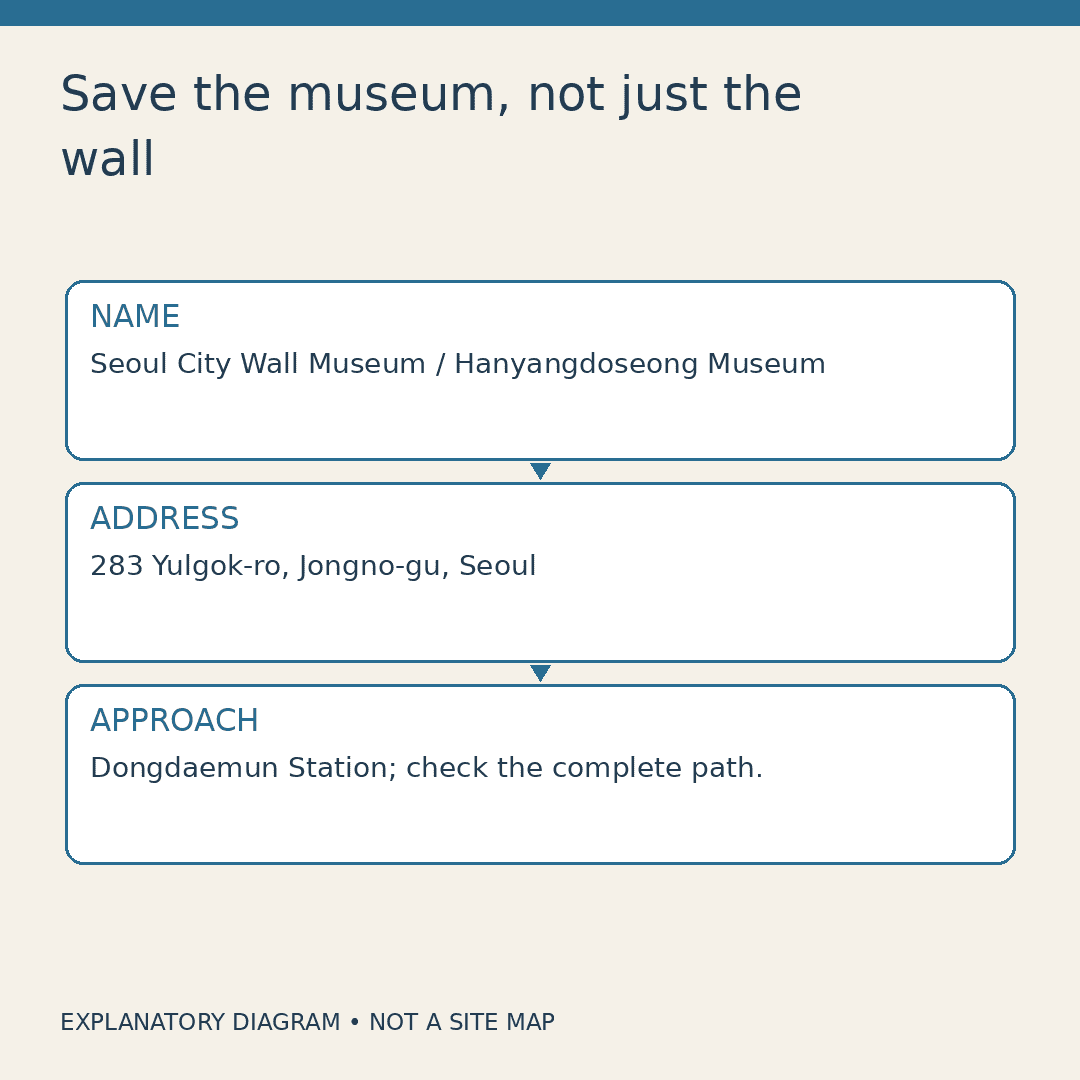
The museum’s official directions place it at 283 Yulgok-ro, Jongno-gu, Seoul, on floors 1–3. They identify Dongdaemun Station on Lines 1 and 4, exits 1 or 10, as approaches. Check the complete pedestrian route and accessibility you need; an exit number alone is not a step-free route guarantee.
Do not substitute the Namsan City Wall Historic Site Museum or a generic “Seoul history museum” result. Save 한양도성박물관 together with the street address. The aim is to reach the institution whose exhibitions you have planned to see.
The current museum visitor page lists free admission, 09:00–18:00 opening and 17:30 last entry, with closures on Mondays and January 1. Some older institutional listings show different evening hours; use the museum’s own current visitor information and date-specific notices rather than building a late visit around the longest time you find.
As an editorial allowance, keep roughly an hour available if you want to read carefully, plus your approach and departure time. This is not an official tour duration. Shorten the number of displays rather than rushing through all of them, and follow restrictions on touching, food and photography.
Carry one question outside—or finish indoors
If conditions suit an outdoor continuation, our Naksan wall-walk guide deals with route endpoints, terrain and the journey back. It is a separate walking plan, not an obligation after the museum. Rain, tired legs or limited daylight can make an indoor-only visit the better choice.
Outside, look for one interpreted detail that connects with your museum notes. Do not climb the wall or approach a closed section to improve the view. The point of the museum is not to make you an instant dating expert: it is to turn an attractive boundary into a more understandable part of a lived-in city.
Official information checked 3 November 2026, Korea time. Hours and access can change. Reading prompts and the approximate viewing allowance are editorial suggestions.
1 thought on “Seoul City Wall Museum: Read the Repairs Before Walking the Wall”