A short reading stop can add something to a Seoul trip that another landmark cannot: time to compare how Korea is described from the outside with how a Korean writer tells a story. Seoul Library’s fourth-floor Global Room gives that idea a practical home through its Korea Collections.
This is a public reading room, not a bookshop or a guaranteed place to borrow a souvenir for your flight. Plan to read on site, choose a manageable question and leave the room as quietly as you found it.
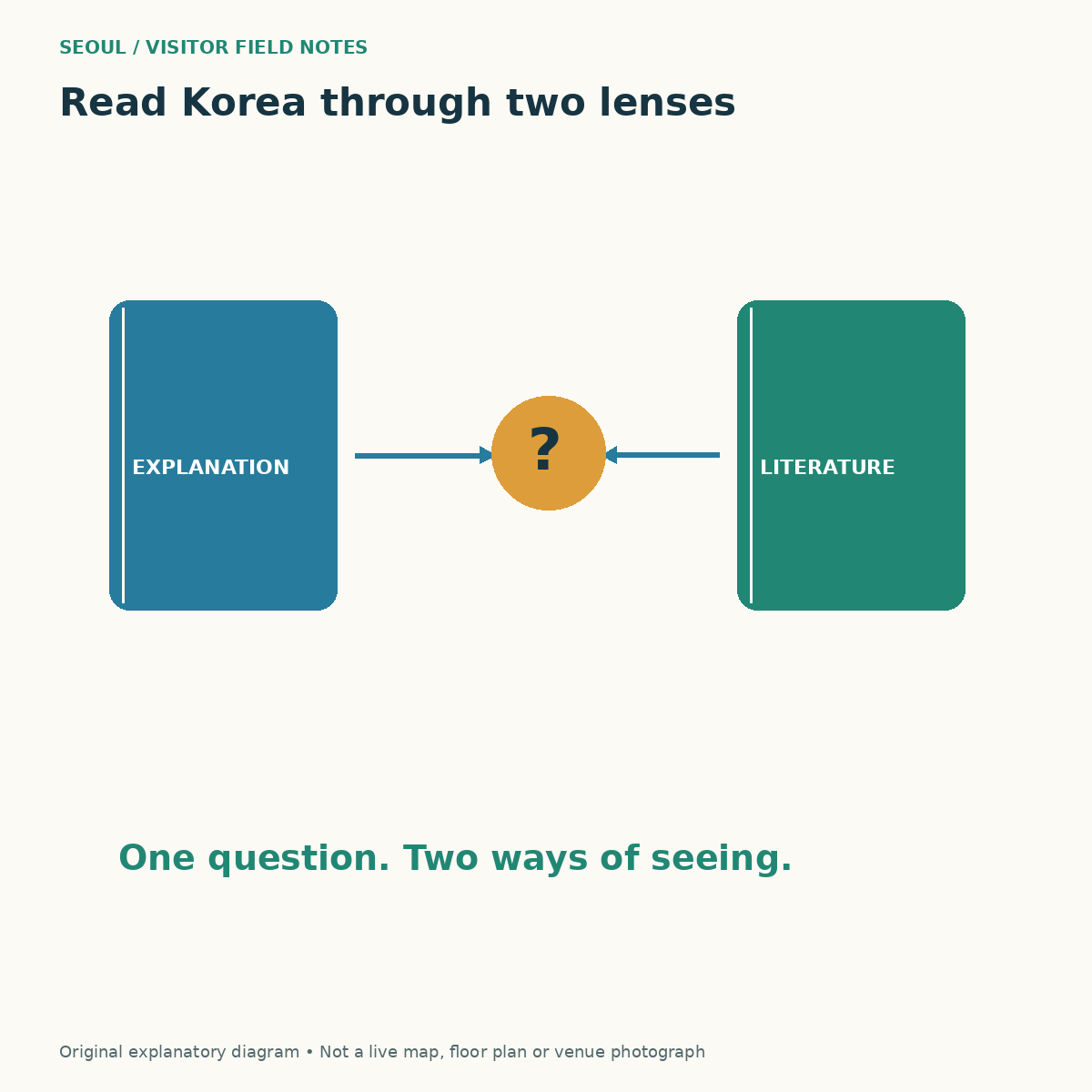
Begin with a question from your trip
Choose something specific rather than trying to “understand Korea” in an hour. Perhaps you have noticed the contrast between apartment towers and older neighborhoods, encountered a historical name repeatedly or become curious about family relationships in a novel. A narrow question makes browsing more rewarding and makes it easier to ask a librarian for help.
The Global Room’s official collection guide describes foreign-language books about Korea alongside translations of Korean writers. The wider room holds books in many languages, including English-language material. That description establishes the collection’s purpose, not the availability of a particular title on a particular afternoon.
Look for a short chapter or section relevant to your question. Note its publication date and the scope of its subject. A book describing an earlier period may be valuable history without being a reliable guide to today’s prices, transport or opening hours.
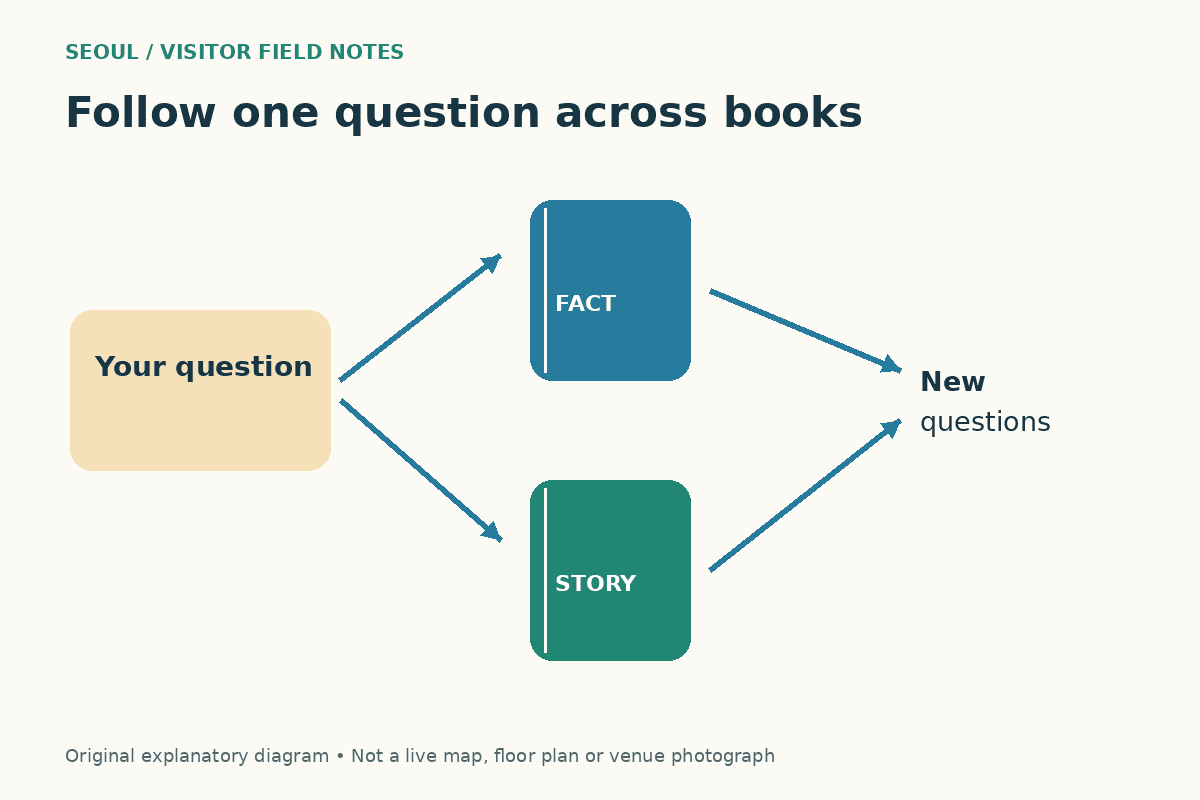
Pair explanation with a translated story
Next, try a Korean novel, essay or other literary work in a language you read comfortably. The aim is not to make fiction prove a general statement about the country. Instead, notice a voice, a setting or a relationship that differs from the explanatory book you just opened.
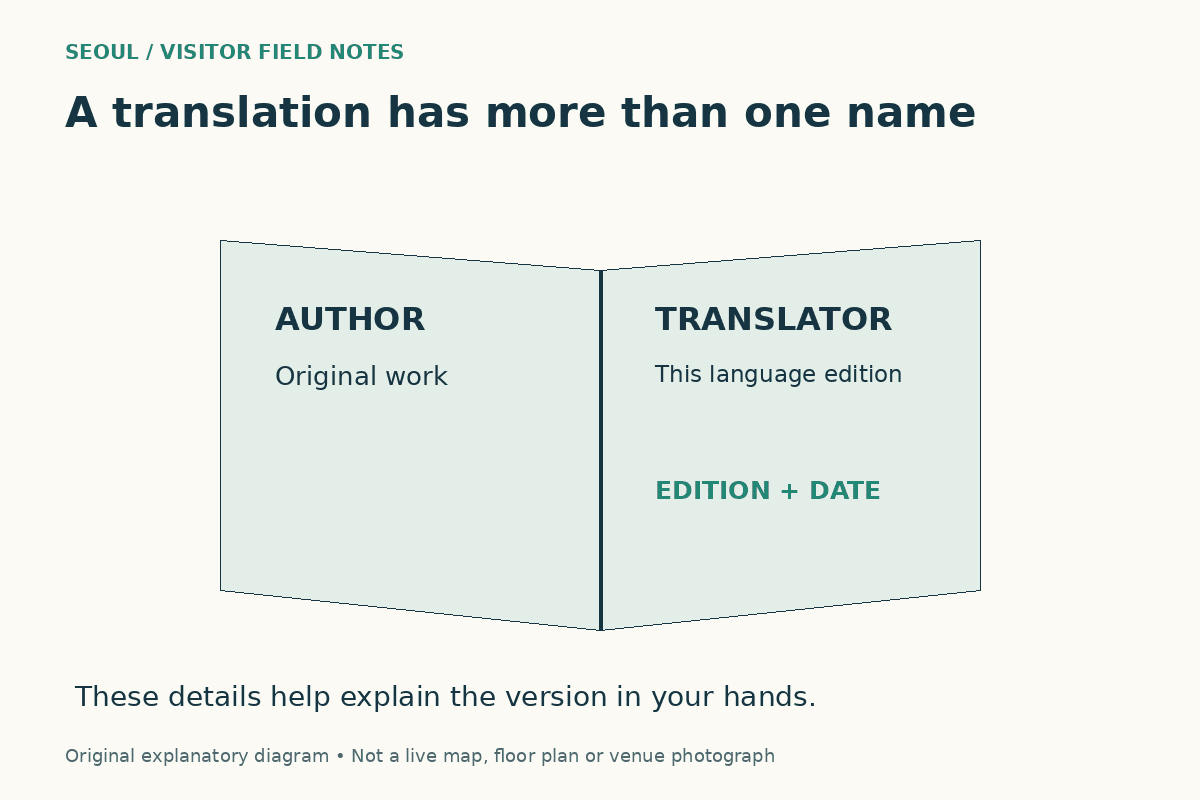
Read the title page as well as the opening paragraphs. Record the author, translator and edition. Translation is part of the work you are encountering; two editions can frame a reader’s experience differently through introductions, notes and choices of wording. You do not need a technical judgment about translation quality to recognize who made the version you are reading.
A simple note can keep the comparison useful: write one idea the nonfiction clarified, one detail the literary passage made you notice and one question neither answered. Avoid turning a single character into a representative of every Korean person. The point is to widen your perspective, not replace one stereotype with a more literary one.
Ask for a shelf, not a guaranteed title
If browsing stalls, show staff the phrase Korea Collections and explain the language and subject you want. You can also show 세계자료실, the Korean name of the Global Room. Asking where to find a section is more flexible than arriving with one title that may be in use or unavailable.
The room also includes books donated by embassies and cultural organizations, along with periodicals. Donated materials and periodicals are designated for reading on site. Those shelves can broaden the visit beyond Korea, but their presence does not mean every item can be checked out.
Return materials according to the room’s instructions rather than guessing the shelving order. Keep a note of the title if you want to locate a copy later through a shop or a library at home. Do not mark pages, remove labels or treat the room as a place to stage a long photo session.
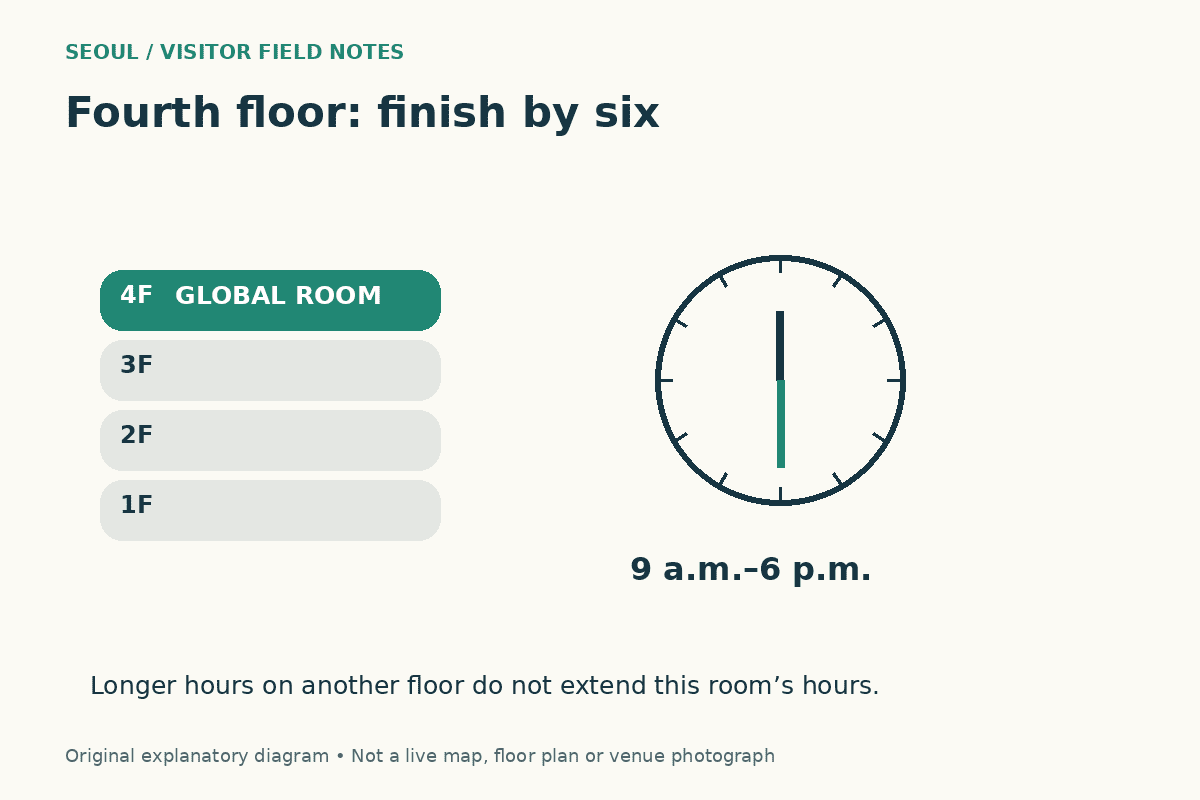
Protect the reading time: this floor closes at six
According to the library’s current hours and use guide, the fourth-floor Global Room opens Tuesday through Sunday from 9 a.m. to 6 p.m. The library closes on Mondays and public holidays, with other temporary closures possible. Longer evening hours advertised for some general-material rooms do not extend this floor’s hours.
The library is at 110 Sejong-daero, Jung-gu, Seoul, beside Seoul Plaza. Save 서울도서관 as the destination and check the actual route from City Hall Station. Leave time to reach the correct floor and put away your belongings before the reading time you hoped to have.
Bring only what you need to read and make a few notes. The library’s etiquette guidance calls for quiet and prohibits eating and phone conversations in the reading space. A café break belongs elsewhere; a quiet room shared with local readers is not a waiting lounge for the next attraction.
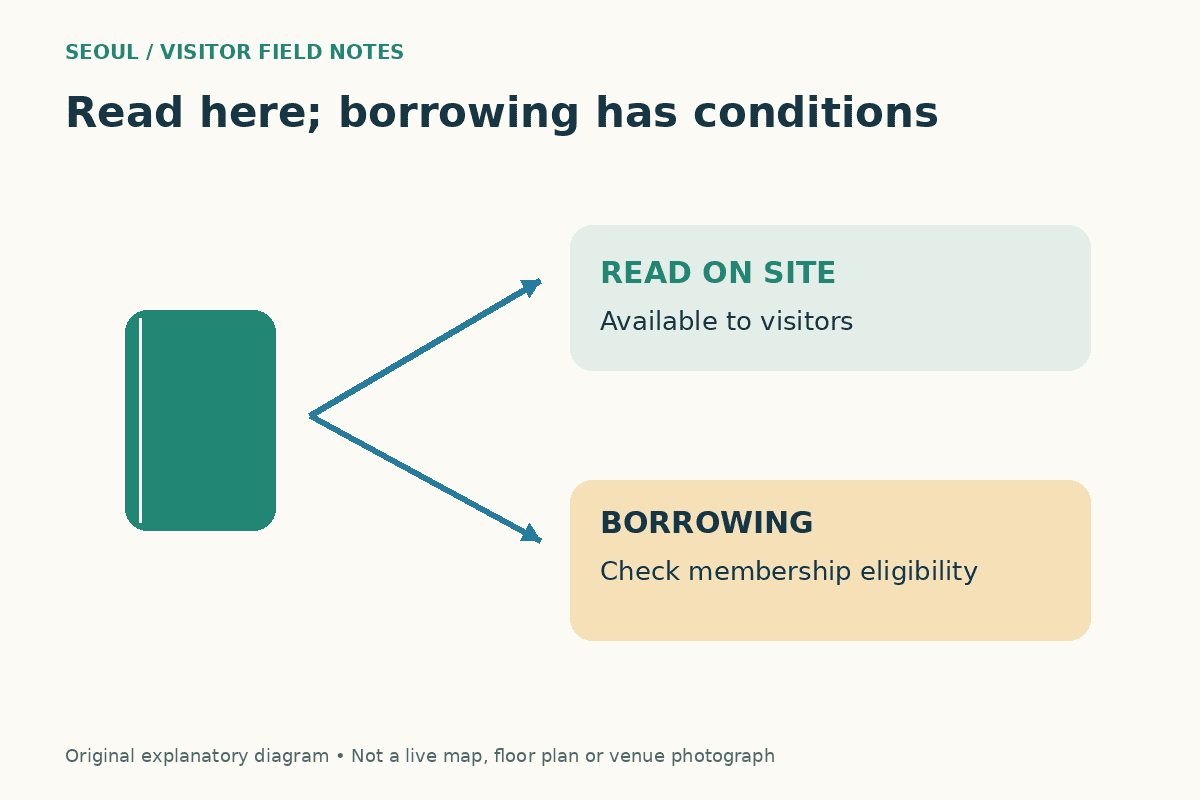
Reading access is not the same as borrowing eligibility
The use guide allows anyone to read, while loans and certain other services are for eligible members. Seoul’s 2025 announcement expanding borrowing eligibility includes Korean nationals and foreign residents in Korea. It should not be read as a promise that every short-term international visitor can register and take books away.
For a brief trip, an on-site reading visit is the straightforward plan. If you live in Korea and want to join, consult the current registration requirements with the library rather than relying on older travel accounts of who qualified.
Afterwards, connect one idea from the books to the city outside. If urban history is what caught your attention, our Seoul City Wall Museum guide offers another way to compare interpretation with physical evidence. It is a separate visit to plan, not a promise that both destinations fit before closing.
Official information checked November 4, 2026, Korea time. Book availability and temporary room closures can change. Original diagrams explain a reading approach and published service boundaries; they are not a floor plan.