A railway station tells people where to move. An exhibition asks them to stop. Culture Station Seoul 284 brings those two ways of using a building together: the former Seoul Station has become a cultural venue, while its earlier purpose remains central to understanding it. For a visitor interested in architecture, the useful question is how much a building can change its job while keeping its identity.
This guide approaches the building through its history, materials and changing use. Indoor access depends on the actual program. The access note below reflects information checked on November 4, 2026; it does not promise that the exhibition spaces are open for your visit.
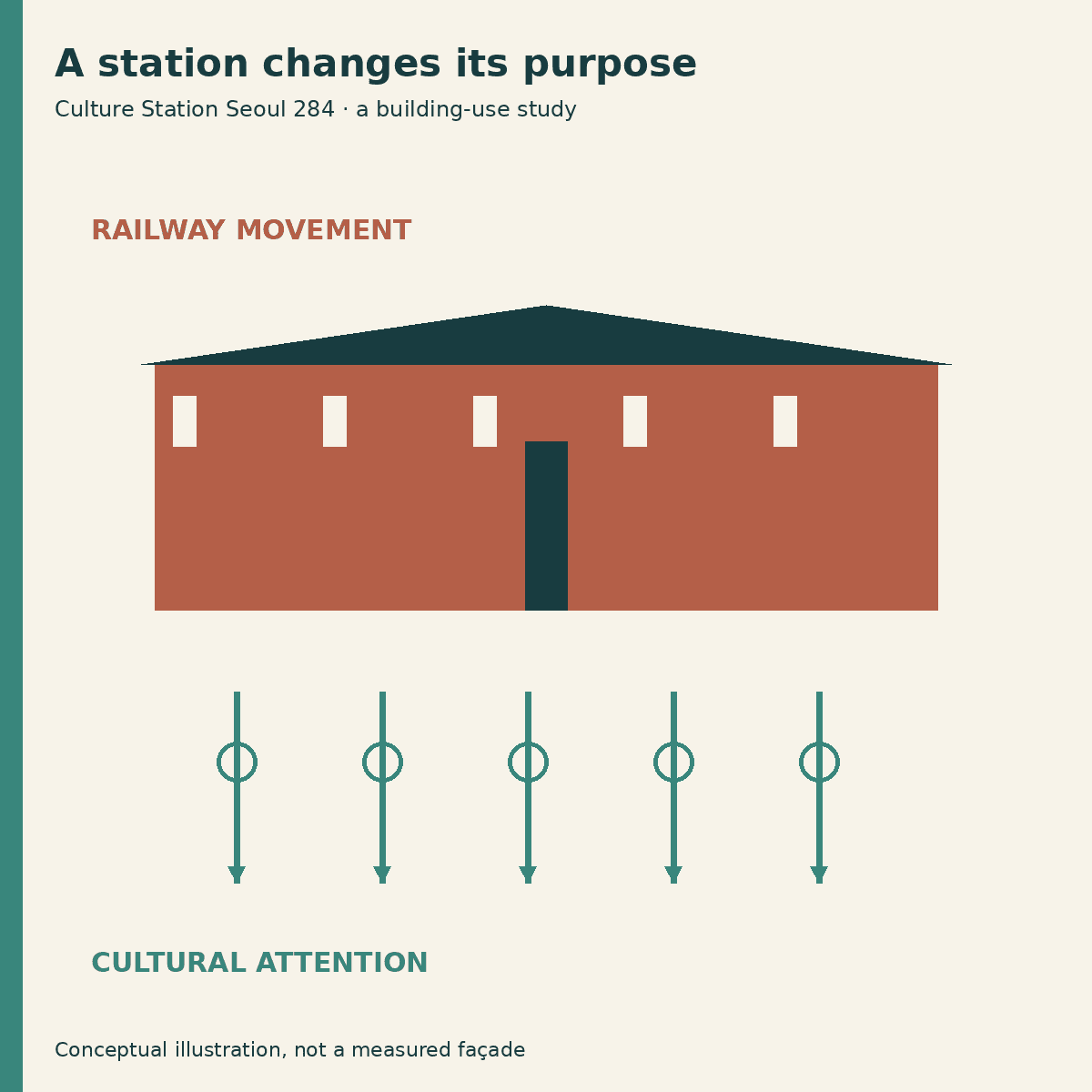
A station building with several different dates
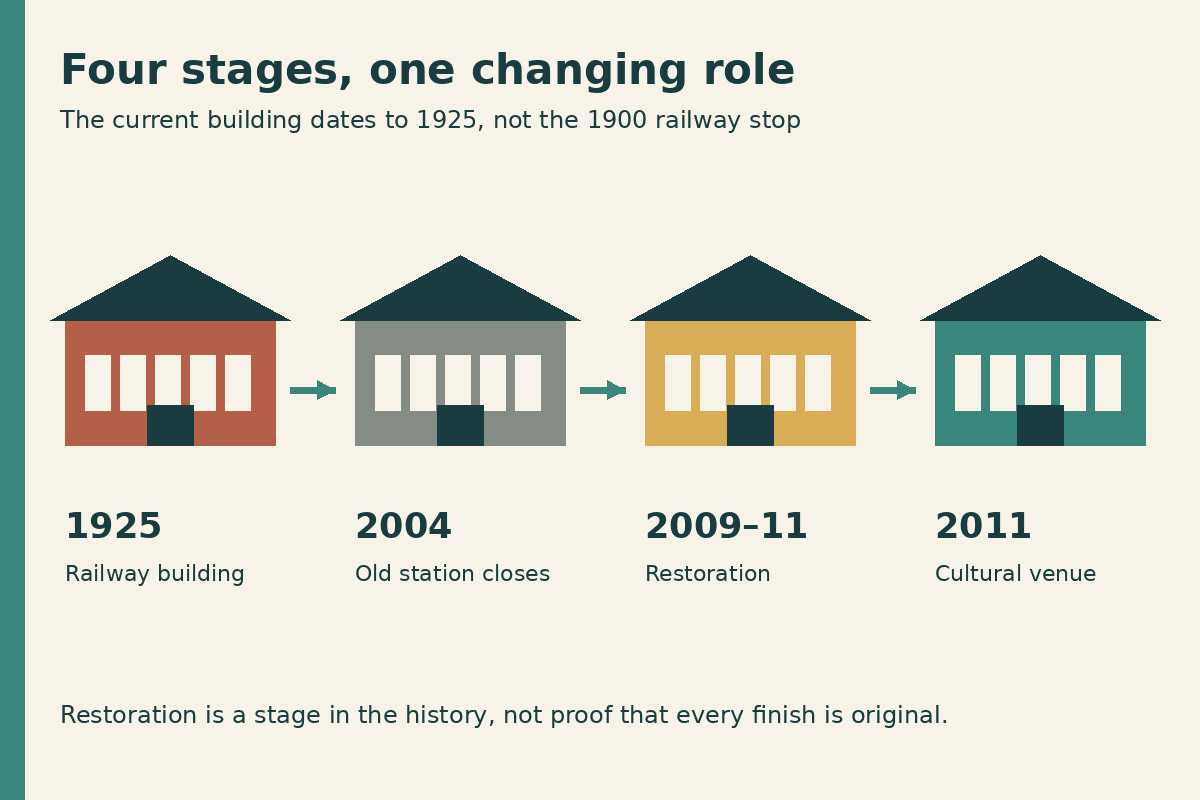
Begin by separating the history of the railway stop from the age of the building in front of you. The site’s railway story reaches back to Namdaemun Station in 1900, but the substantial building associated with Culture Station Seoul 284 was constructed between 1922 and 1925. Calling it simply a “1900 building” merges two different stages.
The venue’s official history describes the 1925 station as Renaissance-style architecture. Built during Japanese colonial rule, it later served as Seoul Station. The old station closed in 2004, restoration followed in 2009–2011, and the cultural venue opened in 2011. The number 284 recalls the former station’s historic-site designation number.
These dates give you a way to read what survives. A restored room can explain an earlier period without every visible surface being untouched material from that period. Separate the building’s original construction, subsequent use, restoration and present function when reading signs or describing a photograph.
Look at the façade before collecting details
From a permitted public viewpoint, first consider the building as a whole. Where does your eye settle? Which openings repeat, and which parts interrupt that repetition? Try following the roofline, then the horizontal divisions below it. This simple sequence makes individual details easier to place.
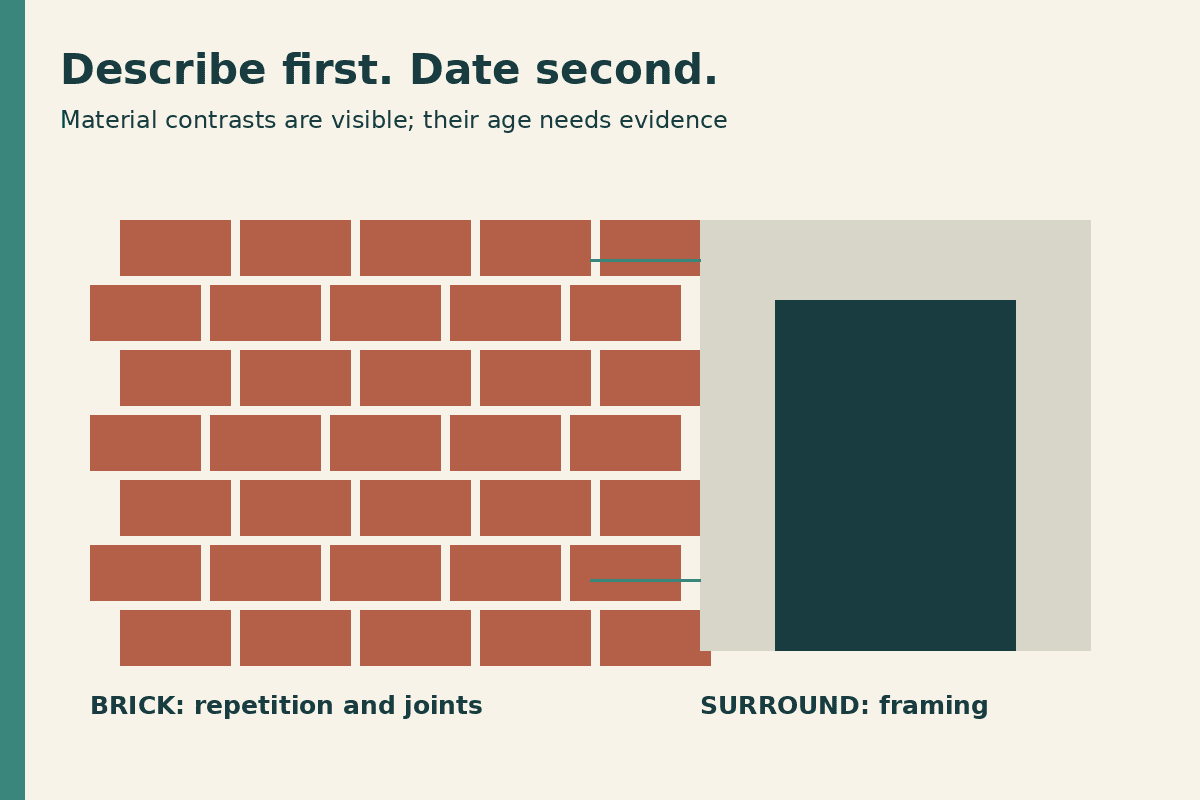
Next, move your attention to the meeting of materials. The official account identifies red brick alongside stone and other finishes. Look for differences in color, texture and the way an opening is framed. Describe what you can actually see before assigning it a construction date or a structural role. A pale surround, for example, is an observable feature; whether it is original requires evidence.
One useful photograph includes enough of the façade to locate a detail. A second can isolate that detail, if you can do so without entering a restricted area or obstructing pedestrian movement. Together they explain more than a series of close-ups that could belong to any building. Do not lean into traffic or block an entrance to obtain a symmetrical view.
What changes when passengers become exhibition visitors?
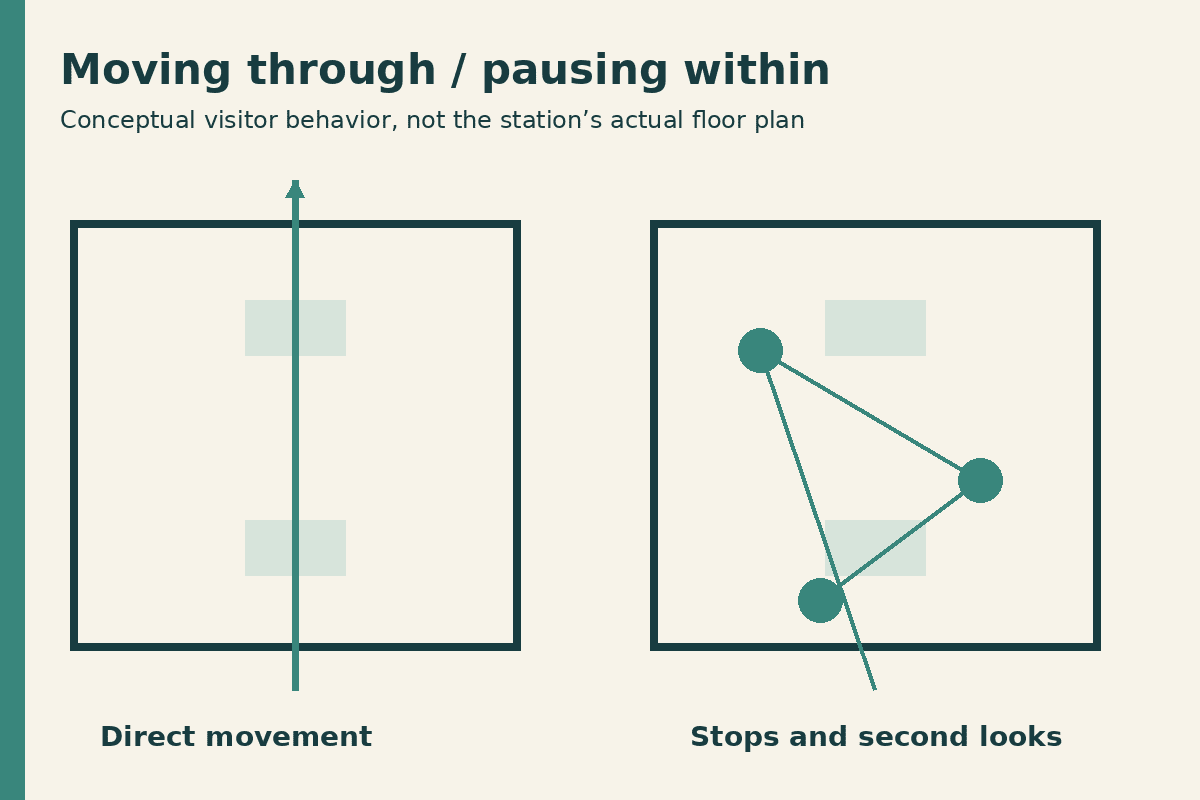
Think about the different demands made on the same kind of space. A traveler may need to find a doorway quickly and continue through it. An exhibition visitor may pause, double back or spend several minutes facing a single object. That contrast is an observation exercise, not a reconstruction of the station’s exact historic passenger routes.
The venue’s space guide describes eight exhibition spaces on the first floor and six on the second, with the RTO event venue to the building’s right. It presents the retained character of the old station as part of the setting for contemporary art. Those room counts describe the venue, not an admission entitlement to every space.
If an exhibition is open on your chosen date, notice how its installations respond to the room. Does a doorway reveal another work? Does an object occupy the center, or leave the passage clear? Does the architecture draw your attention away from the display? You need not decide which arrangement is “correct” to recognize that the building actively shapes the experience.
The online space guide is useful for exploring this relationship before traveling. Keep that virtual exploration distinct from a physical visit: an online room image does not establish that the room is currently accessible.
Locate the historic building, not just “Seoul Station”
The visitor guide gives the address as 1 Tongil-ro, Jung-gu and lists Exit 2 for subway Lines 1 and 4, or Seoul Station Exit 1 on the Gyeongui-Jungang Line. Save the cultural venue’s name, 문화역서울284, as your destination rather than relying on a general station pin.
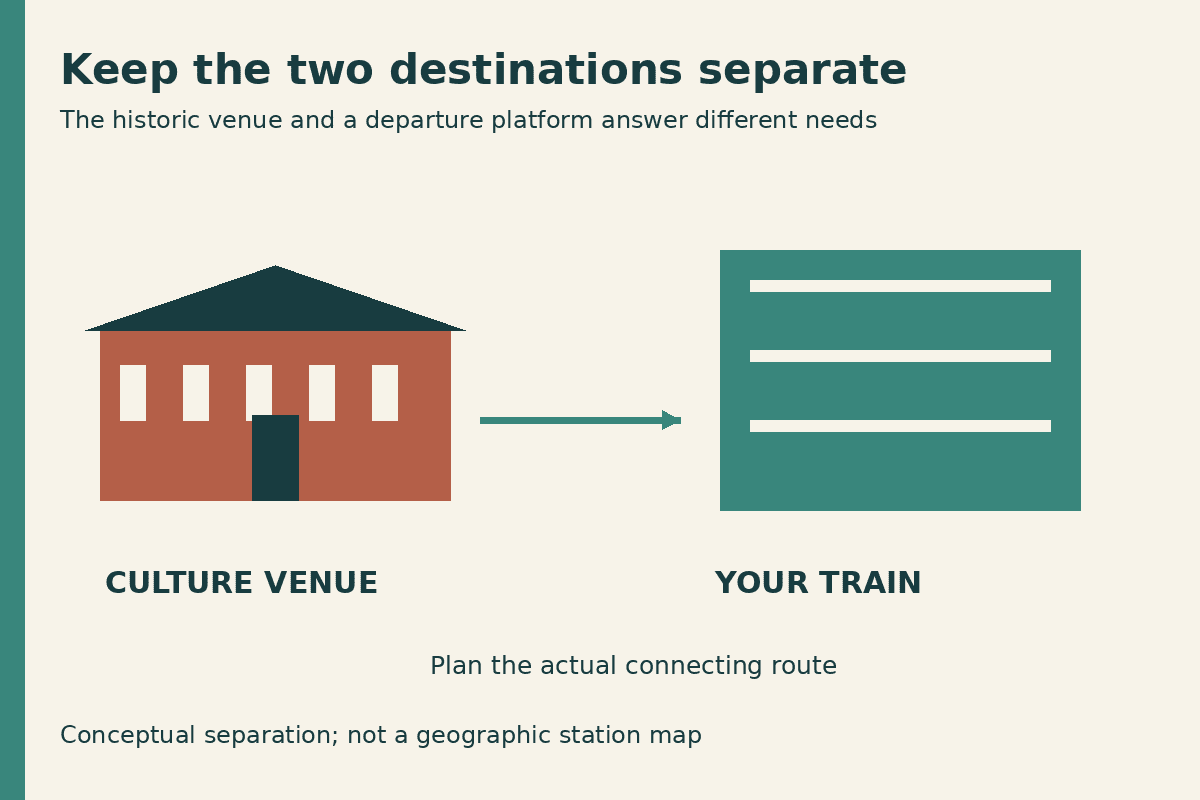
If you are connecting to a train, plan the return to your actual departure area separately. Reaching the historic building does not mean you have reached the correct platform entrance. Our KTX ticket checklist helps keep the departure station, date and service clear. For a subway arrival, the Seoul subway guide explains why the exit is part of the journey.
Leave with a question about what was kept
Rather than treating the building as a backdrop, choose one feature to remember and one question you cannot yet answer. Perhaps the façade gives a clear impression of its earlier identity, while the use of a particular room needs more explanation. Keeping that uncertainty is more useful than borrowing an attractive story from an old tour review.
For a broader historical context on another day, our Seoul Museum of History guide considers how the city changed around its residents. Here, keep the scale smaller: one building, successive uses, and the traces that help you tell them apart.
Research-based, AI-assisted guide; not a first-hand visit report. Original diagrams explain architectural ideas and chronology. Visitor information checked November 4, 2026.