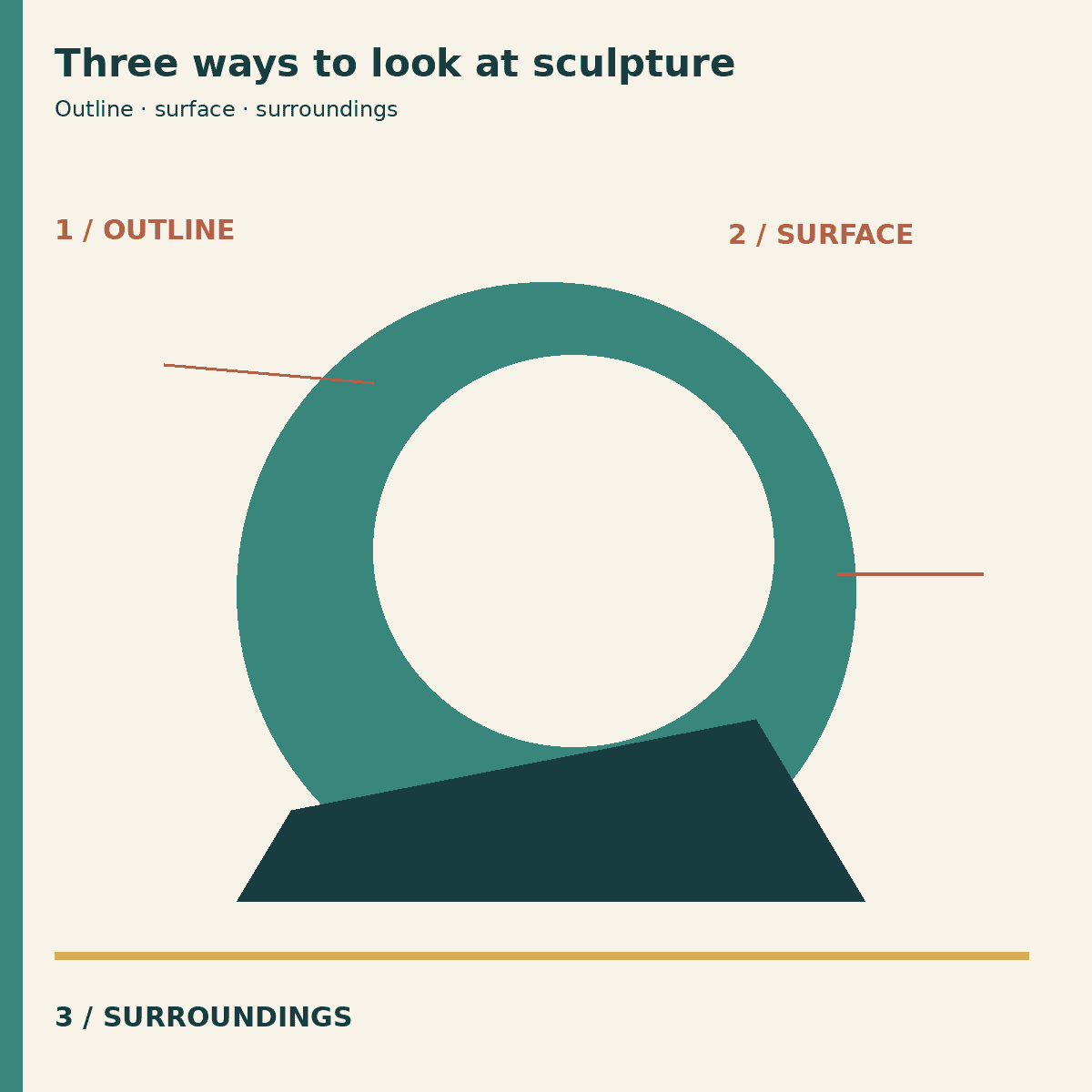
A sculpture can look compact from one angle and almost hollow from another. Its surface may catch the light while its outline disappears into trees. Around SOMA in Olympic Park, those changes offer a rewarding way to spend an outdoor art walk: choose a few works and look at each differently, rather than trying to photograph the entire collection.
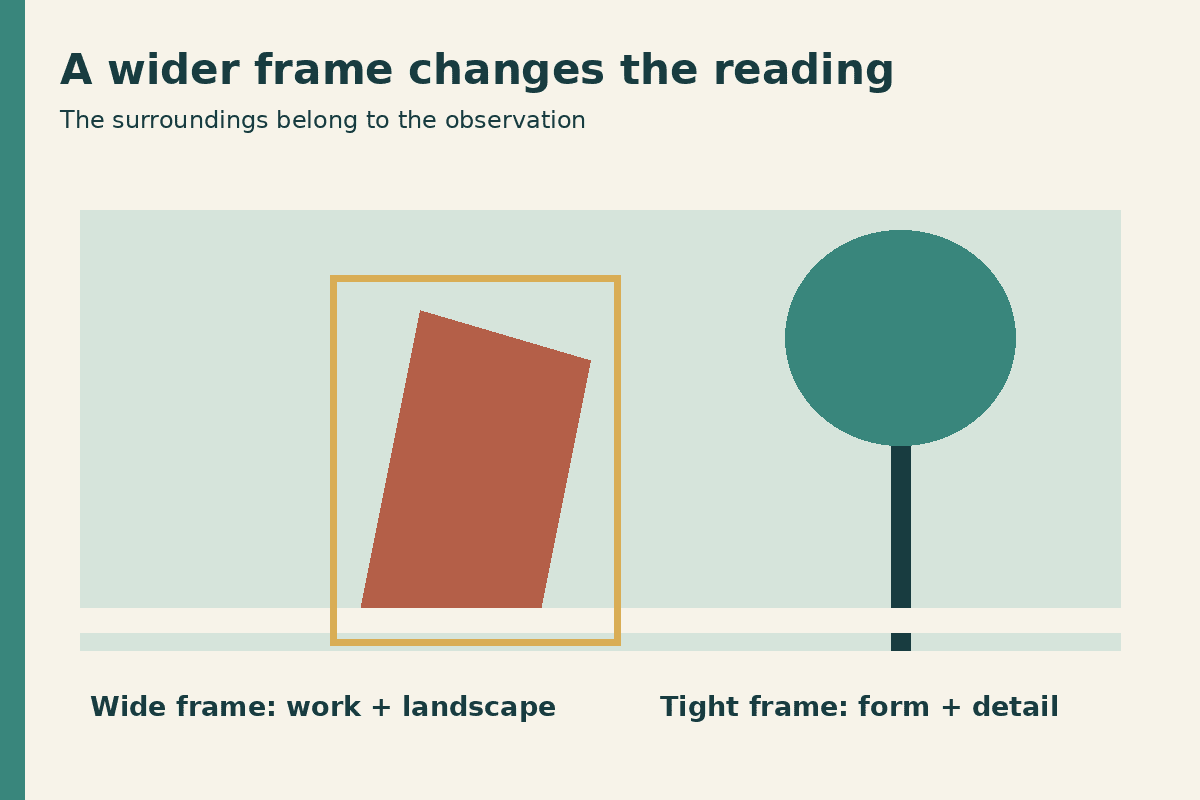
The three experiments below need no specialist vocabulary. They keep the walk around the museum and the park’s southwest side, with an optional exhibition visit afterward. The diagrams use invented forms to explain ways of looking; they are not pictures of particular works in the collection.
Find the museum-side sculpture area
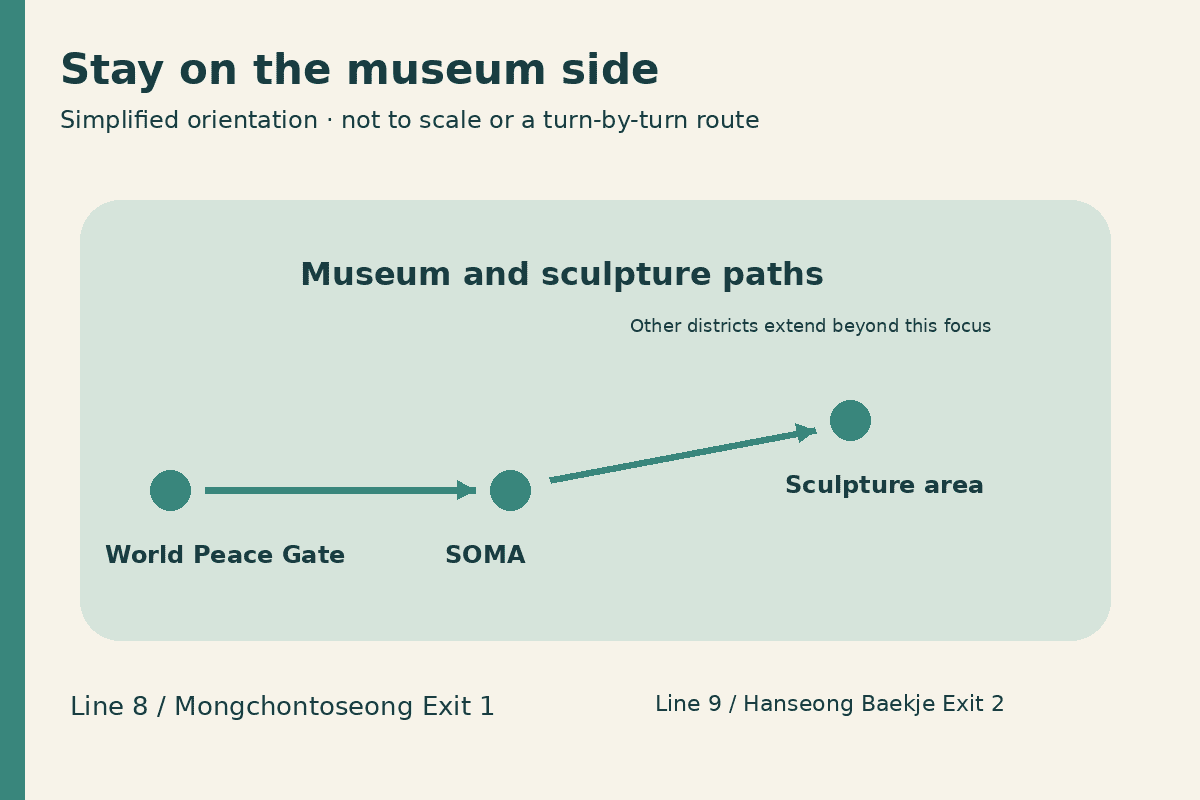
For this walk, use Mongchontoseong Station, Line 8, Exit 1. SOMA’s official directions describe turning right inside World Peace Gate and walking about 200 meters toward the museum. They also list Hanseong Baekje Station, Line 9, Exit 2, with an underground connection. These approaches serve the museum side rather than the eastern stadium district.
Open the official park map before choosing your paths. World Peace Gate and Peace Square provide an initial landmark; SOMA and the sculpture area lie farther east along the southern part of the park. The Baekje Museum and sports venues are different destinations. You do not need to reach them to complete this art walk.
Start with a public path and choose nearby works you can see without crossing ropes or planted areas. Current signs take precedence over a route suggested online. Keep enough space around your viewing position for walkers to pass, especially when comparing photographs.
First experiment: watch the outline change
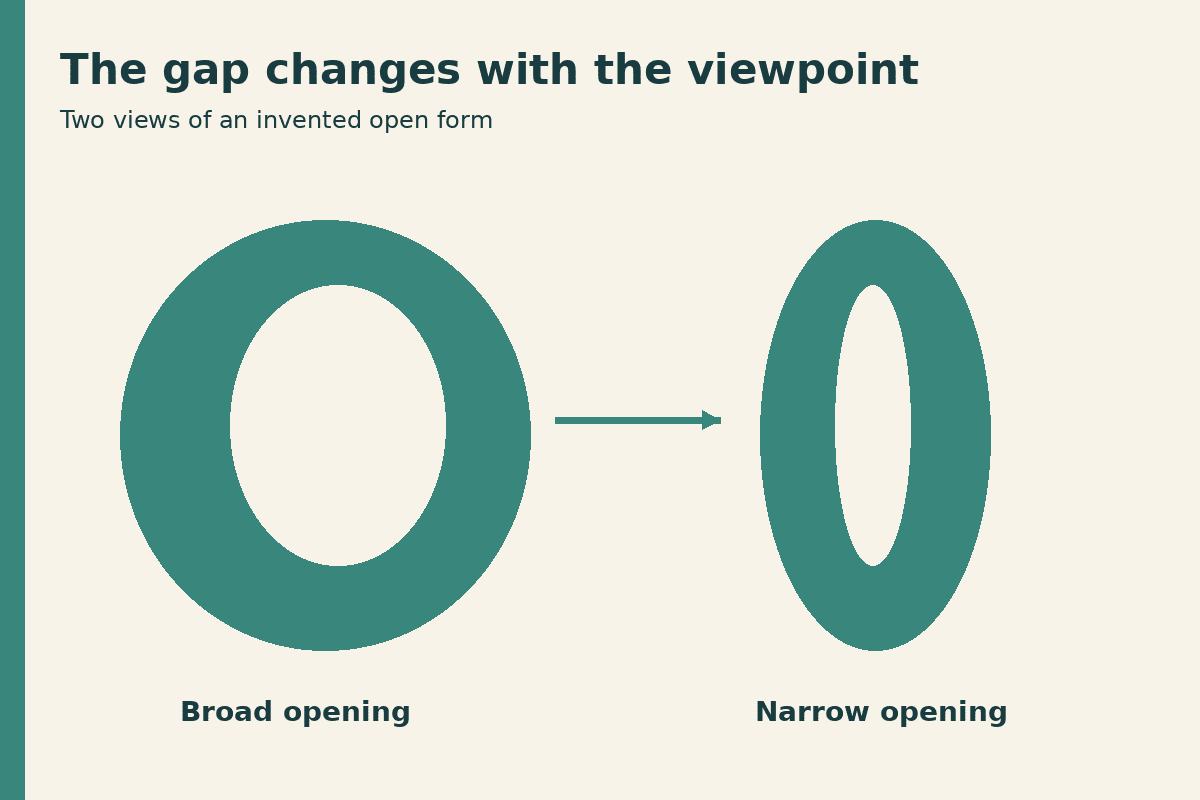
Find a sculpture whose overall shape catches your attention. From one comfortable position, look at its edge against the background. Then move a short distance along the permitted path and look again. Which parts overlap now? Has an opening appeared, narrowed or disappeared?
The empty areas can matter as much as the solid ones. Artists and viewers often call these openings “negative space.” You can explore the idea without guessing what the artist intended: describe the change you observe, then read the label for the title, artist and date.
If photography is permitted, take two images at approximately the same zoom from your different positions. This makes the viewpoint change easier to compare. There is no need to walk a full circle, step onto a lawn or move behind a barrier. Two safe positions can be enough to reveal a different relationship between the parts.
Second experiment: separate surface from shape
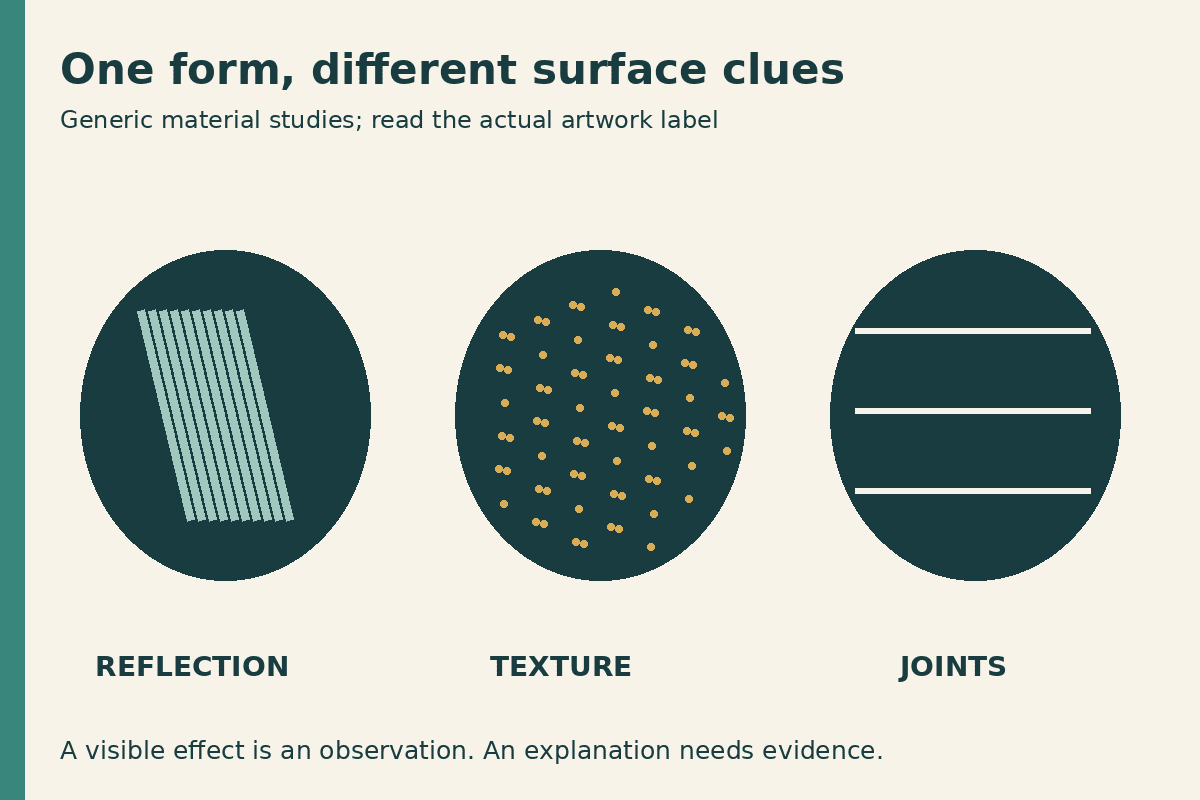
At another work, first describe the outline in a few words. Then look only at the surface. Is it smooth, rough, reflective, dark, or broken into visible joints? Read the material on the label rather than identifying it confidently from appearance alone.
Light can complicate the answer. A reflective area may borrow color from the sky or trees; a recess may look almost black even when it belongs to the same material as a bright face. Compare what happens on two differently lit surfaces. Avoid touching the work to test a guess, and do not treat a discoloration as damage without evidence.
A useful note separates observation from interpretation: “This side reflects the trees” records something visible. “The artist wanted the work to disappear” is a claim that needs supporting information. Keeping the two apart makes your own response more precise without making it less personal.
Third experiment: include the surroundings
For the final stop, widen your attention. Look at the sculpture with a path, a tree, or the space around it included. Does the work feel different when a person passes nearby? Does its outline echo or interrupt the lines of its surroundings? Ask these questions from an ordinary public viewpoint, not by staging someone against the artwork.
SOMA’s collection introduction connects the sculpture park with the cultural program of the 1988 Seoul Olympics and describes later additions, including works created for the tenth anniversary. The park is therefore not a collection in which every object necessarily dates to 1988. Check individual labels or the official work map before attaching a year or artist’s name to a photograph.
Finish this experiment with one wide view and one detail, if permitted. The first records the relationship to place; the second preserves what made you stop. That pair can tell a clearer story than ten similar images taken while moving past.
Carry a question indoors, if the exhibition interests you
SOMA’s Building 1 exhibition 기념에서 풍경으로 is listed for October 17, 2026–February 14, 2027. Published hours are 10 a.m.–6 p.m., with last admission at 5 p.m. and Monday closure. The listed individual adult price for ages 25–64 is ₩5,000. Check the exhibition page for age bands, concessions and changes.
The outdoor experiments give you a question to bring into a gallery: how does a drawing, photograph or object present something differently from a sculpture encountered in a landscape? Let that interest determine whether to enter. There is no obligation to add an indoor visit merely because the building is nearby.
End with the work you remember best
Return toward the gate or use your chosen station approach, following current signs. Keep the last few minutes for a second look at one work rather than extending the walk into the stadium district. For a history-focused visit on another day, our Baekje Museum and earthworks guide explores a different layer of this park.
Choose daylight and conditions in which you are comfortable pausing outdoors; our Korea weather-planning guide can help you adjust the outing. The point of these experiments is to notice more, not to stay outside until every planned stop is finished.
Research-based, AI-assisted guide; not a first-hand visit report. Original explanatory diagrams. Visitor information checked November 4, 2026.