A royal seal can carry two histories at once: the life of the person it names and the later ceremony for which it was made. At Seoul’s National Palace Museum of Korea, that distinction gives a small object much more to say than its appearance alone.
For a focused museum visit, begin with the recipient, the occasion and the object’s date. The example below comes from the museum’s collection record for a seal and jade book honouring King Taejo. It is a way to practise reading a label before your visit, not a guarantee that this particular pair is currently displayed.
Why does a seal for Taejo carry the date 1683?
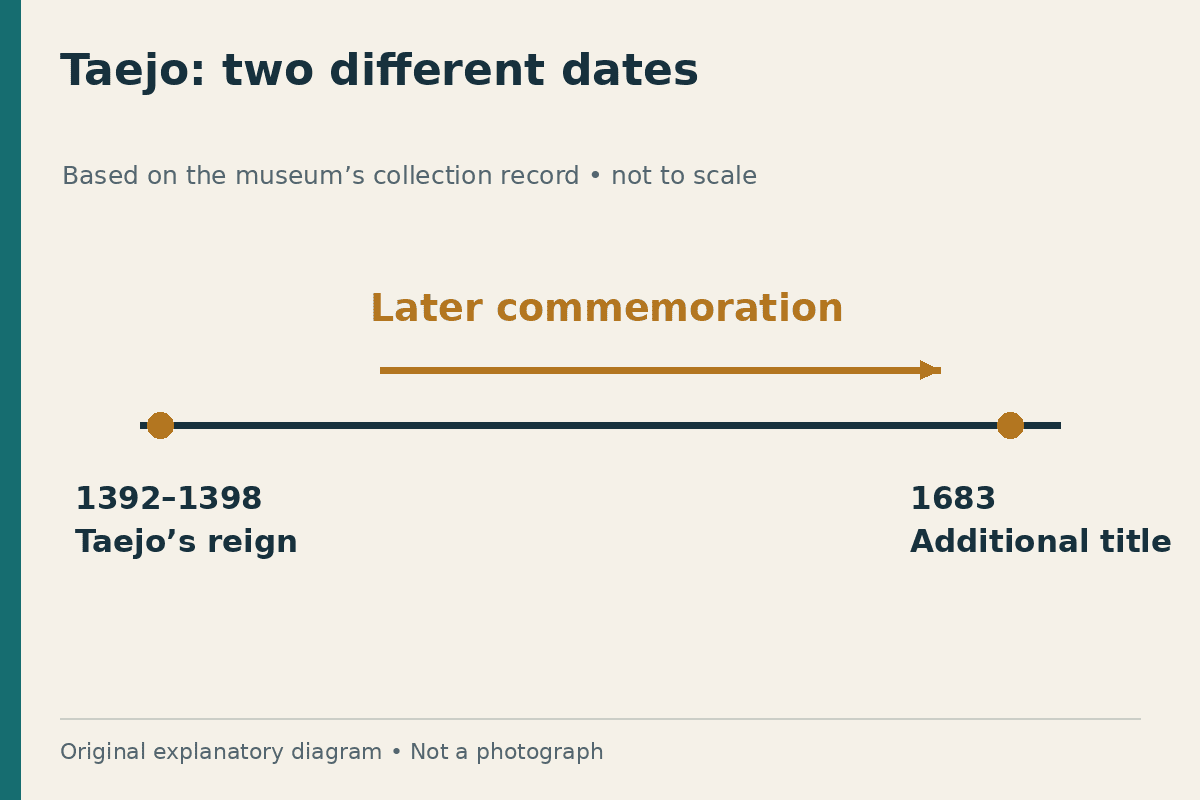
Taejo founded Joseon in 1392 and reigned until 1398. Yet the museum records a seal and jade book made for an additional title granted to him in 1683. Those dates belong to different events.
The museum’s collection entry identifies the later pair with an additional posthumous title. The 1683 date therefore tells you about how a later court honoured the founder. Reading it as an object from his reign would lose the point of the ceremony.
Try separating the label into three short notes:
- Person: Taejo, the founding king.
- Event: the later granting of an additional posthumous title.
- Object: the seal and jade book made for that event in 1683.
These notes let you understand the relationship without memorising a long royal title. They also give you a question to carry to another case: does its date fall during the named person’s life, or does it record a later act of remembrance?
Let the occasion explain the title
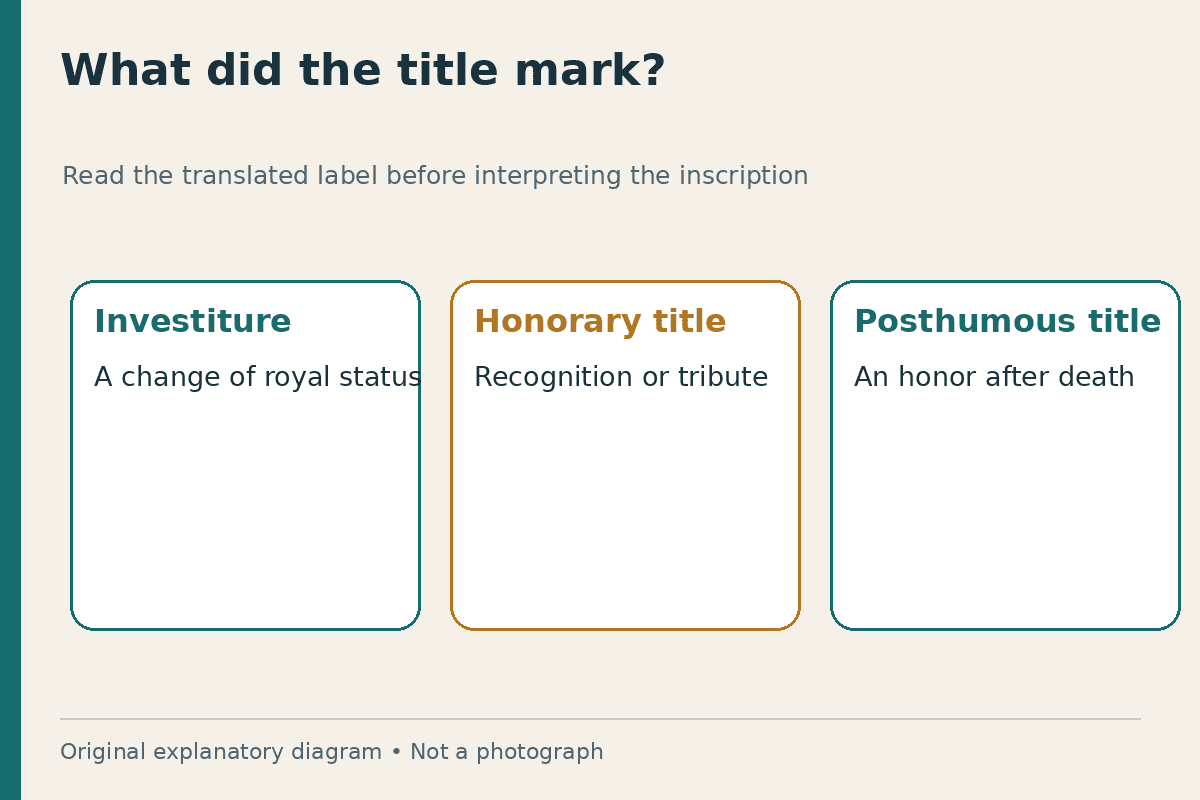
Royal titles could mark different changes in status or acts of honour. The museum’s collection explanation connects these objects with investiture, changes in royal status and the granting of honorary or posthumous titles.
That is why a case full of similar-looking objects need not be repetitive. Two seals associated with the same person may record different occasions. Before comparing decoration, establish which event the label names.
Look carefully at the wording of the material description too. The Taejo entry’s English title uses “Gold Royal Seal,” while the material is described as gilt metal. A title containing “gold” should not be taken as proof of solid gold. This is another reason to read the full object label rather than relying on a heading.
Read the seal beside its accompanying book
The seal and investiture book belong to the same ceremonial setting. The book supplies written context for the honour represented by the seal. When the museum presents a pair together, compare the recipient, title and date across both labels.
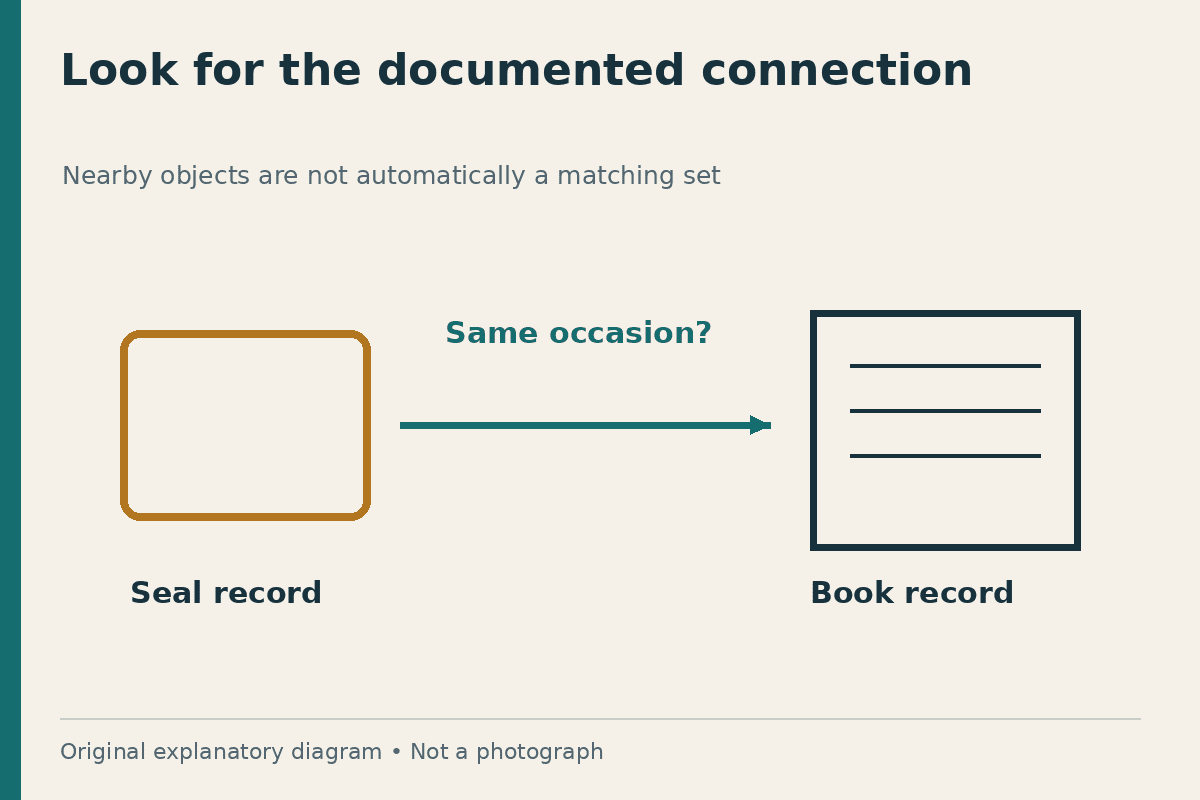
Start with the shared information, then look for what each object contributes. You might note the seal’s form in one column of a notebook and the book’s stated purpose in another. The goal is a small, understandable relationship rather than a list of everything in the case.
Visitor accounts of the museum also draw attention to the containers and wrapping associated with royal possessions. If a case includes such items, read their labels before moving on. Ask which object each belongs with and what the display explains about its handling. Avoid assuming that nearby pieces form an original set unless the museum says so.
Turn the example into a short gallery visit
The museum’s royal-history gallery introduction is useful preparation. On arrival, ask where royal seals or investiture books can currently be seen. A collection database and an archived special-exhibition page describe different things from today’s display.
Allow roughly an hour as an editorial starting point for a focused visit. Use the first part to find the relevant section, spend most of your attention on a small number of labels, and leave time to revisit the object that raised the clearest question. Your pace and the day’s displays will determine the actual duration.
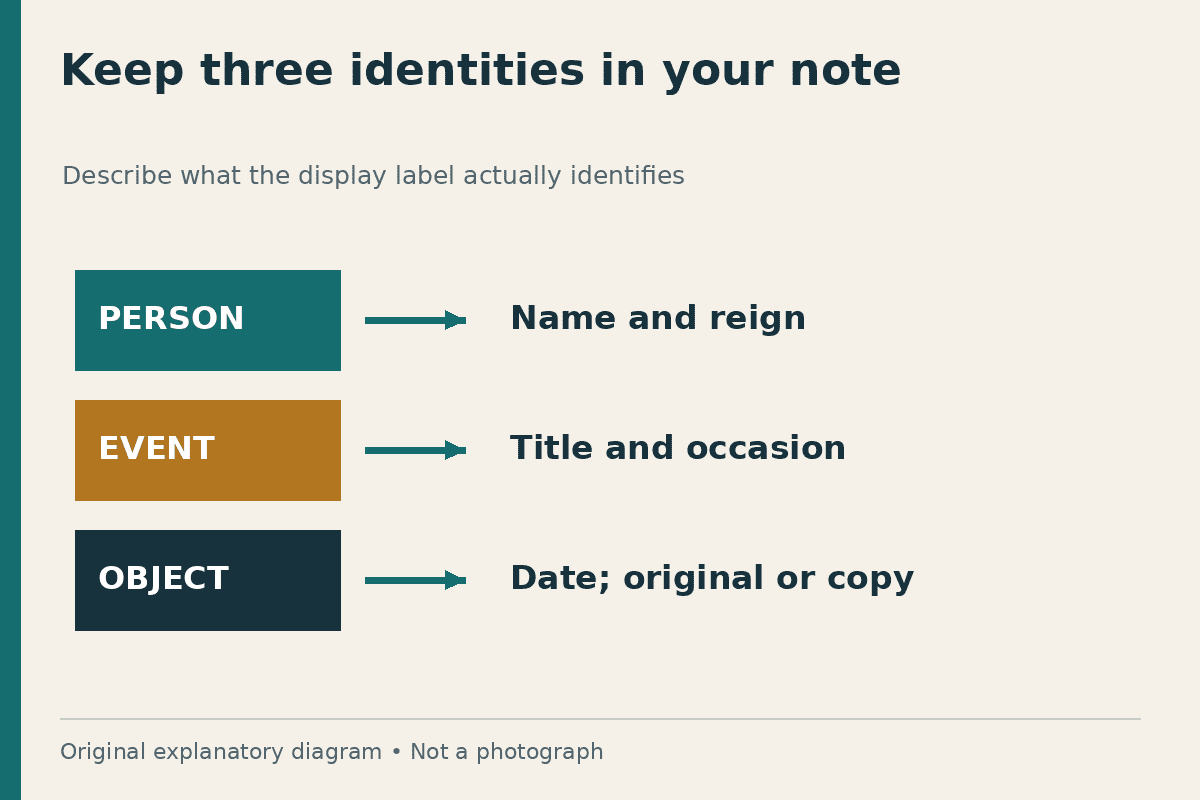
One useful note to take away is: “This object was made for this person, for this event, at this time.” Include any label identifying a reproduction. You will then have a specific story to connect with palace architecture, rather than a photograph with a royal name you cannot place.
Check the museum calendar before setting out
The museum is at 12 Hyoja-ro, Jongno-gu. Its official directions identify Gyeongbokgung Station on Line 3, exits 4 and 5.
The current Korean visitor-information page, checked November 5, 2026, lists free admission until further notice. Ordinary hours are 09:30–17:30, with entry ending at 17:00. Saturdays and the last Wednesday of the month extend to 21:00, with last entry at 20:30.
Closures include January 1, Seollal day, Chuseok day and the last Monday of the month. A public-holiday exception can move the monthly closure to the first non-holiday afterward, so consult the dated calendar. Check the current foreign-language programme calendar too if you want a guided session; old English tour times may no longer apply.
Follow the photography rules: no flash, tripods, selfie sticks or commercial photography in the galleries. If you are pairing the museum with the palace, plan that second visit using the separate Gyeongbokgung visitor guide. Museum entry does not establish palace admission or opening hours.