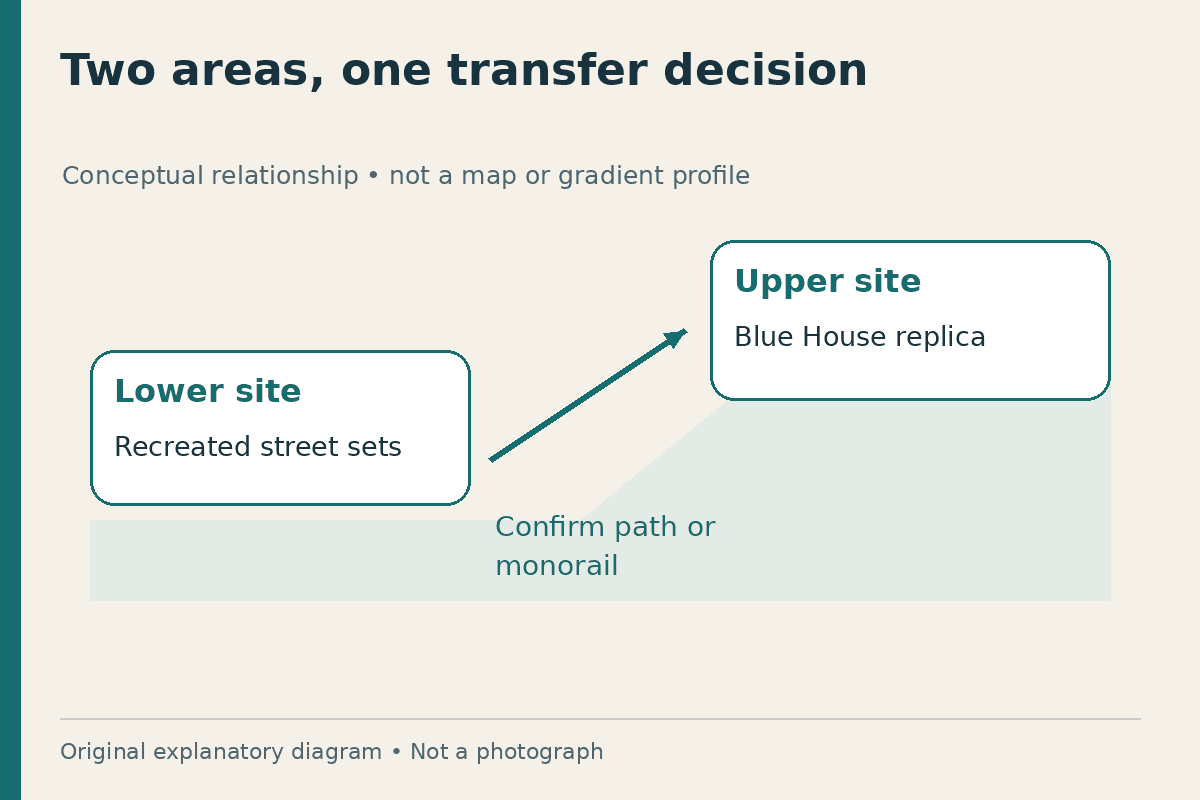
For a visit centred on Hapcheon’s Blue House film-set replica, make the upper site your first planning decision. The replica and garden occupy a different part of the complex from the lower film-set streets. Admission, the transfer uphill and your eventual journey home need separate attention.
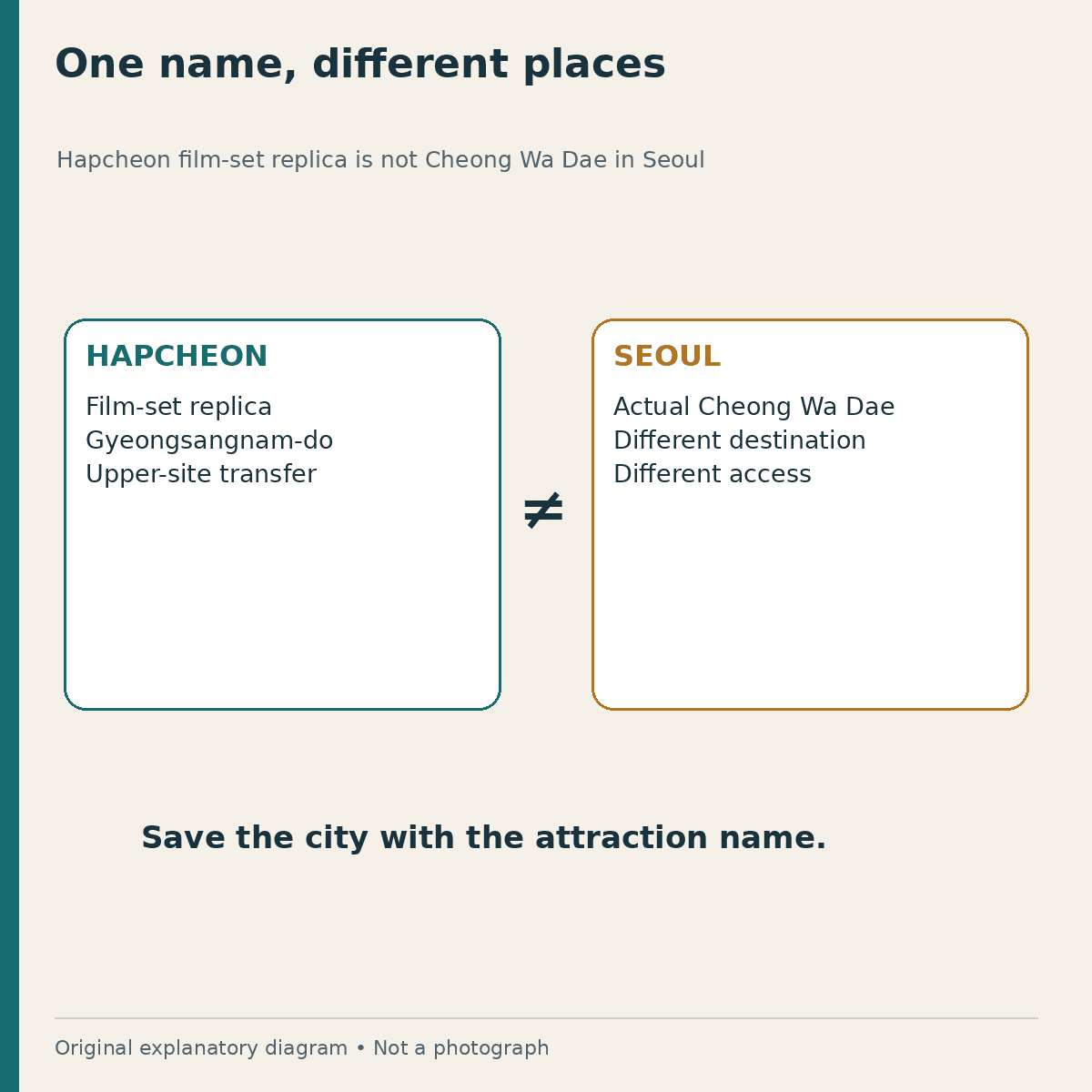
This is Hapcheon Image Theme Park (합천영상테마파크) in Gyeongsangnam-do, not the former presidential compound in Seoul. The current visitor address is 757 Hapcheonhosu-ro, Yongju-myeon, Hapcheon-gun. Search the Korean name as well as the address when arranging transport.
Choose the part of the set you most want to see
The operator’s introduction lists Mr. Sunshine among productions filmed at the wider theme park. That establishes the site’s screen connection. It does not establish that a particular scene used the Blue House replica.
For screen-location travel, the distinction matters. Someone interested in period streets may spend most of the visit below. Someone interested in how a presidential setting is recreated for filming has a reason to prioritise the upper area. The published account of a March 2024 visitor, 꾸스, particularly favoured the upper Blue House setting. Treat that as one person’s preference rather than a promise about every visitor’s experience.
| Area | Main reason to include it | Decision to make |
|---|---|---|
| Lower film-set streets | Explore recreated streets and the wider production setting. | How much time remains after protecting your upper-site and return plans? |
| Upper Blue House replica and garden | See the purpose-built presidential setting. | What transfer is running, which areas are open, and how will you return? |
Filming can restrict access to particular buildings or areas. An old visitor photograph of an interior is not evidence that the room will be open on your date. If a specific room is the main reason for the trip, ask the operator about it before making the journey.
Confirm the uphill and downhill connection together
The official tourism information describes the monorail connection, and the operator’s visitor guide prohibits visitor cars at the Blue House set. Arriving by car or taxi at the complex therefore does not establish vehicle access to the upper destination.
Ask about the monorail’s operation for your actual date, including its last uphill departure and last return. A park’s closing time alone cannot answer either question. If the service is unavailable, have the operator confirm the permitted pedestrian route and its suitability for your group before relying on walking.
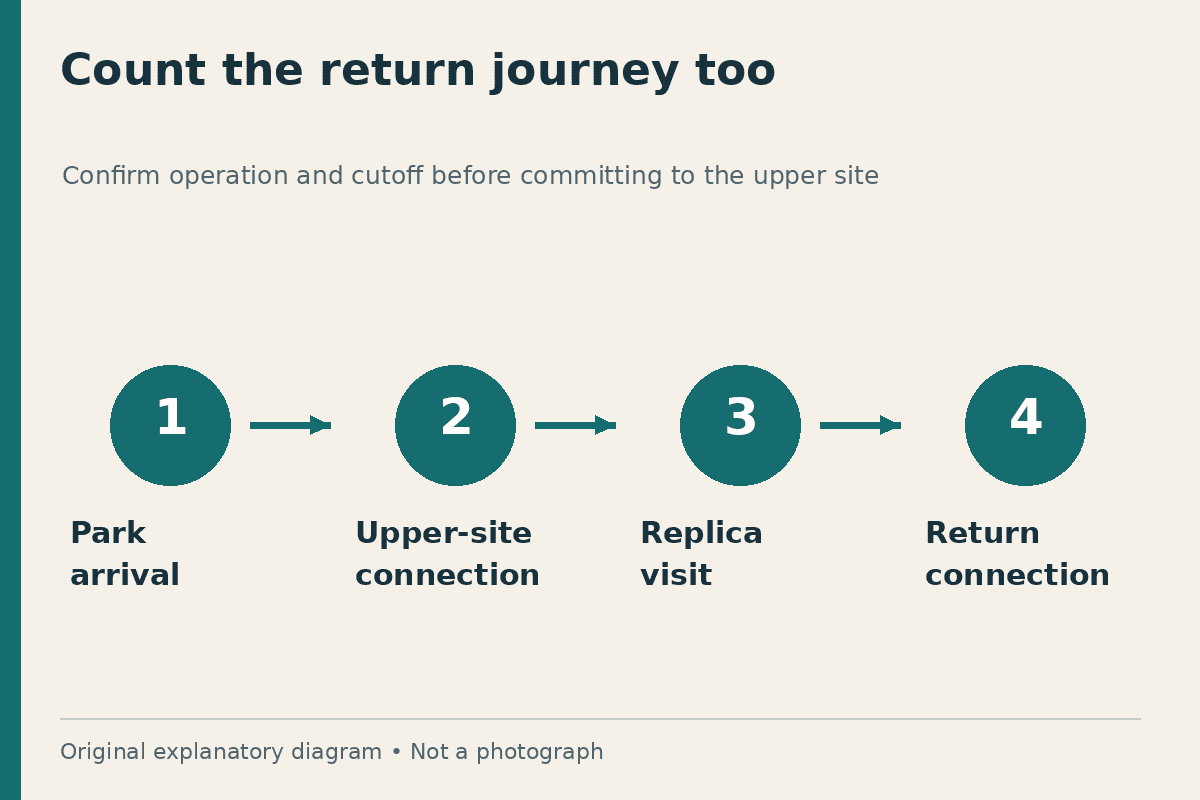
For a wheelchair user, a traveller with limited stamina or anyone bringing a stroller, describe the complete transfer needed. Ask about boarding, steps and the route from the arrival point to the areas you want to see. A general accessibility listing cannot guarantee that every link in this journey works for an individual visitor.
Set the onward pickup point at the same time. Keep the driver’s agreed location and return arrangement accessible on your phone. The Korea taxi checklist can help with the destination and payment conversation.
Keep admission and monorail fares on separate lines
Checked on November 5, 2026, the operator’s ordinary published tariff lists KRW 5,000 for individual adult admission. The general-public monorail fare for passengers aged 13 and over is KRW 6,000 round trip or KRW 4,000 one way.
For one adult paying ordinary admission and choosing the round-trip monorail, those two items total KRW 11,000. This is not a full-day budget: travel to Hapcheon, local transfers, food and other purchases remain separate. Resident and concession columns have their own eligibility conditions, so do not use those prices merely because they appear beside the general tariff.
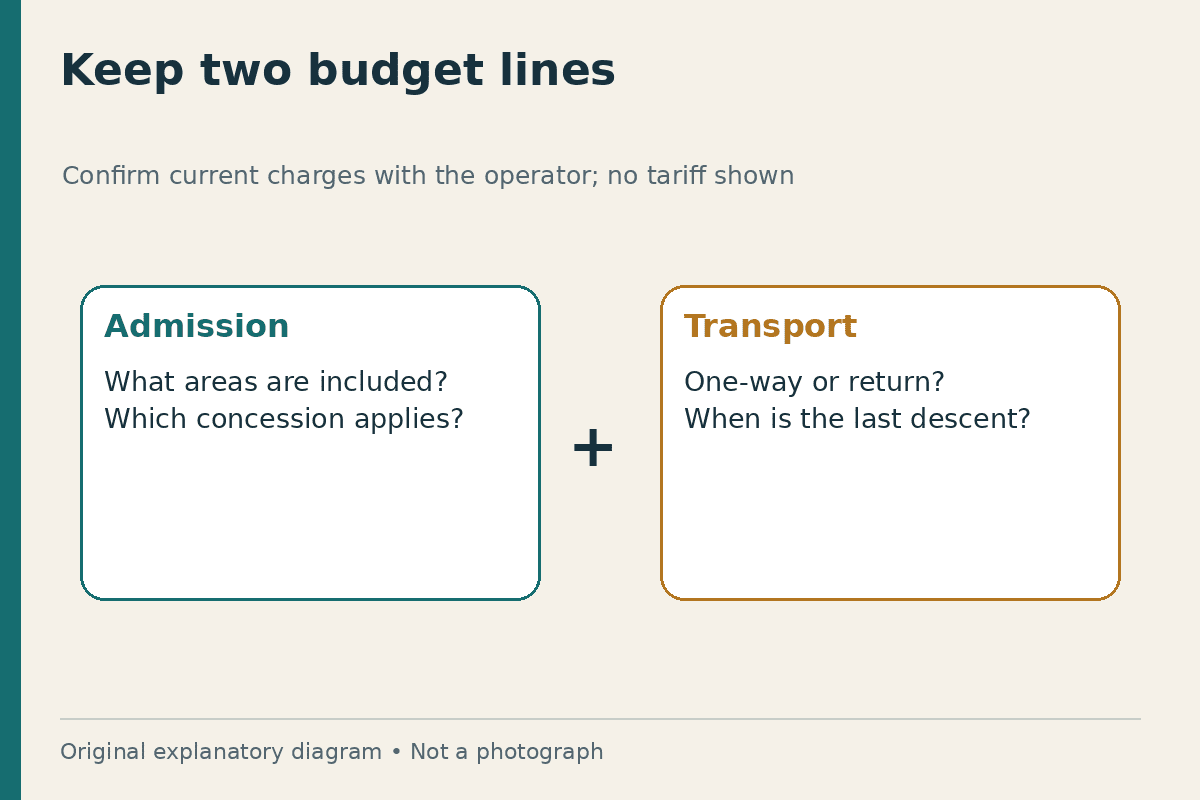
Check event-specific admission, booking requirements and service interruptions for your date. A published monorail fare shows what the journey costs when available; it does not confirm a seat, a departure or operation throughout an evening event.
Use the ordinary winter timetable, then check the date
The normal November–February opening period is 09:00–17:00, with last admission at 16:00. The regular closure is Monday, with the following day used when Monday is a public holiday. These times are in Korea Standard Time.
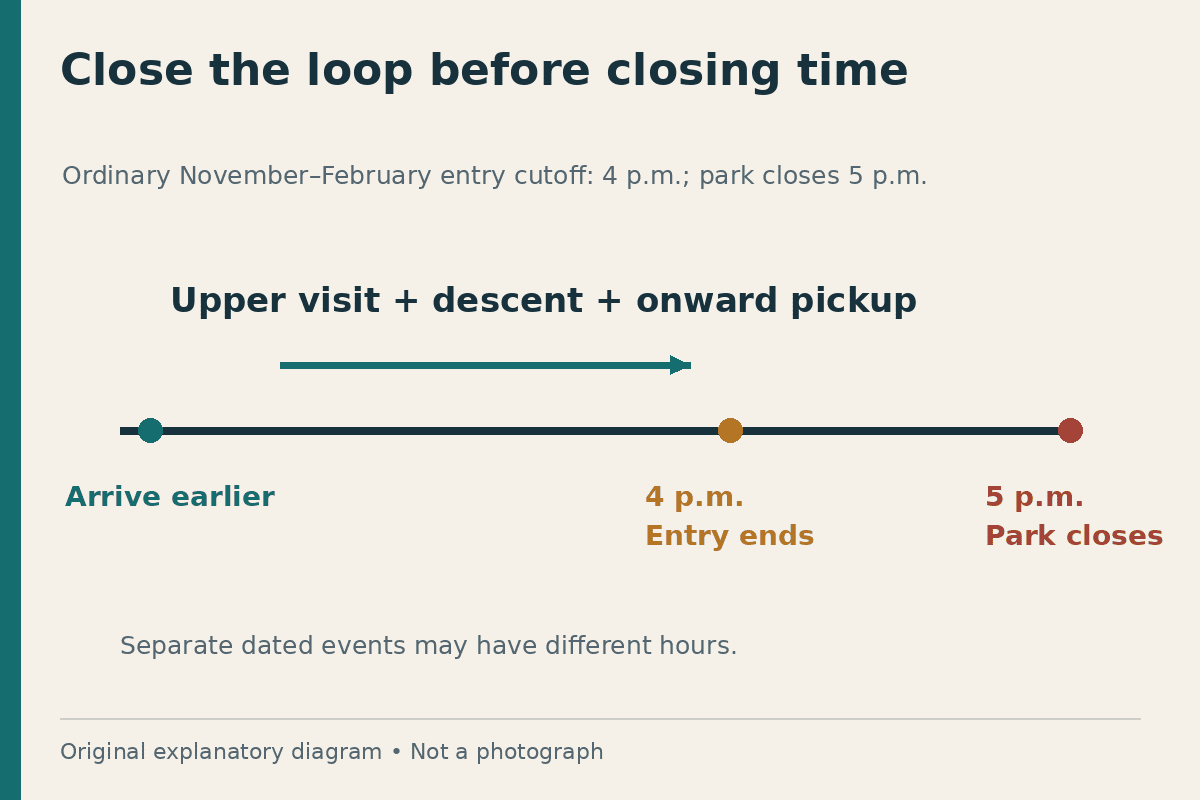
There is a specific November 2026 exception: the operator’s September 30 night-opening notice lists November 7, 14, 21 and 28 with park hours of 09:00–22:00, ticket cutoff at 21:00 and the Blue House set open until 21:30. The notice does not establish matching extended monorail hours, so confirm the upper-site transfer separately before planning an evening visit.
As an editorial starting point, allow two to three hours at the complex and add the journey there and back separately. This is a planning allowance, not a timed route. If your available window is short, decide whether the upper replica is essential before spending the opening part of the visit among the lower streets.
Your final check can be one focused question: “On my date, can I visit the Blue House set, how do I get up and back, and what is the last return?” The 1330 travel-help question guide explains how to present a precise travel query when language support would help.