Visit Dilkusha if you want to understand a historic house through the people who lived there and the work that brought it back. It is a restored home presented as a museum, not a royal residence or a collection of untouched rooms.
That makes a useful question for your visit: what are you seeing from the building’s history, and what has been reconstructed to explain it? Keep those two things separate as you look around.
Start with the house’s changing life
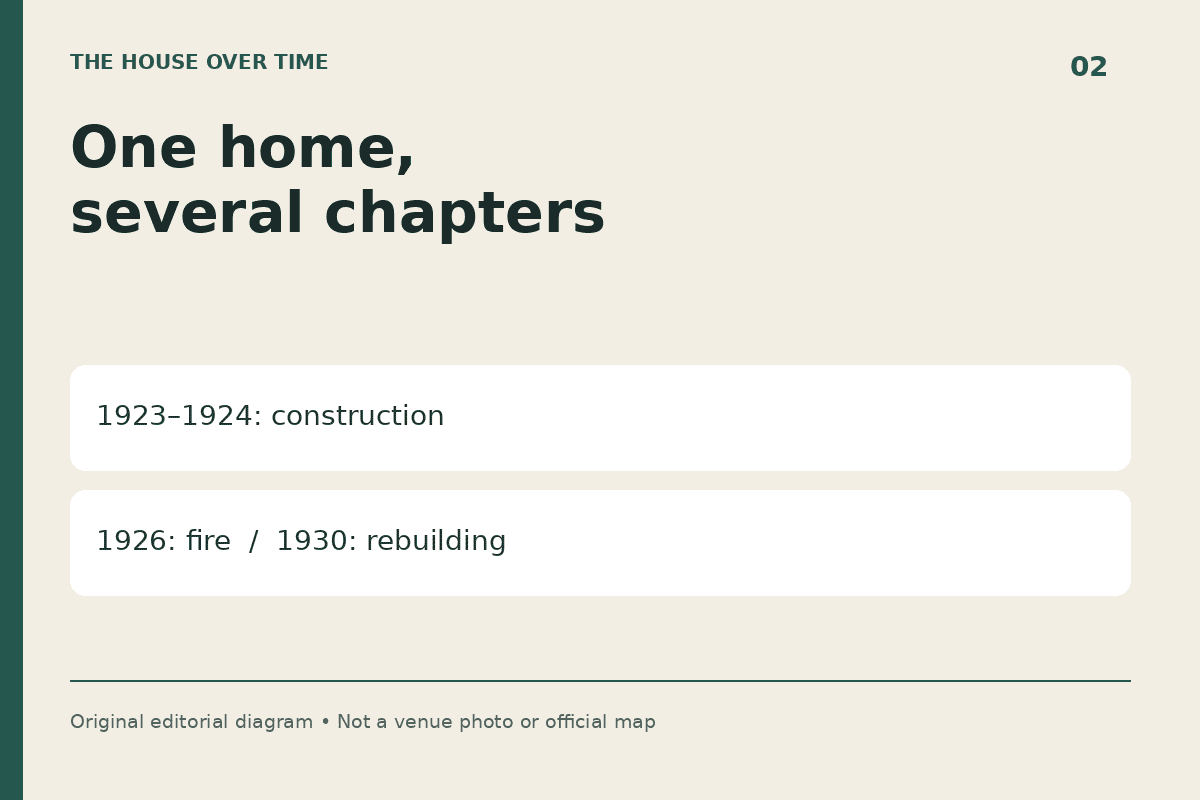
The Seoul Museum of History’s Dilkusha page identifies it as the home of Albert W. Taylor and Mary L. Taylor. Construction began in 1923 and finished in 1924; after a fire in 1926, the house was rebuilt in 1930. The museum describes the displayed living rooms as reproductions.
Those dates change the way to look. Instead of trying to imagine that nothing has moved since the first residents arrived, look for explanations of change. Which part of the room helps tell a domestic story? Which caption explains how the display was assembled? A recreated interior can be informative without being an untouched snapshot.
Give one room your full attention
Choose a room and spend time with its interpretation before moving on. Note one detail that changes your understanding of the residents’ daily lives and one question the display leaves open. This is a suggested viewing exercise, not a claim that any particular object will be on show.
A house museum can reward a slower pace than a long attraction list. You do not have to turn the visit into a survey of every nearby landmark. If you add another stop, choose it for a clear reason rather than assuming that two old buildings tell the same story.
Ordinary admission and a guided tour are different plans
The operator lists free admission, Tuesday–Sunday 09:00–18:00, with entry ending at 17:30. It lists January 1 and Mondays as closures, with public-holiday Mondays open. The address is 17 Sajik-ro 2-gil, Jongno-gu.
For a guided visit, the official page asks visitors to call the information centre at +82-70-4126-8853 one week in advance; Korean, English and Japanese are listed. Do not assume that arriving during opening hours gives you an English tour. Confirm your date and language separately.
Save the house’s name and exact address before leaving, and check the current notice. Leave with a distinction you can explain: a restored building can preserve history while its room displays interpret that history for today’s visitor.
Official information checked November 17, 2026. Source-based planning guidance, not a first-hand visit.