At F1963 in Busan, a used-book browse, an art exhibition and a pause in an open-air square can belong to the same outing. The former wire factory brings these uses together without making them one attraction with a single ticket or timetable. Its appeal is the combination: a substantial bookshop, independently programmed art and the industrial setting between them.
For a first visit, give the books and shared spaces room in your plan, then add a gallery whose current exhibition interests you. That produces a worthwhile stop without depending on every venue being available.

The factory explains the setting
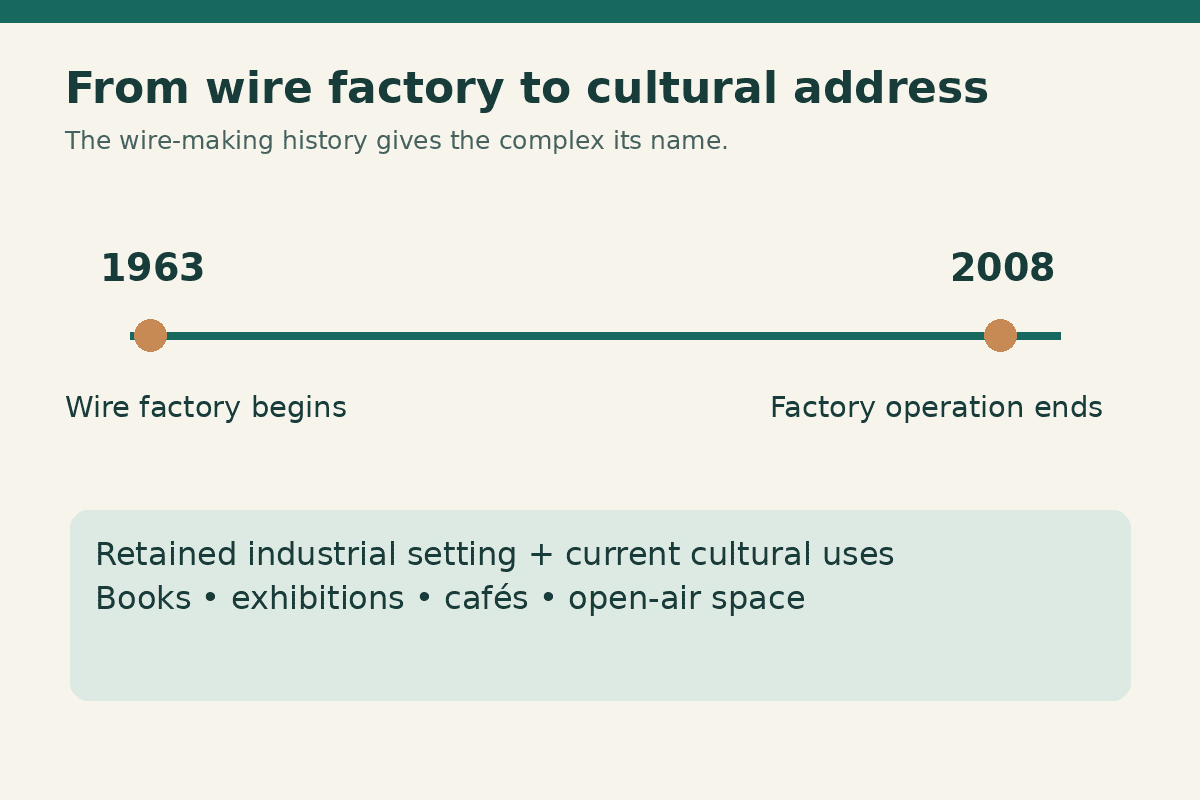
Busan’s official F1963 introduction traces the site to a Kiswire factory operating from 1963 to 2008. The name preserves the factory connection and its starting year. Today, cultural and commercial uses occupy that industrial setting.
The city describes former factory materials reused in café furnishings and an open-air central space called F1963 Square. Those details give you something concrete to notice between indoor stops: equipment and building fabric can remain useful after manufacturing ends. You do not need to turn the outing into an architectural survey to appreciate that continuity.
Start with the YES24 bookshop
YES24’s Suyeong store gives the visit a practical indoor anchor. Its own guide lists used books alongside music and other media, reading and rest areas, and a children’s section. A bookshop visit can be as simple as browsing the shelves, choosing something to inspect and deciding whether it is worth carrying home.
The store guide includes foreign-language book sections. Treat that as an invitation to browse rather than a promise that a particular English title will be in stock. With secondhand books, condition and edition matter as much as the cover. Check the language, missing supplements and any condition notes before buying.
The published hours are 10:00–21:00, with closure on Seollal and Chuseok day. Follow the shop’s own instructions for reading, seating and photography. A reading area within a working store should remain comfortable for other customers.
Choose the art separately
Kukje Gallery’s Busan space offers a different reason to stay. Look at the current exhibition before arriving and decide whether its subject or medium interests you. A gallery visit deserves its own attention rather than becoming the next box to tick after coffee.
The gallery’s official visitor information lists Tuesday–Sunday, 10:00–18:00, with Monday closure. Confirm the exhibition dates and any applicable admission arrangements too. Installation periods can interrupt the experience even when a venue’s ordinary weekly schedule remains on its website.
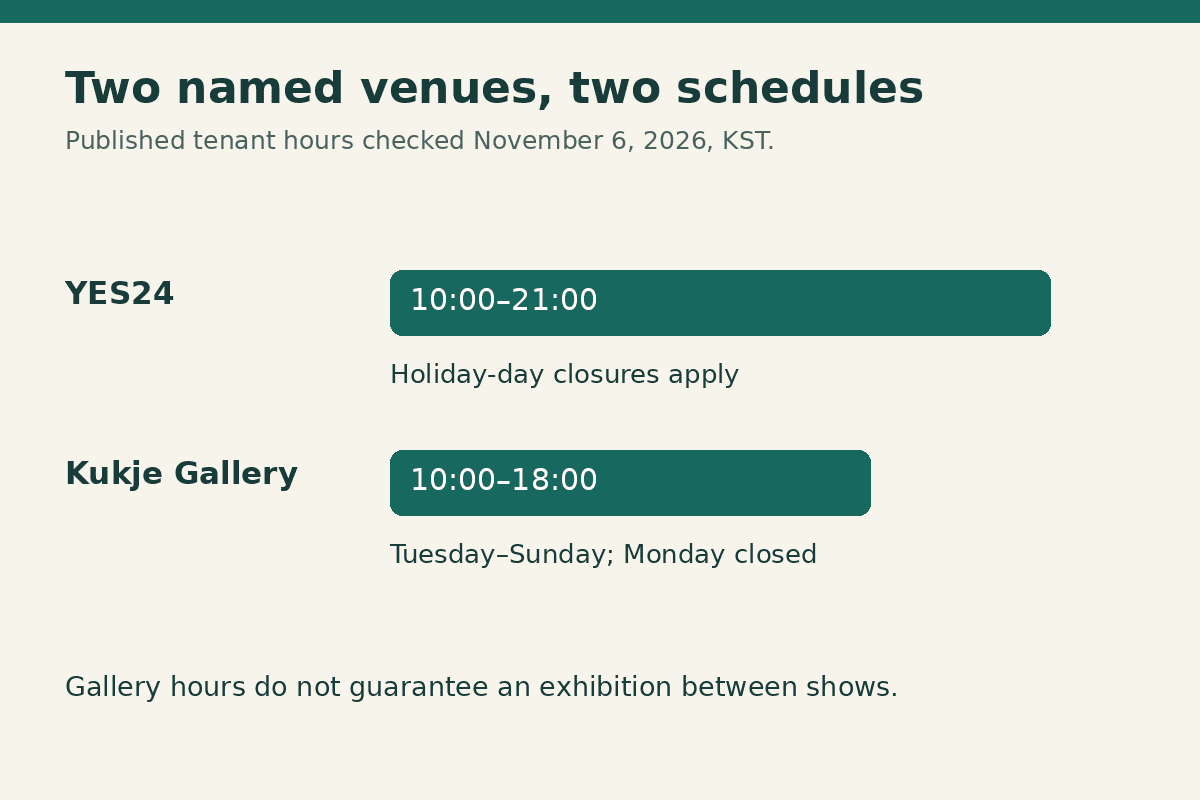
A November 2025 visitor account describes finding the gallery’s main area preparing for another exhibition, with viewing limited to other parts of the space. That dated experience is useful preparation: check the exhibition itself rather than assuming a cultural complex offers a full gallery visit every day.
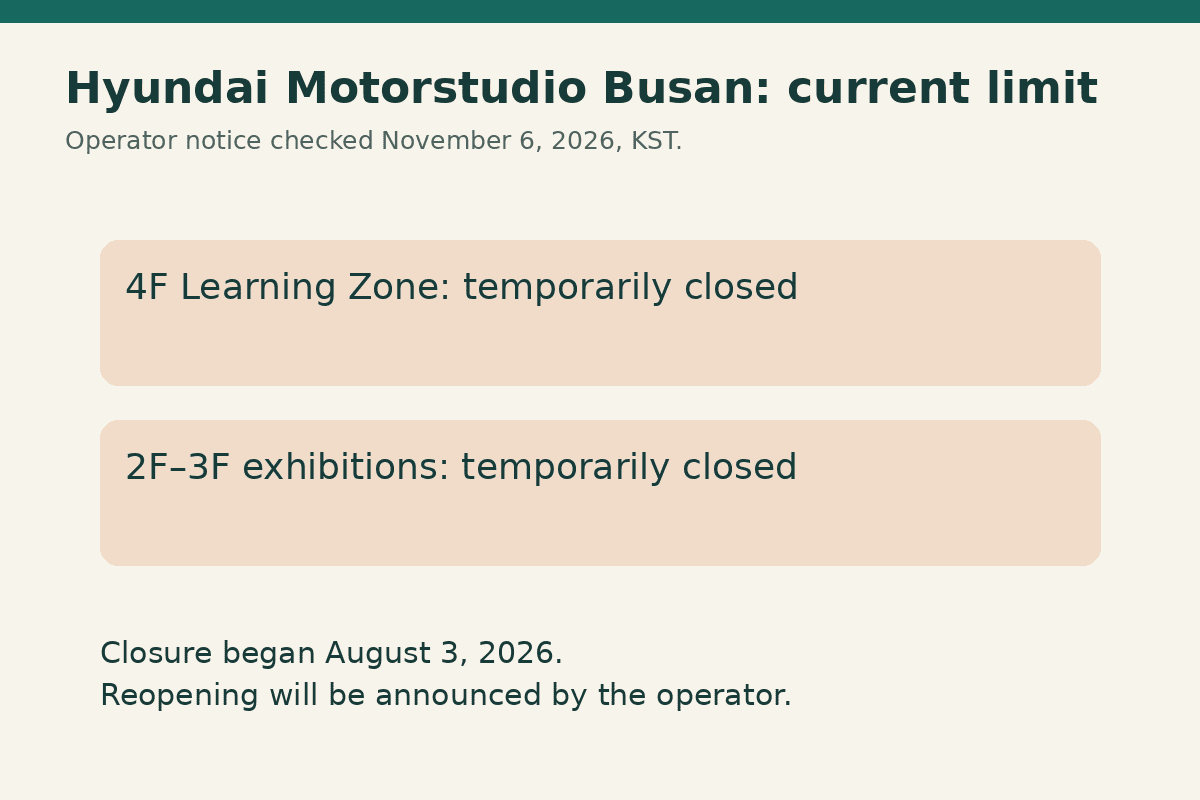
Current Hyundai Motorstudio limit: the operator’s Busan homepage says its second- and third-floor exhibition halls and fourth-floor Learning Zone have been temporarily closed since August 3, 2026. Reopening will be announced. Do not include those galleries in the visit until a newer notice confirms access.
Use the square as a pause between venues
F1963 Square provides an outdoor interval after shelves or galleries. The city also describes the Sori bamboo trail within the complex. Include these shared spaces when conditions are comfortable, while following current signs and any event restrictions.
Allow roughly 90–120 minutes as an editorial starting point for a bookshop browse, a pause and a modest gallery visit if one is available. This is not an official tour duration. A detailed exhibition visit or a café queue may need longer; neither has to fit into the same allowance.
General access is listed as free, but purchases, parking and any separately ticketed programme remain additional. The square and trail also mean the outing is not wholly indoors. In sustained rain, concentrate on a confirmed open venue instead of expecting every connection to provide shelter.
Reach the complex from Mangmi
Save F1963, 20 Gurak-ro 123beon-gil, Suyeong-gu, Busan. The city and tenant directions identify Mangmi Station (망미역) on Line 3. From Exit 4, take village bus Suyeong-gu 2 (수영구2) to Sanjeong Apartment (산정아파트), then make the short walk to the complex. The city describes that final walk as about two minutes.
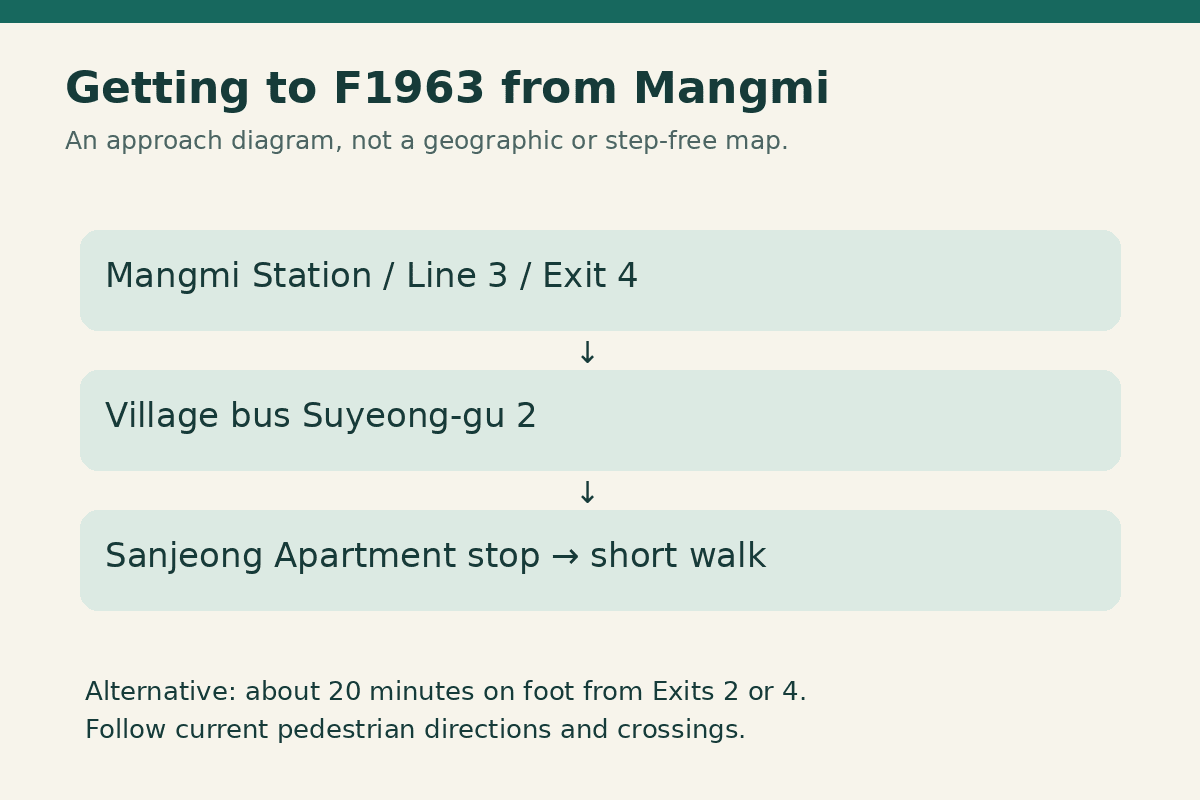
YES24 and Kukje also describe an approximately 20-minute walk from Mangmi exits 2 or 4. Follow current pedestrian directions and crossings; these published estimates do not certify a step-free journey. If accessibility is essential, confirm the complete approach and your chosen venue’s entrance rather than relying on a general facility icon.
Save the tenant you most want to visit alongside the complex address. For help choosing navigation tools, the Korea travel apps guide explains how to prepare your map and translation tools. The most satisfying F1963 visit can be quite small: books you enjoyed browsing, one exhibition you deliberately chose and a little time in the space connecting them.
Research-based guide; visitor information checked November 6, 2026, Korea time. Original diagrams explain the visit and published arrangements, not the site’s exact layout.