If you visit Seoul for the first time, you may hear a lot about Gyeongbokgung Palace and Changdeokgung Palace. They are colorful, photogenic, and easy to understand as royal palaces. Jongmyo Shrine feels very different.
Jongmyo is quiet. It is simple. It does not try to impress visitors with bright colors or dramatic palace gates. Instead, it has a calm and serious atmosphere that reflects one of the most important ideas of the Joseon Dynasty: respect for ancestors.
This Jongmyo Shrine Seoul guide will help you understand the site before you visit. You will learn what Jongmyo is, why it is important in Korean history, what to see inside, how tours work, and what mistakes first-time visitors should avoid.
If you want to understand the deeper side of Seoul’s royal history, Jongmyo is one of the best places to visit.
What Is Jongmyo Shrine?
Jongmyo Shrine is a royal ancestral shrine from the Joseon Dynasty, the Korean dynasty that ruled from 1392 to 1897. It was built to honor deceased kings and queens of Joseon. In simple words, it was the sacred place where the royal family remembered and respected their ancestors.
Jongmyo is not a palace. It was not a place where kings lived. It was not a Buddhist temple either. It was a Confucian shrine, which means it was connected to Confucian ideas such as family order, respect for ancestors, ritual, and moral duty.
The shrine housed the spirit tablets of former kings and queens. A spirit tablet is a wooden tablet representing the spirit of a deceased royal ancestor. The king visited Jongmyo to perform ancestral rites and pray for the safety of the state and the people. UNESCO describes Jongmyo as the oldest and most authentic Confucian royal ancestral shrine that has been preserved.
Why Jongmyo Shrine Matters in Korean History
To understand Jongmyo, it helps to understand Joseon society. Joseon was strongly influenced by Confucianism. Confucianism is not a religion in the same way as Buddhism or Christianity. It is more like a system of ethics, social order, education, family duty, and government philosophy.
For Joseon kings, honoring royal ancestors was not only a private family matter. It was also a political and spiritual duty. By performing rites at Jongmyo, the king showed that his rule was connected to the dynasty’s ancestors and that he had a responsibility to protect the country.
This is why Jongmyo was one of the most important state spaces in Joseon. It was not built for entertainment or daily life. It was built for ritual, memory, and royal legitimacy. UNESCO explains that Jongmyo symbolized the legitimacy of the royal family and preserved a unique spatial layout connected to ancestral rites.
For foreign visitors, this may feel different from other Seoul attractions. Jongmyo is not about taking quick photos. It is about understanding how Korean kings thought about duty, family, death, and the state.
A Short History of Jongmyo Shrine
Jongmyo Shrine was established in 1395, soon after the Joseon Dynasty moved its capital to Hanyang, the old name for Seoul. The official Royal Palaces and Tombs Center history page notes that the shrine was created during the reign of King Taejo, the founder of Joseon.
Like many important buildings in Seoul, Jongmyo suffered during the Japanese invasions of Korea in the late 16th century. The shrine was later rebuilt in the early 17th century. UNESCO notes that Jongmyo was originally built in the late 14th century, destroyed during the 16th-century Japanese invasion, and rebuilt in the early 17th century.
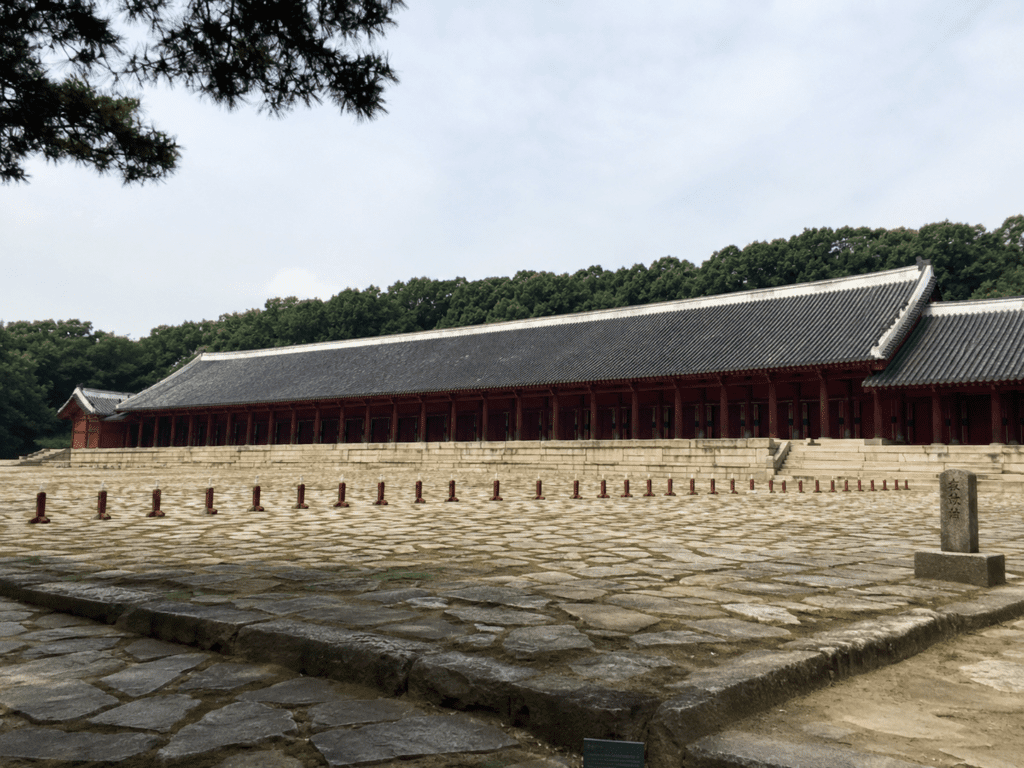
Over time, the shrine was expanded because more royal spirit tablets needed to be enshrined. The Main Hall, called Jeongjeon, and the auxiliary hall, Yeongnyeongjeon, became longer as more ancestors were honored. The official history page explains that the present structure includes 19 bays for the Main Hall and 16 bays for Yeongnyeongjeon Hall.
Jongmyo was listed as a UNESCO World Heritage Site in 1995. The royal ancestral ritual and its music were later recognized as UNESCO Intangible Cultural Heritage in 2001.
What Makes Jongmyo Different from Seoul’s Palaces?
Jongmyo is close to several famous royal sites, including Changdeokgung Palace and Changgyeonggung Palace. Because of this, many travelers add it to a palace-hopping route. But you should not expect it to feel like a palace.
A palace was used for government, royal ceremonies, daily life, and residence. Jongmyo was used for ancestral rituals. This difference explains almost everything about the atmosphere.
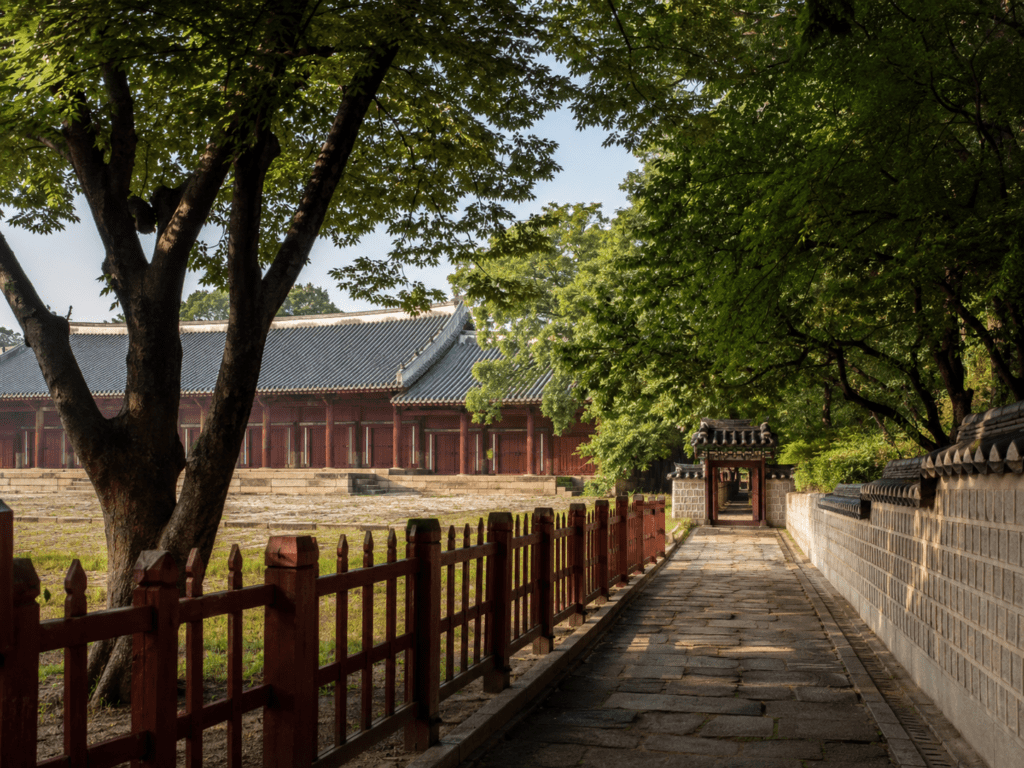
The buildings at Jongmyo are restrained and solemn. The colors feel less decorative than palace buildings. The long stone courtyards, straight paths, and simple wooden halls create a mood of silence and respect.
If Gyeongbokgung shows royal power, and Changdeokgung shows harmony between architecture and nature, Jongmyo shows the spiritual and ritual side of Joseon kingship. That is why it is worth visiting together with the palaces.
What to See Inside Jongmyo Shrine
The most important building at Jongmyo is Jeongjeon, the Main Hall. This is where many of the royal spirit tablets were enshrined. It is one of the most visually memorable parts of Jongmyo because of its long, horizontal structure and wide stone courtyard.
Another important building is Yeongnyeongjeon, sometimes translated as the Hall of Eternal Peace. This was an auxiliary shrine hall. It was also used to enshrine royal ancestral tablets. UNESCO identifies Jeongjeon and Yeongnyeongjeon as the main features of Jongmyo.
You may also hear about Mangmyoru Pavilion, Hyangdaecheong, Jaegung, and other ritual-related buildings. These spaces supported the ancestral ceremonies. For example, Jaegung was where the king and participants prepared before rituals, and Hyangdaecheong was connected to incense and ritual prayers.
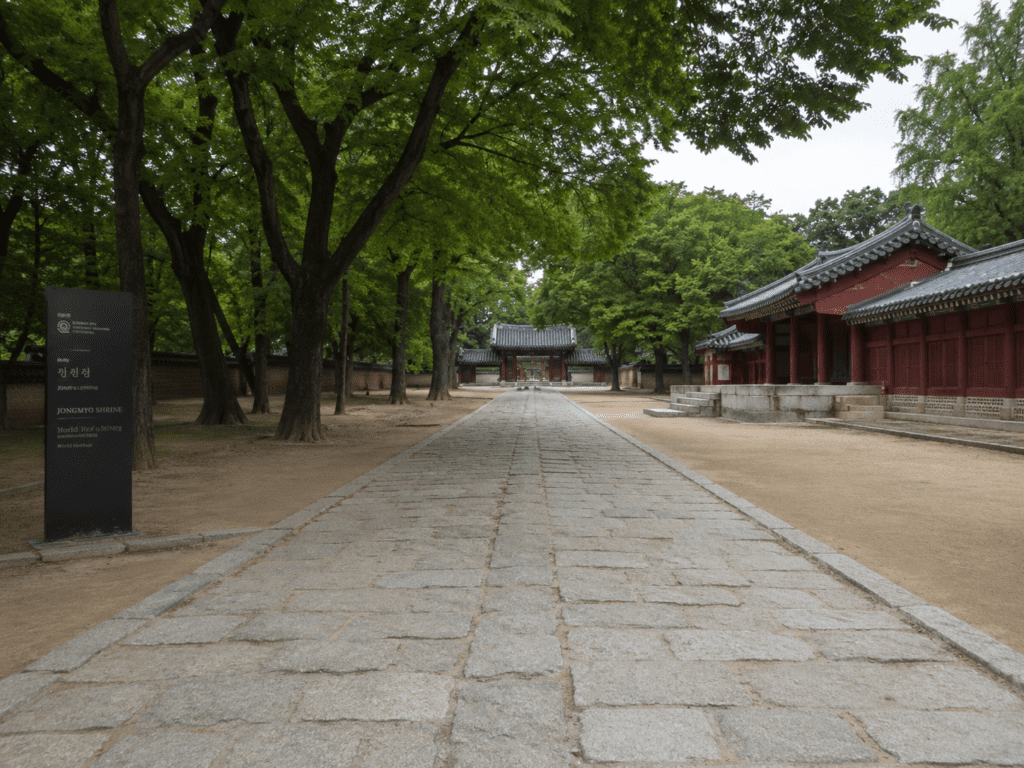
As you walk through Jongmyo, pay attention to the paths. Some stone paths had ritual meaning, including paths connected to the spirits. Visitors should be respectful and avoid walking where signs or guides tell them not to walk. The Korea Heritage Agency specifically advises visitors not to walk on the path for the spirits during Jongmyo-related visits and events.
What Is Jongmyo Jerye?
Jongmyo Jerye is the royal ancestral ritual performed at Jongmyo Shrine. You may also see the name Jongmyo Daeje. “Daeje” means a great rite or major ceremony.
This ritual honored the kings and queens of the Joseon Dynasty. It included formal rites, music, song, and dance. UNESCO notes that ritual ceremonies linking music, song, and dance still take place at Jongmyo, continuing a tradition that goes back to the 14th century.
The Korea Heritage Agency explains that Jongmyo Daeje is held on the first Sunday of May each year in its present form. It also describes the ceremony as a combination of tangible and intangible heritage, including ritual, music, and dance.
For most travelers, visiting on a normal day will not include seeing the full ritual. But knowing about Jongmyo Jerye helps you understand the site. Jongmyo was not just a group of old buildings. It was a living ritual space.
How to Visit Jongmyo Shrine Step by Step
First, check the official website before your visit. Jongmyo has different rules from many other attractions in Seoul. Operating hours, admission fees, guided tour schedules, and free admission days can change.
Second, decide whether Jongmyo fits your travel style. If you want a colorful photo spot, you may prefer Gyeongbokgung or Changdeokgung. If you want a quiet historical site with deep meaning, Jongmyo is a very good choice.
Third, plan enough time. Jongmyo is not huge in the same way as a palace, but it is best experienced slowly. Give yourself at least one hour. If you join a guided tour, plan extra time before and after the tour so you are not rushing.
Fourth, use Naver Map or Kakao Map to plan your route. In Korea, local map apps are often more reliable than Google Maps for walking routes, subway exits, and exact entrances.
Fifth, stay quiet and respectful inside. Jongmyo is a shrine, not a theme park. The mood is calm, and visitors are expected to behave politely.
Jongmyo Shrine Tours and Admission Tips
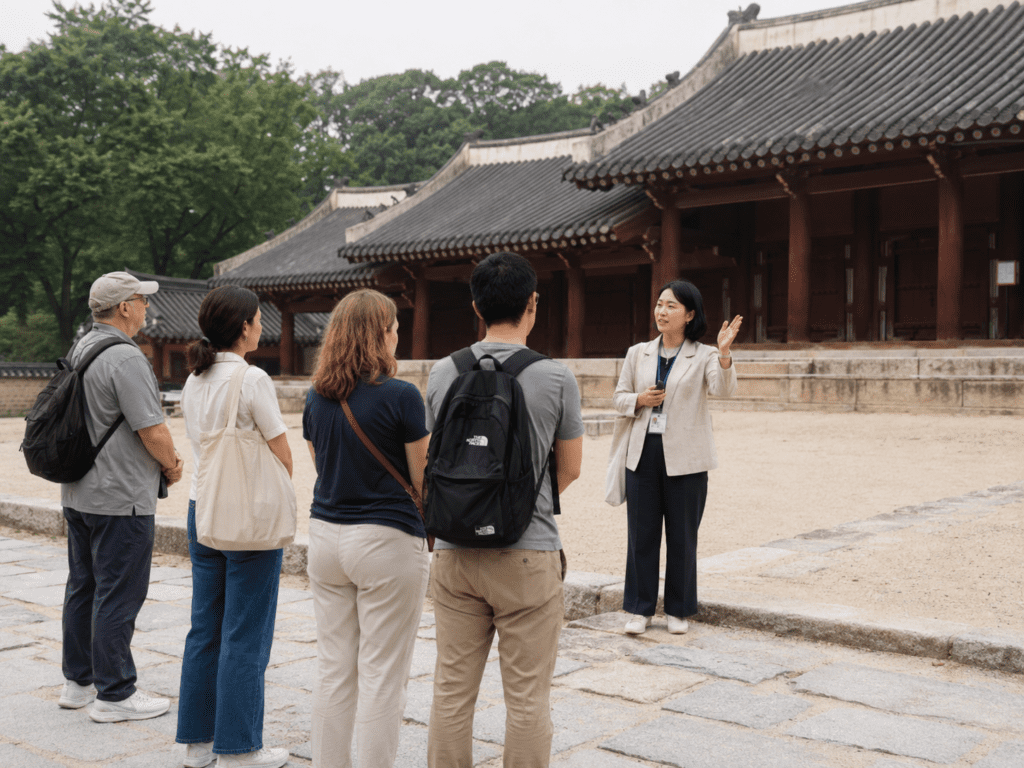
One of the most important things to know is that Jongmyo often uses a guided-tour system. UNESCO states that general public entry to the heritage area is allowed on guided tours only, and that building interiors are not open to visitors.
The official admission information page also notes that foreign-language guided tours are offered for foreigners and Koreans accompanying foreigners, and that general admission applies on weekends, national holidays, and Culture Day.
This means you should not treat Jongmyo like a place where you can always enter freely at any time. Tour rules can vary, and special days may have different entry conditions. Always check the official Royal Palaces and Tombs Center website before your trip.
Visit Korea lists Jongmyo’s general seasonal operating hours, Tuesday closure, last admission rule, and basic admission fee, but these details can change. It is best to use Visit Korea for general planning and the official Jongmyo page for final confirmation.
Prices, operating hours, and guided tour rules can change, so it is always a good idea to check the official website before your trip.
Common Mistakes First-Time Visitors Make
The first mistake is expecting Jongmyo to look like a palace. Jongmyo is much simpler and quieter. Some visitors may think it looks plain at first, but that simplicity is part of its meaning.
The second mistake is confusing Jongmyo with a temple. Jongmyo is not a Buddhist temple. It is a Confucian royal ancestral shrine. This difference matters because the site was connected to Joseon state rituals, not Buddhist worship.
The third mistake is not checking tour rules before visiting. Depending on the day, you may need to enter with a guided tour or follow a specific admission system. If you arrive without checking, you may have to wait longer than expected.
The fourth mistake is walking too quickly. Jongmyo is best understood through atmosphere. Look at the long halls, the empty courtyards, the trees, and the stone paths. The quietness is part of the experience.
The fifth mistake is being too loud. Jongmyo is one of the most solemn heritage sites in Seoul. The Korea Heritage Agency asks visitors to keep their voice down, avoid running, follow guides, and show respect during Jongmyo-related visits and events.
Local Tips from a Korean Perspective
As a Korean, I think Jongmyo is best visited after you have already seen at least one palace. If you visit Gyeongbokgung or Changdeokgung first, Jongmyo becomes easier to understand. You can compare the spaces and feel how different royal life, royal authority, and royal rituals were.
Jongmyo is also a good place for travelers who want a slower Seoul itinerary. It is in Jongno, one of the most historical areas of the city. You can combine it with Changdeokgung Palace, Changgyeonggung Palace, Ikseon-dong, Insadong, or Gwangjang Market.
Do not rush to take too many photos. Jongmyo’s beauty is not only in one famous photo spot. It is in the silence, the repeated wooden columns, the wide stone courtyard, and the feeling that the city suddenly becomes slower.
If you are interested in Korean culture beyond K-pop, food, and shopping, Jongmyo is a meaningful stop. It helps you understand how deeply ancestors, family order, and ritual shaped Korean history.
Best Nearby Places to Visit Together
Changdeokgung Palace is one of the best places to visit before or after Jongmyo. It is nearby and gives you a different view of Joseon royal life. Changdeokgung shows palace architecture, royal residence areas, and the famous Secret Garden.
Changgyeonggung Palace is also close. It is smaller and often less crowded than Gyeongbokgung. It can be a nice addition if you want a quieter palace route.
Insadong is a good place to visit after Jongmyo because it has traditional tea houses, souvenir shops, galleries, and Korean craft stores. If Jongmyo gives you the serious side of Korean history, Insadong gives you a softer cultural break.
Gwangjang Market is also nearby by public transportation or a longer walk, depending on your route. It is a famous traditional market where many travelers try Korean street food. After a quiet shrine visit, the market gives you a completely different Seoul atmosphere.
Things to Check Before Your Trip
Before visiting Jongmyo, check the official opening hours and closing days. Visit Korea currently lists Tuesday as the regular closing day, with closure on the next business day if Tuesday is a holiday. It also lists seasonal operating hours and notes that last admission is one hour before closing.
Check guided tour availability, especially if you want an English tour. Tour schedules can change, and some tours may be limited to foreign visitors and Koreans accompanying foreign visitors.
Check the weather as well. Jongmyo is mostly an outdoor site, with paths, courtyards, and trees. Rain, snow, summer heat, or winter cold can affect your visit.
Finally, check your route using Naver Map or Kakao Map. Jongmyo is in central Seoul, but choosing the right subway exit can save time and make your visit smoother.
Frequently Asked Questions
Q. Is Jongmyo Shrine worth visiting?
A. Yes, Jongmyo Shrine is worth visiting if you are interested in Korean history, royal culture, or quiet historic places in Seoul. It is not as colorful as a palace, but it gives you a deeper understanding of Joseon royal rituals and Confucian culture.
Q. Is Jongmyo Shrine different from a palace?
A. Yes. A palace was used for royal government, ceremonies, and daily life, while Jongmyo was a royal ancestral shrine. Jongmyo was a sacred ritual space where kings honored deceased royal ancestors.
Q. Do I need a guided tour for Jongmyo Shrine?
A. In many cases, visitors enter Jongmyo through a guided-tour system, although general admission may be available on certain days such as weekends, national holidays, or Culture Day. Rules can change, so check the official website before visiting.
Q. How long does it take to visit Jongmyo Shrine?
A. Most visitors should plan about one hour or a little more. If you join a guided tour, arrive early and leave extra time after the tour so you can continue your route without rushing.
Q. Can I visit Jongmyo Shrine and Changdeokgung Palace on the same day?
A. Yes, Jongmyo and Changdeokgung are close enough to visit on the same day. This is one of the best history routes in Seoul because Changdeokgung shows royal palace life, while Jongmyo shows royal ancestral ritual culture.
Q. What is Jongmyo Jerye?
A. Jongmyo Jerye is the royal ancestral ritual performed at Jongmyo Shrine. It includes formal rites, music, song, and dance, and it honors the kings and queens of the Joseon Dynasty.
Q. Is Jongmyo Shrine good for first-time visitors to Seoul?
A. Yes, but it is best for travelers who enjoy history and quiet places. If you only want bright photos, you may prefer Gyeongbokgung first. If you want to understand Seoul more deeply, Jongmyo is a meaningful place to add to your itinerary.
Final Thoughts
This Jongmyo Shrine Seoul guide is for travelers who want to see more than the famous photo spots of Seoul. Jongmyo is not loud, colorful, or dramatic. That is exactly why it is special. It gives you a quieter way to understand Korea’s royal past.
For first-time visitors, the most important thing to remember is that Jongmyo is not a palace and not a temple. It is a royal ancestral shrine. It was a sacred space where Joseon kings honored their ancestors and expressed the moral and political order of the dynasty. Once you understand this, the simple architecture and quiet courtyards begin to feel much more powerful.
Jongmyo is also a good reminder that Korean history is not only about kings, wars, and beautiful buildings. It is also about rituals, family memory, respect, and responsibility. These ideas shaped Joseon society for centuries, and they still help explain parts of Korean culture today.
If your Seoul itinerary includes Gyeongbokgung Palace or Changdeokgung Palace, try to add Jongmyo as well. The palaces show where kings ruled and lived. Jongmyo shows how they remembered those who came before them. Together, they give you a much richer view of Seoul’s history.
Before you go, check the official website for current opening hours, guided tour rules, admission details, and closure days. Wear comfortable shoes, keep your voice low, and give yourself time to walk slowly. Jongmyo is not a place to rush. It is a place to pause, look carefully, and feel the quiet side of old Seoul.