Seodaemun Prison History Hall asks for a different pace from a palace photo stop or a shopping street. Come prepared to read, reflect and take a break. Its exhibitions concern imprisonment, repression and the struggle for independence, and some displays can be distressing.
If this is your first encounter with modern Korean history, begin with context before entering the prison buildings. A little orientation helps individual rooms and names become more than a succession of difficult images.
The practical details to settle first
| Item | Planning information |
|---|---|
| Place to search | 서대문형무소역사관, Seodaemun Prison History Hall |
| Address | 251 Tongil-ro, Seodaemun-gu, Seoul |
| March–October | 09:30–18:00 |
| November–February | 09:30–17:00 |
| Last entrance | 30 minutes before closing |
| Regular closing day | Monday; the following day when Monday is a holiday |
| Published individual adult fee | ₩3,000 for ages 19–64; check eligibility for other rates |
The history hall’s official site also lists New Year’s Day, Seollal and Chuseok closures. Check current notices for your exact date. Visit Seoul’s listing supplies the admission rate and the Line 3 approach via Dongnimmun Station, Exit 5.
Allow time for the walk from the station and ticketing. Reaching the area shortly before last admission may technically leave time to enter, but it is a poor plan for a thoughtful visit.
Read the setting before the rooms
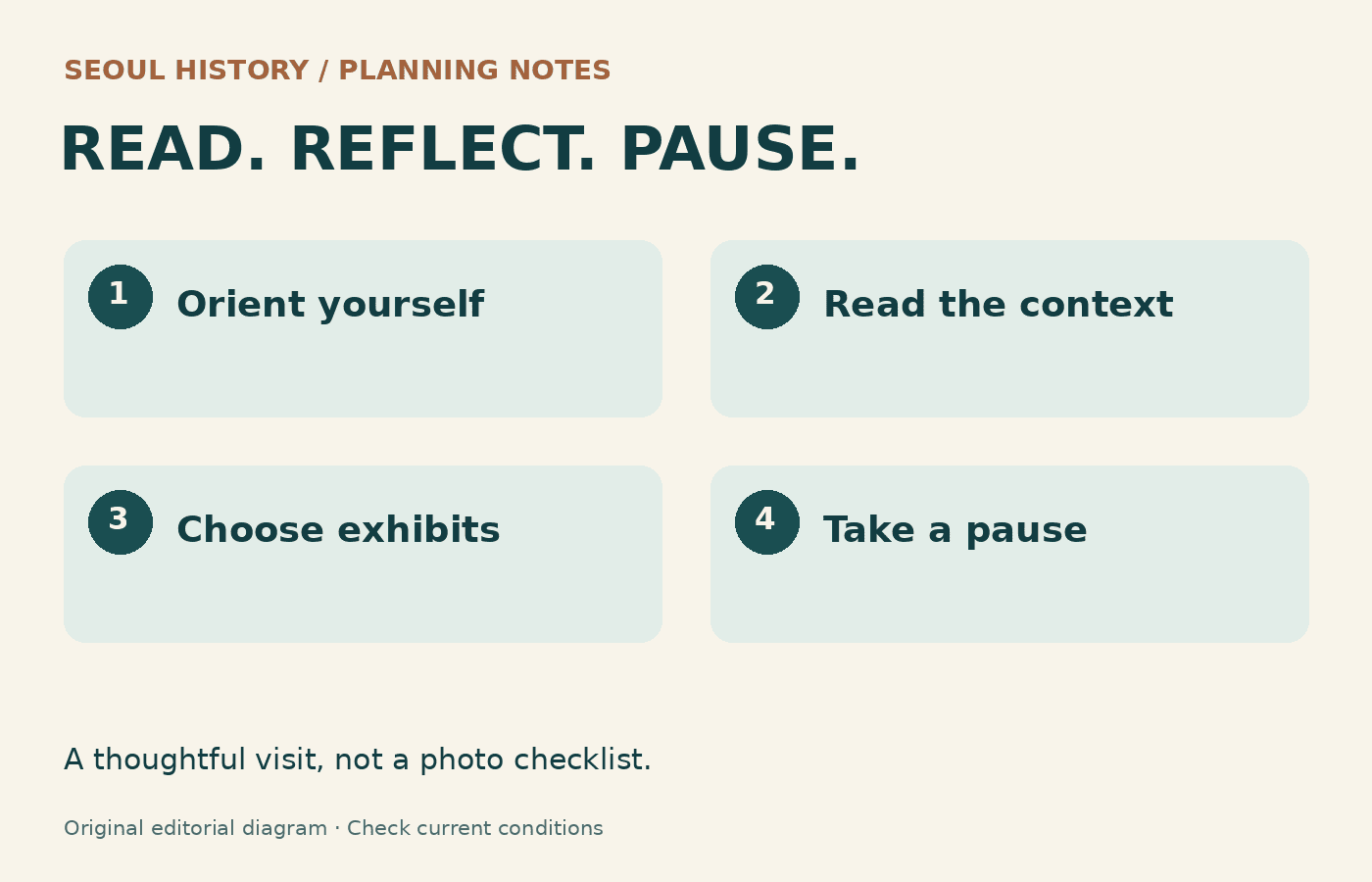
The former prison held people resisting Japanese colonial rule. The history hall opened as a memorial and educational site in 1998. Use the introductory exhibition and current official guide to understand how the institution changed over time.
As you move through the displays, distinguish a preserved building, a reconstructed setting and a modern interpretation. Read each label rather than assuming everything visible is untouched from the same year. The official history overview is a useful starting point before arrival.
Choose one person or episode to follow carefully. You may remember that more clearly than a rapid tour of every room. There is no need to turn the visit into a test of how much distressing material you can tolerate.
Build in pauses and language support
A Korean-language firsthand account describes both indoor and outdoor sections and the emotional impact of the exhibits. Its reaction is one visitor’s experience, but it is a reason to leave space around this stop rather than placing it between two rushed appointments.
If you are traveling with children or someone sensitive to depictions of violence, preview the official exhibition information and decide together which areas to skip. Step outside when needed. You can learn from the site without entering every display.
Use the visitor guide to look for available interpretation, and check language, booking and schedule before relying on a docent session. This article does not promise an English tour at a particular hour.
Leave the site respectfully
Follow photography notices, keep voices low and avoid playful reenactments around memorial spaces. Give other visitors room to read and reflect. An arresting brick wall is part of a place with a difficult history, not merely a backdrop.
Plan the Dongnimmun journey and the right station exit →
Make the next stop simple: a meal, a quiet break or the journey home. Leave with one question you want to learn more about, and use the institution’s material to continue that reading.