The most useful subway habit in Seoul is simple: check the line, direction, transfer and exit before you start moving. You can take the journey one decision at a time.
Seoul’s network reaches across the city and into the surrounding metropolitan area. Visit Seoul’s subway guide explains the colour-coded lines and multilingual station signs. Keep the line number or name alongside its colour, so you have more than one way to recognise the route.
Search for the place you want to enter
Start with the hotel, museum, café or public venue, rather than just its nearest station. In NAVER Map or your chosen route planner, compare the route and its final walk. Check that the destination is the correct branch and address.
Write down or save the starting line, the direction of travel, any transfer station and the destination exit. Large stations can involve a substantial walk inside. Allow room for that when meeting someone or heading to timed admission.
If you need a step-free route, look for elevator information and confirm the relevant entrance with station staff or the operator. The shortest exit on a map may not be the entrance that works for your luggage or mobility needs.
Choose a ticket or transport card
A rechargeable transport card is convenient for repeated journeys. Keep enough balance for your route and use one card per person on the subway; Tmoney advises that a card cannot be shared by several subway passengers at once.
For a single journey, station ticket machines are another option. Seoul’s transport guide explains that single-journey subway tickets do not cover buses. Read the machine’s fare and deposit instructions before buying.
Some new kiosks now accept overseas cards for single-journey tickets and short-term Climate Cards, under Seoul’s March 2026 announcement. That is a ticket-machine option, not a statement that foreign bank cards work directly at all gates. Check what your machine actually offers.
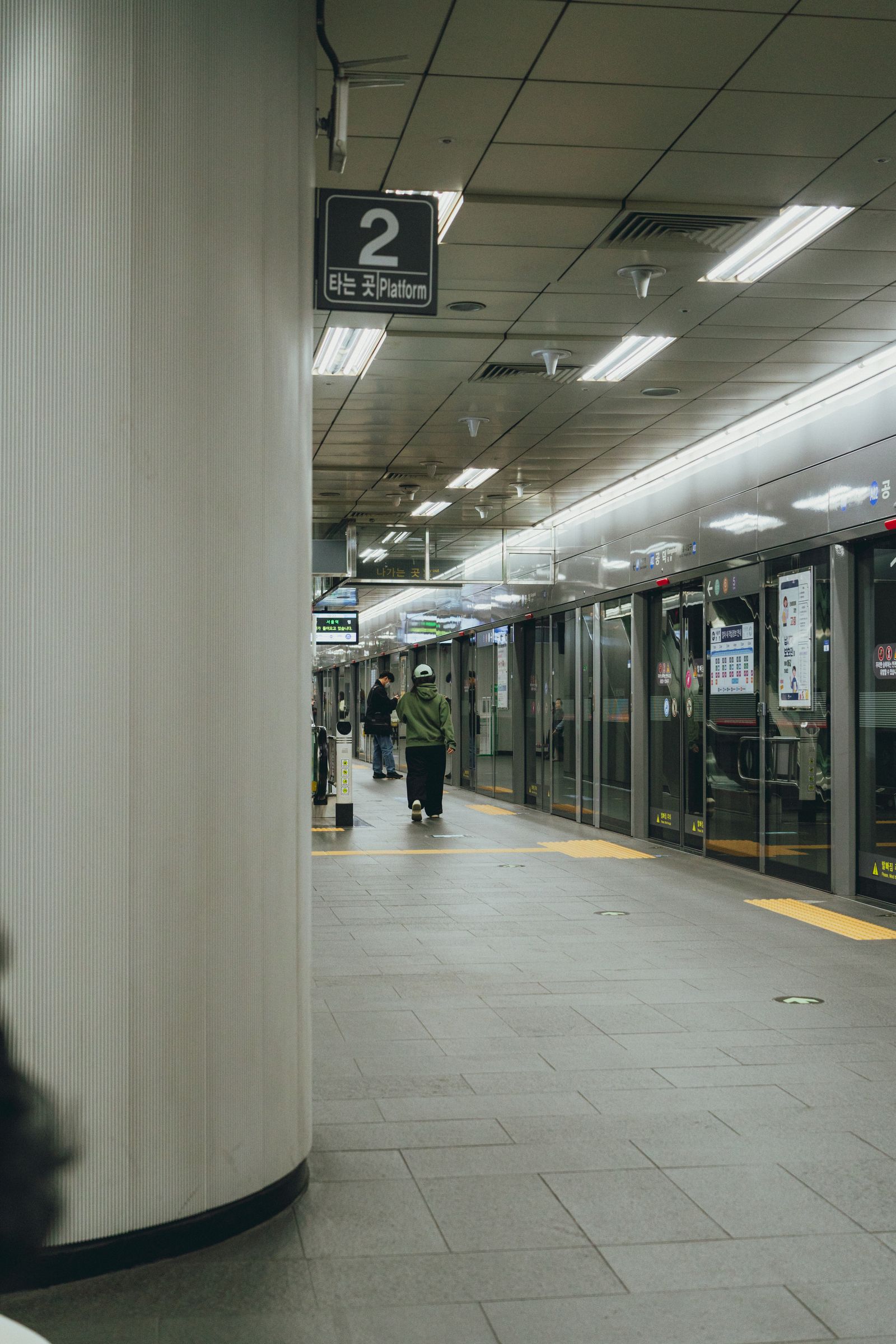
Follow transfer signs until the next platform
A transfer can mean corridors, stairs or another set of gates. Follow the marked route and the instructions at any reader. Avoid leaving the paid area merely because an exit is closer; if the route is confusing, ask station staff.
Check whether the arriving train serves your stop, particularly where branches or different stopping patterns appear in the route planner. The right line in the wrong direction is a common planning error that another glance at the station list can prevent.
The exit is part of the address
Different exits can put you on opposite sides of a wide road. Before tapping out, look for the exit that suits the final destination and any access needs. If meeting someone, agree on the exit number as well as the station name.
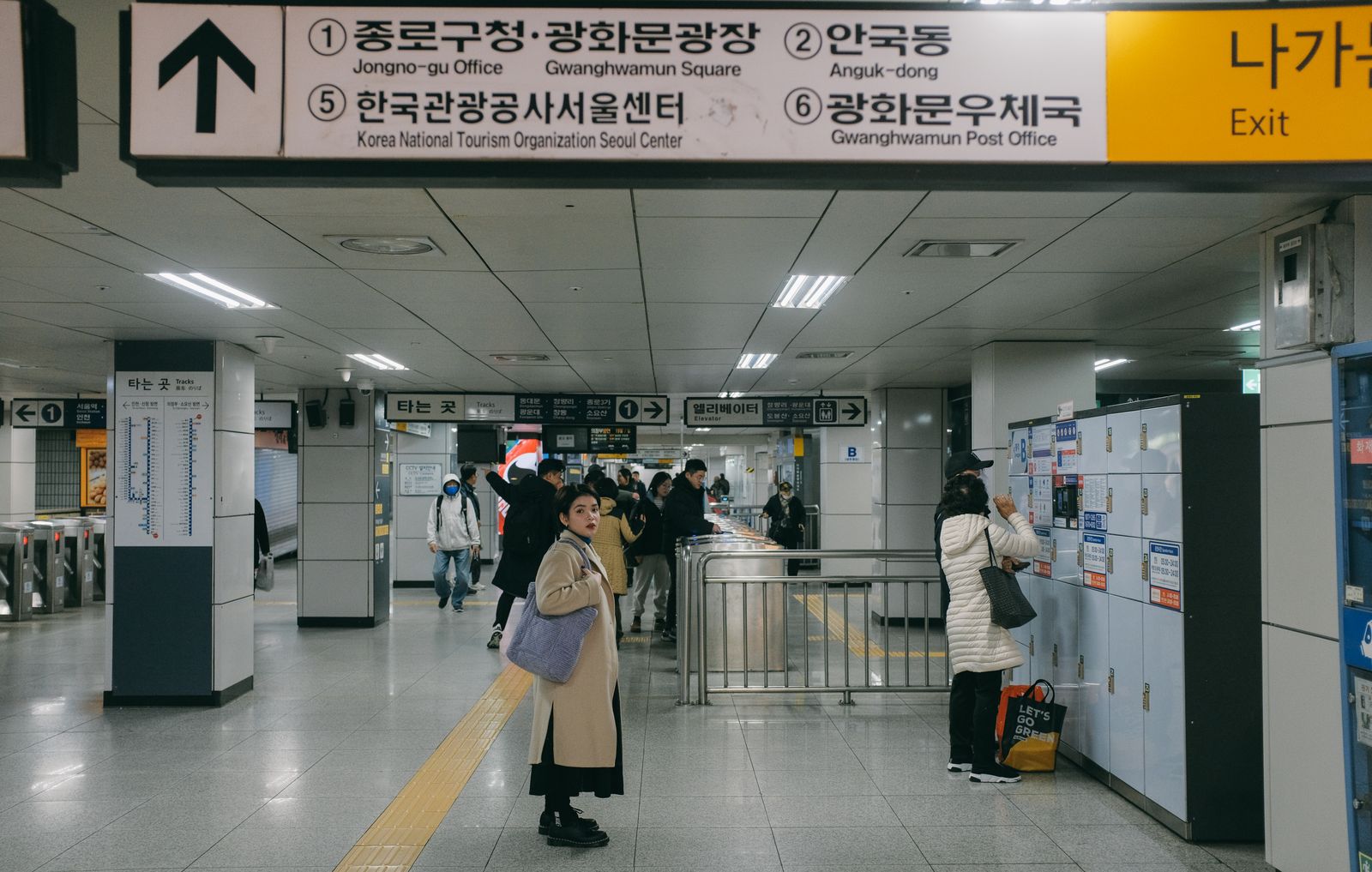
When you take a wrong turn, stop somewhere out of the way and check again. If you board the wrong train, get off when it is safe and confirm the return route. Do not assume opposite platforms are connected without leaving the paid area; use the help point or staff if needed.
A real destination example: National Museum of Korea
Use 국립중앙박물관 as the destination, rather than stopping the search at a station name. The museum’s subway directions identify Ichon Station (이촌역) on Line 4 and the Gyeongui–Jungang Line, followed by Exit 2 and a 150-metre walk toward Yongsan Family Park. They also locate an elevator in the direction of exits 1 and 2.
- Search from your actual starting point to the museum. Save the line and any transfer shown for that journey; Ichon has two lines, but you only need the one that fits your route.
- On the platform, check the next station names against the direction in your planner. Use the station sequence to distinguish the two directions; the line name alone is not enough.
- At Ichon, follow the museum signs and the appropriate exit or elevator route. The museum also lists the Nadeulgil underground connection, open 07:00–23:00; this passage’s hours are not the gallery opening hours.
This is the whole journey to check: your starting point, the correct train, the exit and the final approach. Once transport is settled, our two-hour museum plan helps you choose what to see inside.
Leave time for the trip home
Check the last viable journey for your exact destination, including every transfer and the day of travel. Service times vary. For an evening event, keep an alternative way back in mind rather than treating an approximate systemwide closing time as your deadline.
On board, keep luggage close, leave doorways clear and respect seats reserved for passengers who need them. A little space for other people makes the journey easier for everyone.
Sources and travel updates
Source check: 5 October 2026. Confirm product terms, service notices and your own route before departure.
14 thoughts on “How to Use the Seoul Subway: From Route Search to the Right Exit”